British intelligence estimates that half a million Russian soldiers have died in Ukraine
The director of the UK's cybersecurity agency announces the creation of an "AI-powered cyber shield"

-
CAT -
CAST
LondonNearly half a million Russian soldiers have died since the invasion of Ukraine began in 2022. The figure, one of the highest Western estimates made public so far on the human cost of the war for the Kremlin, was revealed this Wednesday by Anne Keast-Butler, the director of the Government Communications Headquarters (GCHQ), one of the country's three security agencies.
The data, which exceeds the deaths of US soldiers in World War II (416,000), was presented by Keast-Butler as further proof of Russia's progressive wear and tear after more than four years of war. In her words, Vladimir Putin is "going backwards on the battlefield", amid an increase in casualties, difficulties in replacing soldiers, and a Ukrainian offensive increasingly based on drones and precision attacks within Russian territory. Her statements coincide with Western military analyses that point to a slowdown in Russian advances and a possible turning point in the conflict in the coming months.
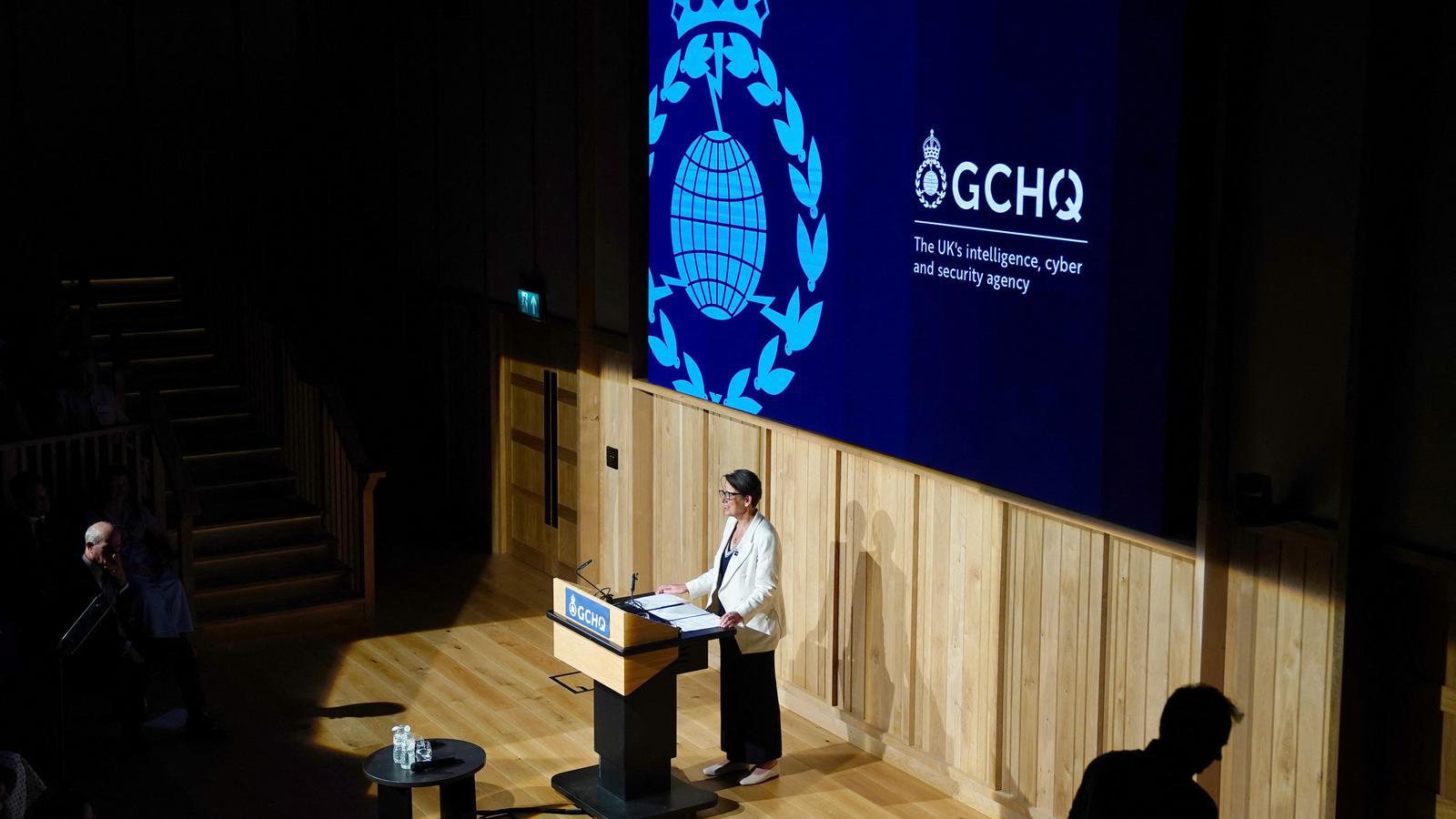
The director of the Government Communications Headquarters (GCHQ) made the announcement at the agency's first annual public conference held at Bletchley Park, the historic code-breaking center of World War II. The GCHQ is the UK's intelligence agency specializing in cybersecurity and communications espionage, responsible for protecting the country from digital threats and intercepting strategic information.
Keast-Butler, however, did not publicly explain the precise methodology behind the estimate, limiting herself to commenting that it came from new intelligence assessments. Independent counts by media outlets such as BBC Russian and Mediazona have confirmed more than 220,000 identified deaths of Russian military personnel through open-source evidence, while other analysts believe the actual figure is substantially higher, approaching the aforementioned half a million.
In fact, the war in Ukraine is already one of the conflicts since World War II that have caused the most military casualties, with figures similar to the Vietnam War and the Iran-Iraq conflict of the eighties of the last century. The number of military casualties includes dead, wounded, missing, and captured from both sides and reaches around 1.8 million people. Of these, and according to data from the Center for Strategic and International Studies (CSIS), between February 2022 –when Russia attacked Ukraine– and December 2025, between 100,000 and 140,000 Ukrainian soldiers would have died on the front. In total, Kyiv counts about 600,000 casualties in its ranks. Even so, last February, on the fourth anniversary of the invasion, President Volodymyr Zelensky only acknowledged 55,000 deaths since the start of the war.
Prevention against cyberattacks
But the director of GCHQ places the war in Ukraine within a broader framework: that of a "new era of hybrid confrontation between powers". She warns that Russia is intensifying its activities against the United Kingdom and Europe "from the seabed to cyberspace", with operations targeting critical infrastructures, democratic processes, supply chains, and public trust. She also accuses Moscow of promoting sabotage, espionage, and cyberattacks in a "grey zone" situated below the threshold of conventional warfare.

In this context, the GCHQ has announced one of the British government's most ambitious technological bets: the creation of a new national "cyber shield" based on artificial intelligence. According to Keast-Butler, the agency has developed in recent months a very detailed scheme to integrate autonomous artificial intelligence into digital defense systems capable of reacting at very high speed – much faster than humans – to cyber attacks.
The head of the British cyber intelligence services warns that the speed of technological advances reduces "the window of opportunity" for the West to maintain an advantage over rivals like Russia or China. She particularly highlights the future impact of quantum computing, which could break current encryption systems in a matter of seconds. To confront the new threat, Anne Keast-Butler advocates for closer cooperation between governments, technology companies, and universities.
Keast-Butler has been directing the GCHQ since 2023 and is the first woman to head the organization in over a century of history. A mathematician by training, she has worked in the field of British national security for nearly three decades. Before taking command of the GCHQ, she had held positions of responsibility at MI5 and in British government security coordination structures. The GCHQ, based in Cheltenham, is the country's largest intelligence agency and consumes a very significant portion of the British budget allocated to the secret services.
