Txispa, the restaurant that has earned its place next to the most famous 'asador' in the world
The restaurant of the chef Testuro Maeda offers a menu that fuses ancestral Japanese tradition with Basque
-
CAT -
CAST
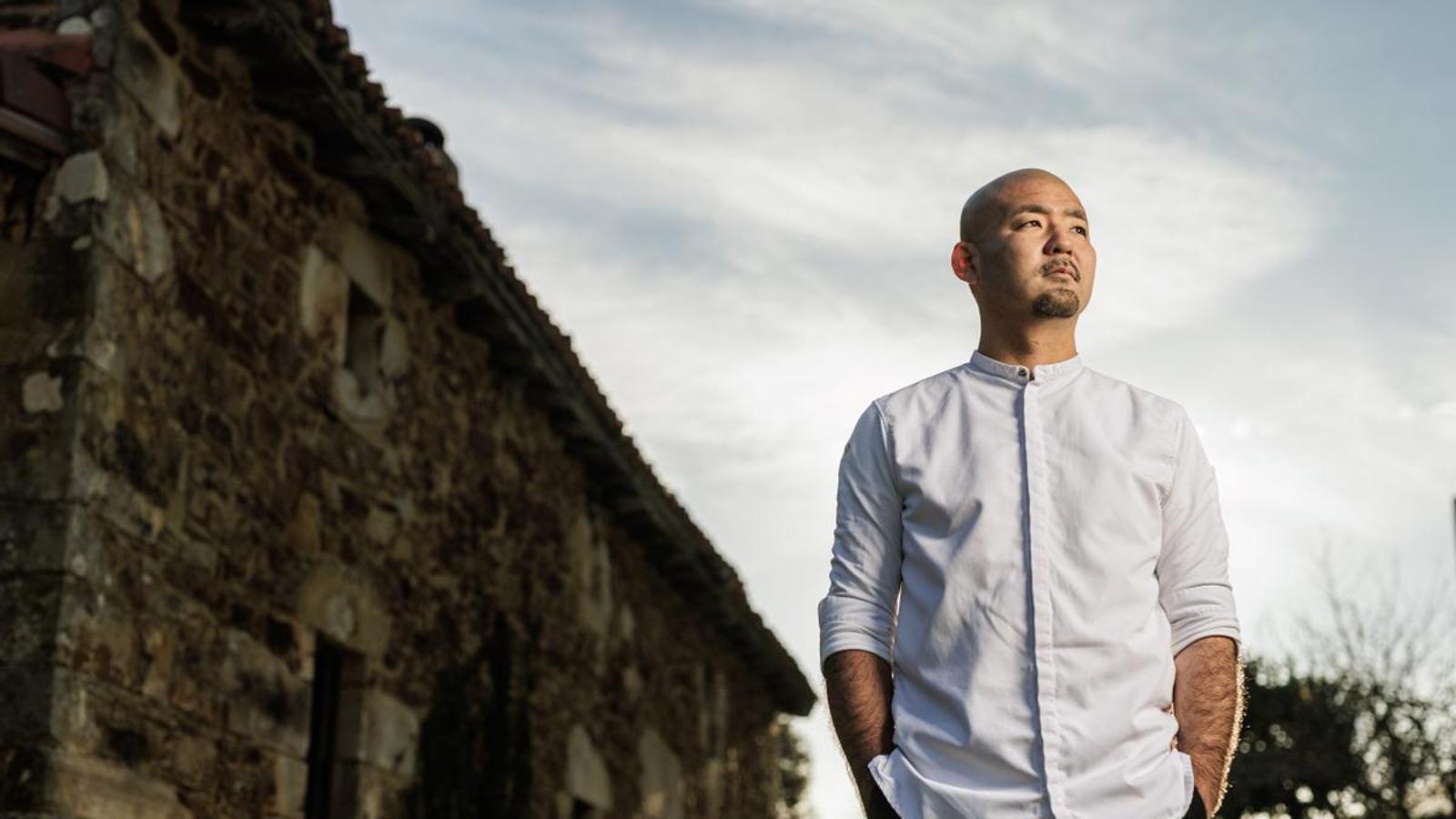
Axpe, Basque CountryIf you have had the luck to visit Japan, you may have experienced the feeling of seeing that there are many things that escape you. And instead of feeling overwhelmed by the situation, you feel the comfort of knowing that you find yourself in a complex cultural framework in which you are ignorant and that, even if you were to stay there to live forever, you could never fully unravel it. An ancestral sediment that goes beyond understanding and for which you can only feel respect and admiration. This happens with millenary cultures. That is why, when I set foot in Axpe, in Atxondo, to visit the Txispa restaurant, suddenly it makes a lot of sense that Basque and Japanese culture have understood each other so well. The Basques are one of the oldest and most resilient peoples in the world, and here Tetsuro Maeda has found his home.
Tetsuro Maeda was born in Tokyo in 1984, but grew up in the north, in Kanazawa, where his life was linked to snowboarding. It was through an acquaintance that he ended up in the Basque Country, where he began his journey through the world of catering. The most relevant thing, however, was his time at the asador Etxebarri. Maeda was at Bittor Arginzoniz's house for 11 years, eventually becoming sous-chef in his final years. Etxebarri is actually located very close to the Txispa restaurant. To get there, you have to pass in front of it. Maeda opened it in May 2023 and it caused quite a stir. Was there space for two great restaurants in a village as small as Axpe? Six months later it was already recognized with a star, but many people wondered to what extent there would be similarities or differences between the two establishments. Now that Tetsuro Maeda has been able to follow his own path, I can assure you that the proposals of the two restaurants are completely different and both are recommended for different reasons.

'Basque Sakura'
The experience at Txispa begins outside. This is where you are welcomed and shown the vegetable garden. Sato Kazuki is in charge of growing all the vegetables for the restaurant. Almost everything is homegrown, and in many cases, they are Japanese vegetables that have been adapted to the Basque soil and climate. If the weather permits, the appetizers begin outdoors. In my case, it was already inside a wonderful dining room they have before moving on to the main room and the kitchen. The restaurant is flanked by large windows. The goal is for the forest outside, the changing weather, and the sound of the cowbells to be part of the meal. In this dining room, it is inevitable to see that the taste for minimalist Japanese furniture is what has prevailed. One of the clear cases that less is more.
Once the meal has started, the next steps take place directly in the kitchen, where you can see the famous glowing embers. There, they will serve you edamame on the branch, a format we are not used to. And preparations like the xori bao. That is, chorizo in a steamed bao-style bun. Or what Maeda calls euskal sushi, a bite that is pure marmitako. Besides that, you can already start seeing what is to come when you are at the table. Like a small plate of bites where one is 100% memorable: the pork and shrimp dim sum. The menu is elaborate but not heavy at all. The first thing you find on the table is a list of vegetables present in the day's menu, something you will remember later when the digestion is easy and light. The menu will end with the classic ribeye steak, where you can see, table by table, how Maeda himself prepares it in the kitchen. There, he drizzles it with a liquid extracted from the fat itself, the ventresca, and plays with the embers so it stays crispy on the outside and juicy on the inside. An exhibition. Maeda will appear often to explain the dishes; he has a lot of charisma and a contagious laugh. His team also has a good repertoire of resources to be approachable without losing the formality of this type of restaurant that aspires to international lists. The menu will also end with a dessert to remember: the cherry blossom flan, in honor of one of the moments in which the Japanese fall in love with their country again, the sakura bloom. Maeda claims he knew he wanted to have his restaurant where we are because he saw a beautiful cherry tree in bloom. That is when the spark was lit. It could not be a more Japanese motive.
I ask Maeda about the similarities between Basque and Japanese culture. Beyond the extreme love for bread he found on the Peninsula and the power of the flavors, Maeda highlights a similarity. “Basque mythology is very similar to Japanese. Everything, even a stone, has a spirit and must be respected. In Japan, before tourism, we had that way of thinking,” he says. The other similarity is the extreme respect for the product and seasonality. You don’t mess with the soul of food.

