Teresa's stew and meat stew: a Barcelonan by adoption in love "with spells"
Seventh chapter of Empar Moliner's Wise Kitchen series, dedicated to reclaiming the gastronomic legacy of our grandmothers
-
CAT -
CAST

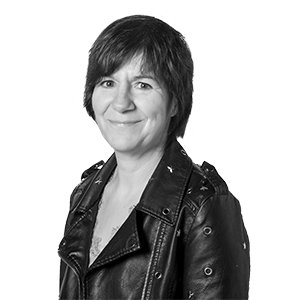
Teresa lives in the Gràcia neighborhood. She's the first Barcelona native we've featured on Cocina Sabia, but she's a Barcelonan by choice. She was born in Rasquera and came to Barcelona as a young woman because the village felt too small for her.
Her daughter, Nuri, wrote to the newspaper to pay tribute to her mother (who has done a great job instilling a love for cooking, as her other son owns a restaurant). Today, Nuri is acting as her "lousy"Because Teresa has to use a cane, and what she'll do is direct the operations. "I really like a cook who's in the kitchen with her jewelry in her hand," I tell her. And she says, "Let me tell you something!" And she shows me the bracelet. "I put that on my hand to remind myself that when she has Are you going to post something? You can see the bracelet in my mouth. I don't diet. I eat less. When I go out (this lady I am will be 91 in January) I use a wheelchair. And since I used to drive, I push the wheelchair myself. And I have to be strong. It wasn't good for me to gain weight."
Teresa has in common with all the wise women we've met that she has always been a force to be reckoned with. They are women who fit a certain pattern. They are curious, pioneers in many aspects (driving, keeping accounts, starting businesses, encouraging their husbands to do the same). They like to care for and comfort others. That's why she uses a wheelchair in the street, but she "drives."

Ingredients and steps for the Christmas bowl (everyone can make it).
Chickpeas:
Let's start with the chickpeas. We'll buy them dried at our trusted stall. They'll give us instructions there. Teresa prepares them like this:
I soak them overnight in warm water. I add a teaspoon of baking soda. The next day, I drain them and boil them separately in clean, cold water. "The soaking water isn't good enough. They boil once, over very low heat. Some people cook them together, but I think it's better not to have so many things cooking at once."
The ham bone:
We'll also soak it the night before, so it doesn't get smelly.
The ball:
Ask the butcher to mince 200 grams of beef and 200 grams of pork. Some people also ask for mince of neck fat and mix it all together. Some have it pounded twice, some only once, and some buy it pre-packaged.
Soak bread in milk until it's completely absorbed. Then, in a mortar and pestle, crush garlic and parsley. To prevent the garlic from splattering, add a pinch of salt.
Teresa had frozen parsley, which keeps very well. You could also use packaged parsley in those little spice mixes, or, of course, fresh.
Mix the minced meat with the soaked bread, an egg, and the garlic and parsley. Form into balls and coat them in flour on a small plate to help them hold their shape. You'll see that the bread soaked in milk gives it that extraordinary flavor. Set them aside, we'll need them later.
Let's get to the ingredients for the escudella for 10 people:
Ask the butcher for ingredients "for making stock" and they'll advise you. You'll need some pork, chicken, hen (if you can find it), and beef. Teresa is keeping ossobuco because it has "meat and bone." Black and white sausage. Bacon. She hasn't included pig's trotters, bone marrow, or backbone. Everyone makes their own; they're all the best.
Salt and oil from Rasquera.
The vegetables:
Cabbage, celery, turnip, carrot, leek, onion, and potato... Many stores already sell all the vegetables together pre-packaged. She doesn't add turnip.
Galets (large pasta shells), any size you like, if you wish. Teresa will make them mixed together.
Note that Teresa starts by boiling (Nuri, her daughter, does it) the bones, by themselves, in a medium-sized pot with not too much water. Ham bone, beef, pork, beef bones, pork bones, chicken (although we'll remove it later), and bacon.
After an hour, she turns off the heat and discards the water, which she says "isn't good." It contains impurities.
Now, she puts the bones that have been boiled earlier into a large pot with clean water and boils them for two hours. Then she'll remove the bones. And that's when she'll add the rest of the ingredients: the chickpeas, the vegetables, the blood sausages, and the meatball.
While we look at the photo Pedro took of her with the meatball in her hand, she takes the bones out of the small pot and puts them in the larger one with clean water. "There's something bouncing around in there, and I don't know what it is. It's better if this juice isn't in. And now we start again. We'll bring it to a boil. When I take it out, I won't use all of it for the bowl. So that when I take it out, there's only what you're supposed to eat."

A town that's too small
We left the pot simmering, the house filled with that ancient aroma, which must be the smell of the world, because they make soup everywhere. We went to the dining room, where we discovered that Teresa really enjoys going to the Encants flea market to look for rampoines (a type of small, round pastry). In fact, she has the book in the entryway. Leonardo da Vinci's Kitchen NotesToday's Topics (Planeta). It's an "imagined" book, by the way. Anyone wanting to know its curiosities (How does Leonardo "talk" about American products not yet "discovered"?) should read José Carlos Capel. It has bookshelves, a chest of drawers that—he tells us—belonged to Cánovas del Castillo, a Marilyn Monroe in the bathroom. Ashtrays from the 1950s, little boxes... "I like spells," he says, playing with words.
Teresa went to live in Barcelona as a young woman because the village "was too small for her." She says she didn't like any of the boys, and decided to live in houses in Barcelona. "But I knew that without studying you don't get anywhere, so I started doing my high school diploma at night. And during the day I helped out at the men's stall, which sold vegetables. And you know what? Teresa passed her high school diploma!"
Her uncles moved the bus stop when the Besòs river was widened and went to live elsewhere. And she, then, decided she would find lodging. That is, what we now call colivingFor 40 pesetas she lived in the house of a widow with two children. They all slept in the same room. She, Teresa, wanted to be a midwife, but to be a midwife she had to study nursing. She did.
"And behold, in those days they did Stories to keep you awake"From Chicho Ibáñez Serrador. My widow didn't have a TV, but the woman next door did, and we all went to watch the program. That's where I met Félix, my future husband."
She smiles as she tells the story. "He was a war orphan, but from the Nationalist side. He'd been in a home for Orphans of the Fatherland, but he'd left and started studying to be a lawyer, but he did everything but study... And I told him, 'Start studying immediately!' And he listened to me and quit, yes..."
We go back to the kitchen. Now it's time to add the vegetables. She asks that the cabbage be cut into quarters; the leek, too.
"I'm going to do something that nobody does, but I'll show you now," she says. "Oil cruet?" And she pours a little oil into the pot. "There's no good broth without that. After skimming off the fat!" And he laughs:Understood"?"
She starts peeling potatoes ("I can do it now") and meanwhile asks us to put the parsley in the freezer, chop the onion... We add the chickpeas to the pot. We cover it and wait. At the end of cooking, Teresa adds some onions so they toast. Once toasted, she adds them to give it that golden color that Patufet's parents couldn't enjoy. We boil them in water so they "release the starch," and when they're almost done, we add them to the broth. Then we'll serve the meat and vegetables separately. Very, very entertaining. Of all the recipes in Catalan cuisine, it's perhaps the one that most inspires the motto that every cook should have: "Patience and a desire to care."
