Màrius Carol: "Drinking orange juice with certain dishes is one of the most disappointing things that has ever happened to me."
Journalist
-
CAT -
CAST
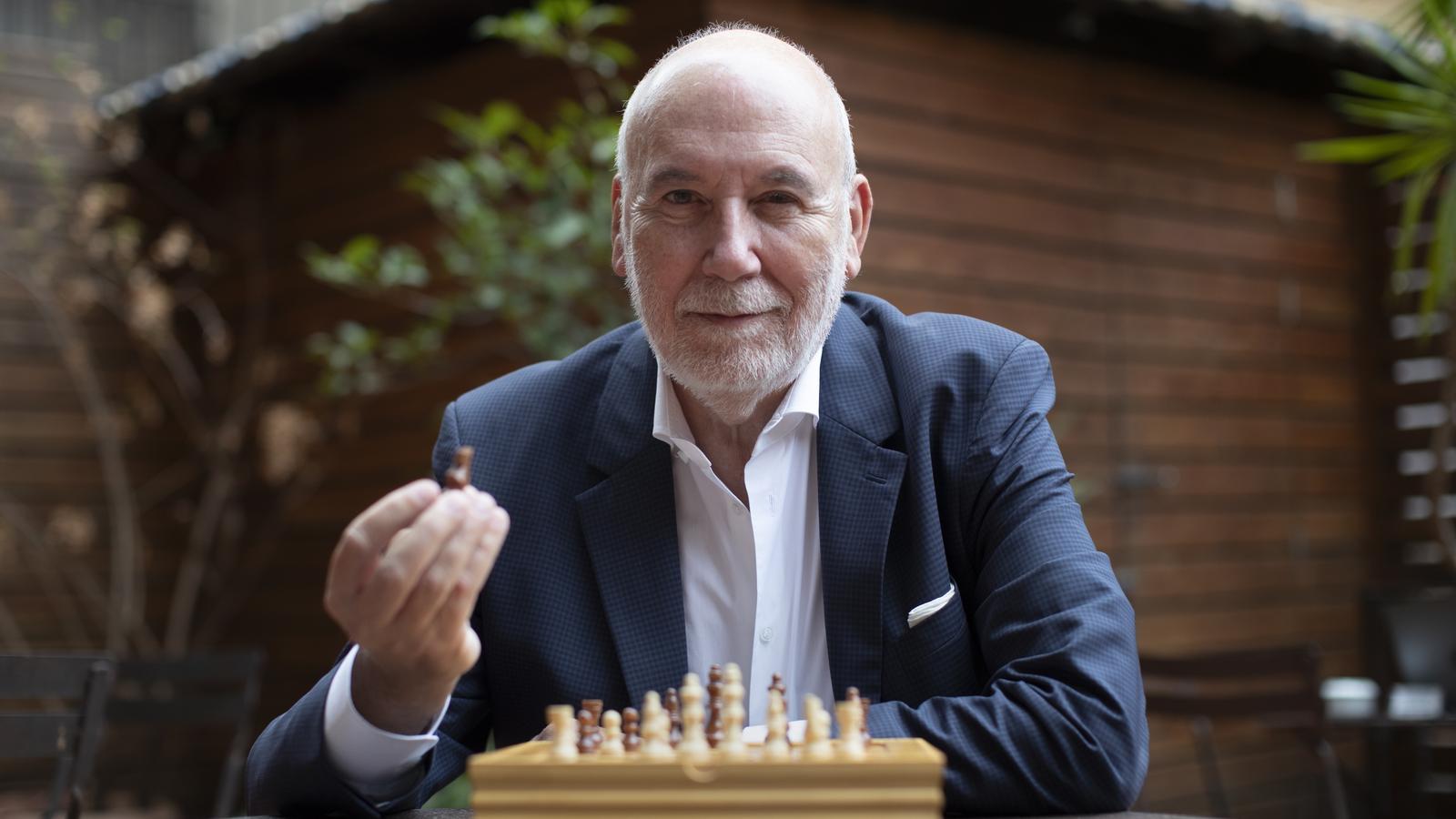
Màrius Carol (Barcelona, 1953) directed The Vanguard Between 2013 and 2020, during the turbulent years of the Catalan independence movement and the October 1st referendum. A veteran journalist and author of several books, he says his profession has opened many doors for him. Including those in the world of wine.
What is your first memory of wine?
— My maternal grandfather was a glassblower. I remember that when I was a child, he made me a little porroncillo (a traditional Spanish wine pitcher). It's not that I grew up drinking wine, but when Christmas or some other holiday came around, they'd give me a tiny drop of wine mixed with soda water. Something that, well, would get you in court today.
Does the porroncillo keep?
— No… I suppose it must have broken. But I do still have some champagne glasses my grandfather made. They're very beautiful; you won't find any like them. The bowl is red, and the stem is clear glass. He didn't leave us anything, but I was thrilled to have these glasses. They're something that, in a way, connects me to my personal history.
When did you first become interested in the world of wine?
— I've always been interested in them. I've been lucky that my job has given me access to them. I was on the team of Giravolt On TVE, which was practically the first Catalan-language documentary program ever produced. And the first report I did was about Priorat wine. This wine had received a very favorable report from the FAO praising its characteristics and organoleptic qualities. When we arrived in Falset to film the report, we found that there were practically no wineries. There was the cooperative—beautiful, practically a cathedral—but little else.
And what did they do?
— We rebuilt a world that no longer existed. And it's true that when we went to eat, they brought us a wine with an enormous alcohol content. In the afternoon, we had trouble working [laughs]. We had to climb the church bell tower, and the stairs were tough.
Priorat has become a benchmark wine.
— I respect him a lot. At home I have a bottle of L'Ermita [de'Álvaro Palacios] saved for a special occasion. I also really like Gratallops. When Barça plays away in the Champions League, we get together with a group of friends—four or five from my profession—for dinner. We used to go to Fermí Puig's restaurant; since he died, we go to the Sepúlveda WineryIf things go well, we'll treat ourselves to a bottle of Gratallops.
He has previously stated that his job has made things easier for him.
— It has allowed me to taste wines that are very difficult to appreciate. I was obsessed with trying a Romanée-Conti. It's a wine you don't buy in a store; you buy it at auction. Finally, I was able to try a glass at a friend's house in the Empordà region, one day when he invited a very important winemaker over. He brought out a bottle of Romanée-Conti from 1973. The wine was past its prime. It had aged poorly. I tasted it, but I didn't feel anything special. But I can always say that I tasted it.
What's the best wine you remember?
— It was at Artur Carulla's house, who has a magnificent wine cellar. One day he gathered six friends and brought out a bottle of La Tâche from 1996 and one from 1998. The '96 was wonderful. I have it etched in my memory that I've never tasted a better wine. And we tasted some truly excellent things that day, mind you. But La Tâche, for me, is like Barça B compared to Barça.
When you say a wine is very good, what exactly do you mean?
— It's hard to agree on taste. But even if you know nothing about wine, the difference between a good wine and a sublime wine is noticeable. You'd have to have seriously impaired taste buds not to notice it.
Do you have a personal wine cellar?
— I have a small wine cabinet at home. And I'm proud to have good wines at a reasonable price. For me, this shows more that you're a wine connoisseur than just talking about the big names. It's fantastic to be able to drink a Château Lafite, but you can only do that the day you win the lottery or the day a friend—a rich friend—treats you. The great thing is being able to have your own collection of wines that might cost €25 or €30. Sometimes, Parker discovers these wines, gives them 98 points, and they become incredibly expensive. What shows you know wine, that you truly love the world of wine, is knowing that you've discovered things before they become benchmarks.
Does he have a knack for navigating the mysteries?
— Yes. And I must say I'm impressed that people are able to identify not only the region or the terroirbut the vintage. But that's not what I aspire to. With wine, I just want to have a good time. I'm very good friends with Quim Vila, and I love going to his shop and saying, "Hey, recommend something I might like." In fact, he once gave us a really fun tasting. He had us try several wines, and at the end, he put a Petrus in front of us, hidden away, to show we didn't know anything. Next to it was a perfectly decent but much more modest wine. When he asked us which we preferred, almost all of us said the modest wine. We made complete fools of ourselves. On the other hand, when he did the same thing with champagne, it was different: we got practically everything right.
In his memoirs (The captain's cabinDestination, 2021) explains that the night before October 1st was very long for you. Wine also appears.
— Knowing that the coming day would be long and difficult to manage, I invited some of my closest colleagues from the newspaper to dinner to start thinking aloud about how we would approach the next day, over a little wine and a good meal. Because we didn't know what would happen. In the end, you don't run a newspaper alone: it has an owner, it has readers, and it also has its history. I remember something my editor [Javier Godó] said to me, which I'm very grateful for: "Fifty years from now, when someone looks at the newspaper, I don't want them to be ashamed or hear that the newspaper didn't live up to expectations." It's a huge responsibility, like being put in front of a Ferrari and told, "Drive it to the finish line without crashing it." And it seemed to me that being surrounded by colleagues, people you appreciate and trust, was a good way to approach it. I was very grateful to them for joining me.
And how do you see that cover today?
— The photograph we published was a very graphic one, showing the police charging. The title, initially, was neutral, but in very large type: "The government represses October 1st." My editor told me he thought it was fine, and I think thatThe VanguardHe did what he had to do. When you see that cover now… Wow, it's incredible. It's funny, but…
Yeah?
— Sergi Pàmies and I left quite late; our after-dinner conversation must have ended around 2:30 in the morning. He went straight off to write a report on the night before the referendum: he visited several schools and saw how they were explaining to people what to do if the police entered, how to defend the ballot boxes… He was able to write a report on the events leading up to it. Anyway, we didn't toast to anything in particular that night, but the wine gave us the energy to get off to a good start.
From the years you were a correspondent for the Royal Household, is there any anecdote you particularly remember?
— At least in the nineties, those trips always included an official lunch or dinner, to which two journalists were invited. If you were a man, you had to wear a tuxedo; if you were a woman, a long dress. Some journalists didn't own a tuxedo or didn't feel like wearing one: it was a bit of a hassle to pack it in your suitcase, depending on where you were going. I didn't mind it at all, and that meant I often had to go. But I especially remember a trip to Jordan, when King Hussein and Queen Noor were still on the throne. We had dinner at the palace, which looked like something out of a bygone era. One Thousand and One NightsThe food was extraordinary, but it was all accompanied by fruit juice. Being a Muslim country, there was no wine. And you realize it's just not the same. That same dinner, with a good Pouilly-Fumé to start and then a good Burgundy with the meat… would have been absolutely memorable. Wine complements food. Having to drink water or orange juice with such wonderful dishes is one of the most disappointing things that has ever happened to me.
