Aitor Zabala, the Catalan chef who has made history in Los Angeles after receiving three Michelin stars at once
His restaurant, Somni, had only been open for seven months in West Hollywood

-
CAT -
CAST
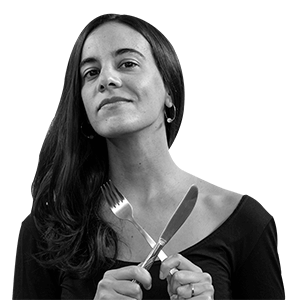
MadridOn June 25, 2025, a Catalan made history. He went from having no Michelin stars to having three at once. And he did it with a restaurant called Somni, located in West Hollywood, Los Angeles, which had only been open for seven months. The Californian city had never had a restaurant with the highest distinction. No one with a Spanish passport had ever achieved it beyond the border. All this happened to a chef with a Basque name from Sicília Street in Barcelona. "I'm a kid from Arc de Triomf who ended up in Los Angeles serving food to Tom Hanks," he said. This is the story of Aitor Zabala (Barcelona, 1979) and how he made his dream a reality.
Zabala appears on stage at Madrid Fusión, the largest gastronomy congress. Among the audience is a large part of his family, who live in Barcelona. The organizers say it was difficult to get him to come. Surely the possibility of reuniting with his loved ones, who are a pillar of support in his life, helped him make his final decision. Zabala is a person who speaks his mind as it comes to him. That's why he begins his presentation by saying that he is an immigrant in the United States. He says this intentionally, for anyone who wants to see beyond the surface. During his presentation, he will champion perseverance over talent. He will talk about failure, about not letting others define you, about finding partners who give you freedom. He asserts that "cooking is about making decisions" and that, in his case, making mistakes has allowed him to go further.

When he steps off the stage, Zabala greets ARA very cordially. His grandfather was a football player. Luis Zabala played for Athletic Club when he signed for Barça in 1941. His grandmother opened and ran a Basque restaurant, Udala. All the Barça football legends, like Kubala, and basketball players, would pass through there. His mother would also have a restaurant, just a stone's throw from his grandmother's. The family would live above it. And his love for cooking, however, came to him during his military service. "I was sixteen years old, a real rascal. I decided to do my military service because I didn't know what else to do." He was stationed in Zaragoza, in the Castillejos division. And they put him in the kitchen. "And I fell in love. The head chefs were civilians, they dressed in French style. I was hooked, and when I came back I said I wanted to be a chef." He studied at the Hoffman School. And two books made a lasting impression on him: The taste of the Mediterranean from El Bulli and The taste of Aubrac by Michel Bras. "I found a language and a way to express myself in cooking. It was like throwing gasoline on the fire," he explains.
El Sueño is a 14-seat restaurant with 22 employees. "I still think Michelin made a mistake and that now they're too embarrassed to call and tell us they're taking them away," he jokes. Regarding the attention he's been receiving since receiving the award a few months ago, he refers to another Barça legend. "There were people who didn't know us at all, and, as Pep Guardiola said when he mentioned the small country, I was in a small restaurant in Los Angeles. And it's been an explosion." What Zabala does want to make clear is that the road hasn't been easy.
El Sueño dies, El Sueño is reborn
"It's not true that Sueño is just these last seven months," he emphasizes. The idea originated in 2013. It's 13 years in the making. It opened in 2018. It earned two Michelin stars. It was already showing promise. And then the pandemic forced it to close. This Sueño is actually Sueño 2.0. "Mentally, it was tough. You don't realize it at the time, but when you see that you won't reopen and that you'll have to start all over again..." In that first Sueño, his partner was the well-known chef José Andrés.
Zabala worked at ABaC with Xavier Pellicer, at Alkimia with Jordi Vilà, and at El Bulli, both in the restaurant and in the R&D department. It was there that Andrés met him and recruited him to work with him in the United States. Zabala likes to emphasize his immigrant background. "Being an immigrant makes things more complicated wherever you go. It's a stigma. I'm privileged. I went to the United States with a company that paid for my visa. I had nothing, and Jose [Andrés] gave me $300 in one-dollar bills. I thought it was a lot of money. 90% go there to make a living and look for a better future for their families." dream"Because it can be whatever each person wants it to be. When we received the three stars in Sacramento, I wore a t-shirt that said the United States was fueled by immigrants. People move out of necessity. I left because there was a brutal crisis in the world and the economic hardship was palpable. If I'd had the chance, I would have opened the restaurant at home," he explains.

What he likes about the country that has welcomed him, he says, is that it supports people with ideas. "And there's no stigma attached to failing. Failing is part of the process. That's what we should learn from," he explains. However, he acknowledges that he's been very lucky. Hard-earned luck. "Right now, I open at seven in the morning and leave at one in the morning on the days we're open. I'm not here by chance. I want young people who are working to see that I've been here too. There are moments of great insecurity, of unanswered questions." He knows that the eclectic cuisine of the Somni restaurant can't please everyone. It seats fourteen people per meal (and six more if you count the private room). On the menu, with exquisitely crafted dishes, you'll find tomato and onion sofrito, a sardine tart, and a pil-pil sauce.
Catalan, of course, is also present in the name. "I wanted a name that conveyed a sense of belonging. It sounds good in English, but I wanted it to be a name I felt strongly connected to and could stand behind. I love where I am and I miss Barcelona. I have the Barcelona rose tattooed on me and I'm a Barça fan." El Sueño was founded in Los Angeles where, in his opinion, there was a gap in this type of restaurant and a public eager to immerse themselves in the experience. Now he would like to expand El Sueño, improve the space, and have an R&D area. "I don't like monotony, I like change." He would love for Messi to visit, whose jersey his best friends gave him, but in reality, the person he would be most thrilled to see is his mother, who hasn't yet seen the new restaurant. "The family has suffered a lot in the process. I want her to know that without them I wouldn't be where I am." He also remembers his team, the other great pillar of his life. Zabala is hardworking and persistent, and he sums it up like this: "I don't want to be the best in the world, but I want to be better every day."
