The CNI warnings portray the Spanish government

-
CAT -
CAST
BarcelonaThe declassification and publication of reports from intelligence services and security forces regarding the Ceuta crisis has not improved the position of the Spanish government, quite the contrary. The documents show that the CNI issued warnings, both to Moroccan and Spanish authorities, that a massive call was taking place on social media to enter Ceuta, taking advantage of the Throne Day holiday. Specifically, the CNI alerted that there were "especially active" profiles on WhatsApp and Facebook calling for a massive entry, with a potential reach of 180,000 people.
It is difficult to understand the insistence of Pedro Sánchez and the rest of the members of the Spanish government—and especially the Minister of the Interior, Fernando Grande-Marlaska—that they were not warned. It can be argued, as the Spanish government does, that the CNI did not alert with a 100% certainty of a massive entry attempt, but the evidence it puts on the table, added to that of other border agencies that produced similar reports, proves that there were more than enough reasons to activate border reinforcements and prepare for the worst-case scenario. The Spanish government hides behind the fact that the CNI did not send a formal alert nor notify any member of the executive. In any case, these are procedural issues that will have to be clarified but do not absolve the authorities of responsibility. The Spanish government's response—or rather, the lack of response—portrays an executive that was completely overwhelmed by the situation that day.
The other flank that also does not favor the theses of the Spanish government is the assessments made in the reports regarding the attitude of the Moroccan authorities. It is not only that they ignored the warning from the CNI, but also, as is denounced in some document, there was also "passivity in the face of the migratory wave" in the case of Ceuta. Mind you, there is no mention at any time of active participation, and from the reports it cannot be concluded that Morocco organized the massive entry, but it is evident that it did nothing to prevent it and, on the 30th and 31st, it acted in a negligent and passive manner. This is the point that, with an investigation open at the National Court, may end up complicating even further the strategy of the Spanish government, which insists on exculpating Morocco and highlighting its collaboration in the following days.
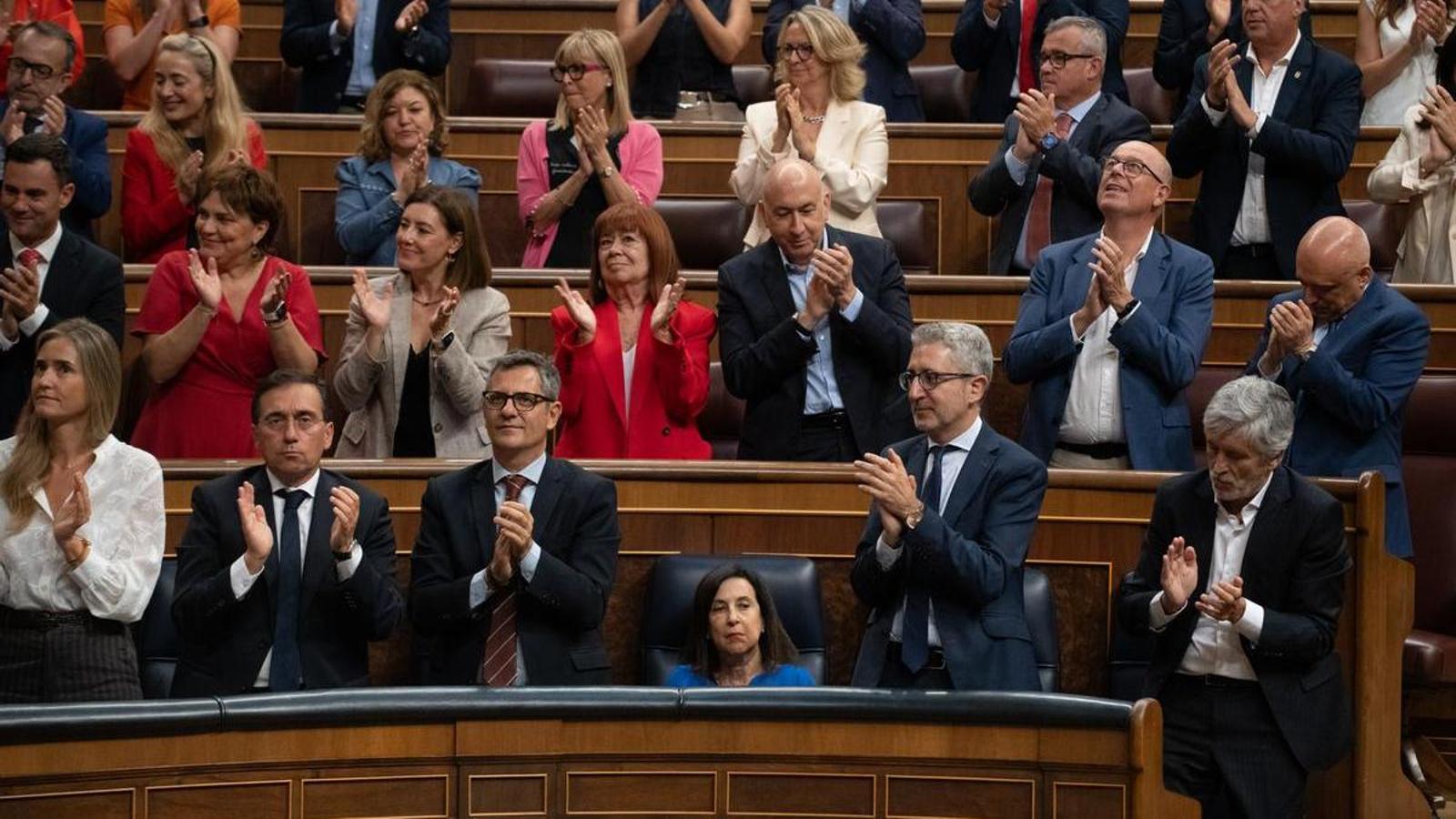
In short, the publication of the reports reinforces the position of the Minister of Defense, Margarita Robles, before her cabinet colleague and head of the Interior, Fernando Grande-Marlaska. That is why it is not understood that the entire executive, starting with Sánchez, has aligned itself from the very first moment with Marlaska and against Robles. The Ceuta crisis leaves the Spanish government very battered, with a serious crisis of credibility and internal cohesion both due to its own errors and the murky role of Morocco in this entire episode. And it seems that after the publication of the reports, the crisis will not subside, but will escalate even further.
