The apartments, first to live in

-
CAT -
CAST
The data and figures on the situation of the housing market, inaccessible for both purchase and rent for a large part of the population, paint a distressing picture. One of the latest was the annual report by the Bank of Spain, which, in addition to reflecting the effort families have to make to pay for their living space and the risk this poses to growth, once again brings to the fore the need to increase supply. On the one hand, it calculates a deficit of 700,000 homes, which continues to rise. This is the figure that should be put on the market to curb price increases. But it turns out that there are at the same time 900,000 completed apartments throughout Spain, representing 3.3% of the entire housing stock, which are in the hands of non-resident foreigners or are intended for tourism, instead of being put on the market as residential supply.
At ARA, we have carried out an exercise with the data on beds in tourist apartments held by the Department of Business and Labor of the Generalitat. In 10 years, Catalonia has added more than 320,000, representing an increase of 123% in 2025 compared to 2015. And what is most striking is that they account for 91% of the total beds intended for tourist use, which includes everything from hotel rooms to apartments, rural houses, and even campsites, which, in comparison, have registered almost testimonial growth. Another important fact is that homes intended for tourist use have soared to represent almost half of the tourist supply, whereas ten years ago they were only 29.9%. All this reveals the boom of this formula that distorts the housing market, especially the residential market, which should be a priority, as it is an essential good guaranteed by the Spanish Constitution.
Although the distribution of this supply is not homogeneous, it is gaining ground in a fairly generalized way throughout the territory. And Barcelona is not the only case. According to the analysis, a small municipality like Naut Aran is an extreme case with a proportion of 3.67 tourist apartment places per inhabitant, followed by Port de la Selva (3.3) and Pals (3). In fact, there are 25 municipalities where tourists are expected to occupy more places in houses than the inhabitants themselves. They are found mainly on the Costa Brava, in the Vall d'Aran and in the central part of the Pyrenees.
It is evident that this avalanche of supply, stimulated by a profitability that exceeds that of housing for stable living, distorts the market, given that they are not a testimonial element. And it is a factor, not the only one, but one with an important contribution, that contributes to increasing the overall cost of supply. And it is not just a question of investment funds, but rather that many individuals who own more than one residence and even some traditional tourism sector players have embraced this formula, which gives them much greater profitability. This is a fact that has been observed in many cities around the world, which have taken measures to curb the phenomenon.
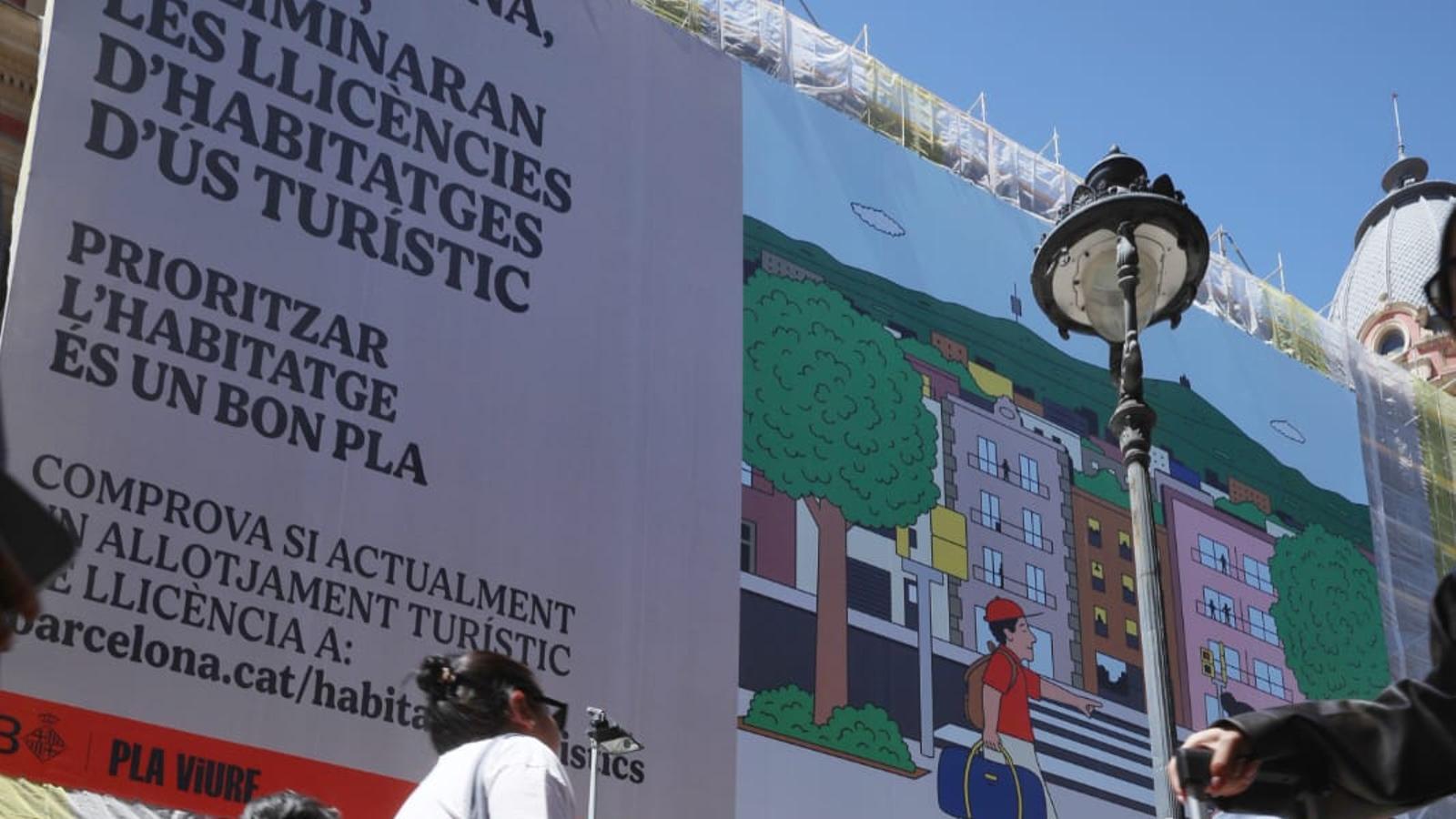
Barcelona has opted for the prohibition of tourist apartments in 2028, a measure that other cities in the metropolitan area want to imitate and implement. It is evident that there must be some regulation, even though there are no magic solutions. In New York, this type of supply was prohibited and housing prices did not go down. However, they rose less. It is already a start to achieve that apartments are, first, for living in, and then for other uses.
