Ignasi Pietx: "We have increasingly permissive legislation when it comes to the right to work permits"
President of Comertia and General Director of Artyplan

-
CAT -
CAST
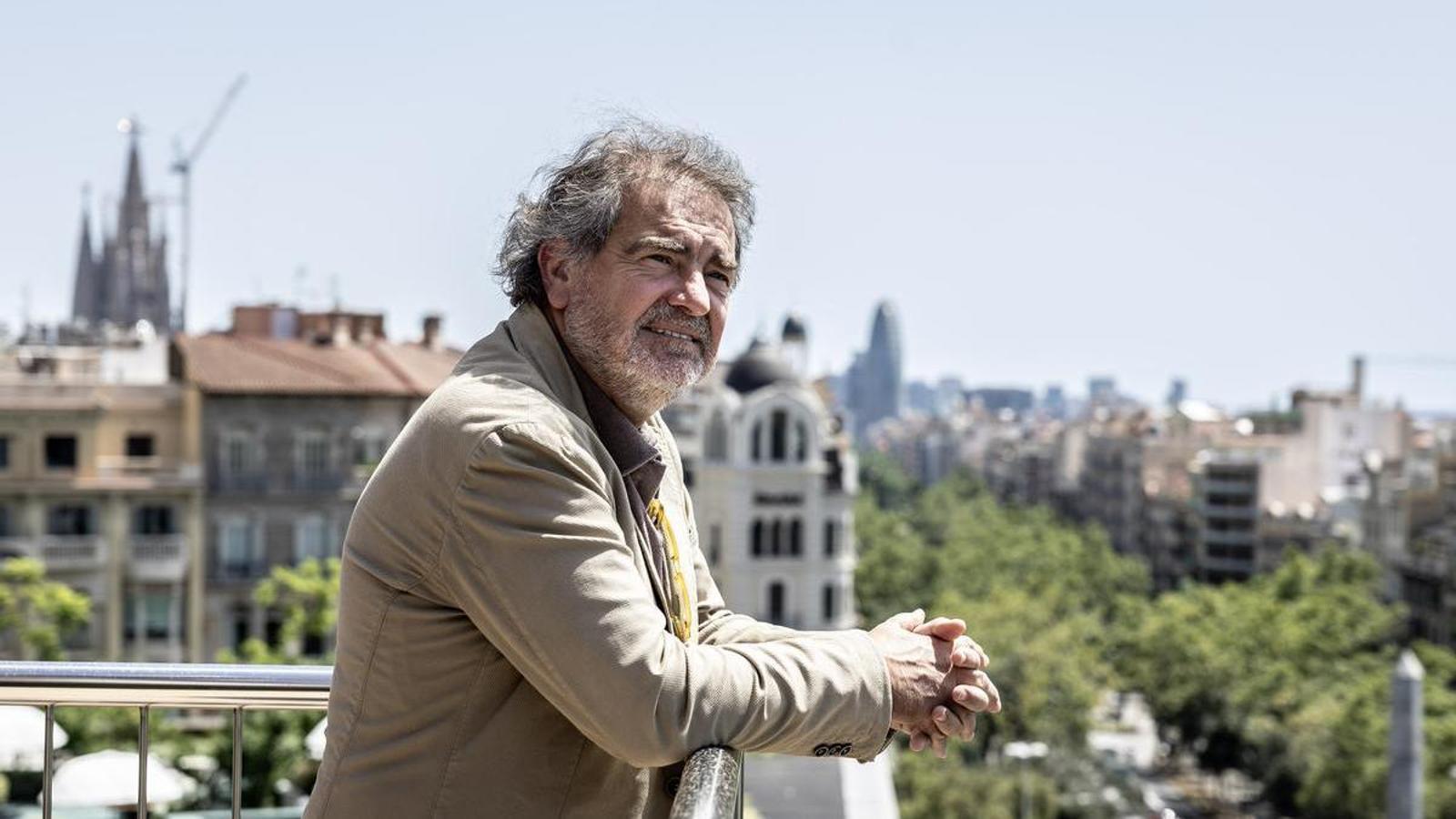
Ignasi Pietx (Barcelona, 1965) is the general director of the design and printing company Artyplan and current president of Comertia, the Catalan employers' association for retail trade. Just at the midpoint of his term at the head of the entity, the executive reviews the main demands of the Catalan family business in the retail sector, in two years marked by a good economic performance at the macro level, but at the same time a global instability that has diminished consumer confidence.This June marks two years since his appointment as president of Comertia. In all this time, has trade in Catalonia improved or worsened?
— I consider it better. If we refer to our indicator, in recent years we have had a constant increase in sales. The other thing is each business, which can be more or less affected depending on its activity and the impact that factors such as e-commerce may have. Large platforms engage in unfair competition against us. We do not ask for any kind of protection from the administration, but we do want to compete on equal terms, and today this is not the case. In many of our sectors, digital platforms from abroad, such as Amazon, Temu, or Shein, are doing us a lot of harm, among other things, due to tax regulations favorable to them. We are not against e-commerce, but it cannot be the case that companies from here have more administrative burdens than others. Companies from here generate quality jobs and pay taxes that help maintain the welfare state. When we talk about trade, we are not only referring to economic activity, but also to a way of life that we have here in Catalonia and in the European and Mediterranean environment.
And what should this model and way of life be based on?
— It is based on companies based in Catalonia, which means that the main and quality jobs are generated in Catalonia. And also that they pay taxes here. It is a local trade that knows its customers and wants to provide the best possible service. With digital platforms, we are heading towards a model that will force us to completely rethink our society if we want to maintain what we have known so far. Defending the Catalan retail model is defending a way of life.
How does tourism fit into this equation?
— We should by no means live turning our backs on tourism. On the contrary, we must embrace it, but with common sense. We must indeed limit tourism that does not generate quality spending in the country. Nor does it mean we have to make the city extremely expensive, but we must set some minimums, also in terms of quality, in everything we offer. We must not die of success.
The labor issue also concerns the sector. Is it difficult to find workers for local businesses?
— I think it's hard to find workers everywhere. Many trades have also been lost. Spain, a few years ago, adopted an economic model where it seemed like everyone had to study at university, and vocational training was left as a second-class thing, and this has consequences over the years. In the case of retail it gets worse.
How can the sector be made more attractive to the worker?
— The main drawback, from the start, is the schedules, but I would also say that we are making custom-made suits. Schedules can be made in the morning, in the afternoon, only on weekends, to complement the activity in case someone is studying. Besides this, it is an activity that, in the end, you deal with people and I think there is nothing more enriching than being able to deal with people.
From Comertia, have you also detected an increase in the absenteeism rate in recent years. How do you interpret the data?
— It concerns us, because the ratio has more than doubled since Covid, and I don't think a plague of illnesses has appeared. I believe that during the pandemic many people changed their mindset and it seems that working is a divine punishment. Besides, we have increasingly permissive legislation when it comes to having the right to work permits for any reason. Everyone has the right to get sick, let that be clear, and this social cost must be covered by all of us. But one thing is to exercise this right rationally and another is to abuse it. [...] Besides, healthcare is overwhelmed, resources are lacking, and we also have to help ourselves more with fines so that absences are as short as possible.
Unions argue that the increase in absenteeism rates also responds to a higher workload and job insecurity, among other factors.
— If you have a point of sale with five people and you are missing two, the three who remain have to do the same job. And if you treat customers badly, the wealth of that company will decrease, it will lose competitiveness, because customers will leave. This means that these three employees, from the outset, already have more pressure. Probably, the absence of these two people has a greater impact on the people who are working and making an extra effort. These might get sick from too much pressure or stress.
Barcelona has been recognized this 2026 by the European Commission as the European capital of proximity trade. How can this impact the city?
— It is a recognition of Barcelona and its model of city and commerce. And in the medium and long term, I believe it must open a debate and promote the proximity model that we defend. This 2026 Barcelona has hosted events such as the start of the Tour de France or the inauguration of the Jesus tower of the Sagrada Família, which put us back in the spotlight of the whole world. During the Colau era, ten precious years of the city were lost, which we must all reverse to make a more active and modern Barcelona that ends up impacting all of Catalonia.
