The "new quantum revolution" that wants to be in Catalonia
The sector celebrates the good moment of form that an industry with "almost magical capabilities" is experiencing in the country

-
CAT -
CAST
BarcelonaThe Minister of Business and Labor of the Generalitat, Miquel Sàmper, boasted last week about an achievement that seems unimaginable not only from Catalonia, but from anywhere in Europe: "We are at a similar level to the United States or China" in the development of deep technology, he assured. This is the quantum industry, one that seems to be part of futuristic fiction, but which is already doing business in the Principality.
According to a recent report by Acció, the Government's agency for business growth, in 2024 the country's quantum companies generated 91.4 million euros. A figure that, according to industry voices consulted, has been left far behind in the nearly two years that have passed since then. "It is much more now. Just one of the projects we undertake generates multiple millions of euros," they assure from the industry.
Quantum technology is that which takes advantage of "almost magical properties", in the words of Vanesa Diaz, executive director of the Catalan company Luxquanta, which studies quantum mechanics to develop "unprecedented capabilities" in technology. Its three pillars, celebrated by the sector, are capable of driving a leap forward in their respective fields: quantum computing, dedicated to performing calculations and simulations impossible for a traditional computer; quantum communications, capable of encrypting and transmitting information with total security; and quantum sensors, infinitely more powerful than normal ones.
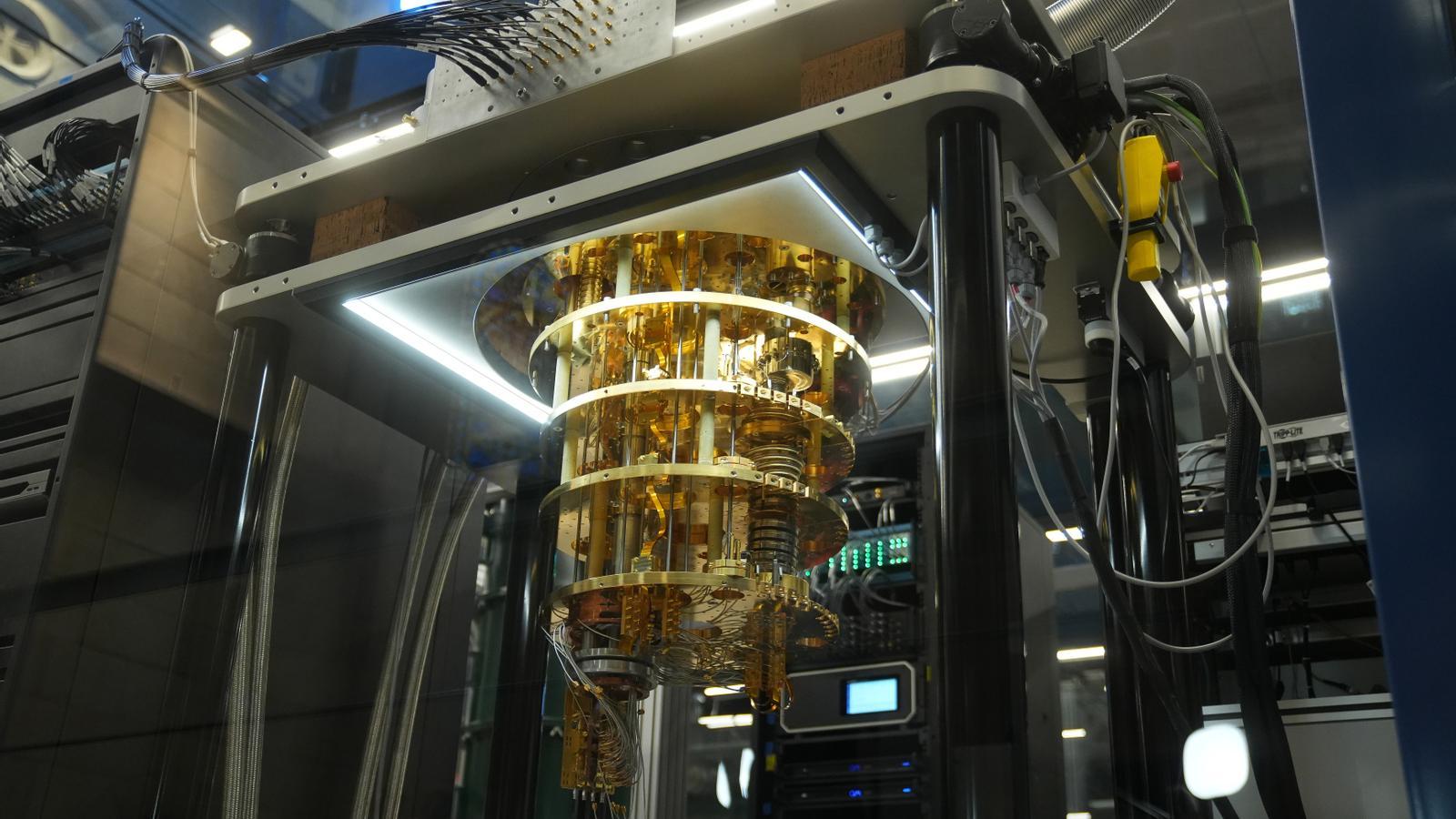
Catalonia, as Díaz recounts, is special because, unlike most European territories, it has its own business assets in all three columns of activity. Luxquanta, the company the executive directs, is a spin-off of the Institute of Photonic Sciences, and is dedicated to quantum communications. Qilimanjaro, a spin-off of the Barcelona Supercomputing Center (BSC) and the University of Barcelona (UB), develops quantum computers –like those already operating at the supercomputing center–; while Qurv, also originating from the photonic institute, offers quantum sensors for computer vision. In addition, ARQ Quantum Technologies accelerates the quantum internet with specialized memories; while QuSide also focuses on cybersecurity and supercomputing.
"It is highly unusual" for there to be this kind of concentration of technological proposals in a single latitude, the executive relates. And it is even more so that they are found at a sufficiently advanced stage of maturity to, as Acció's data shows, have already accessed the market. As the executive director of Qilimanjaro, Marta Estarellas, explains, the level of technological readiness is different in each of the three pillars: while quantum communications and sensors are at more advanced maturity levels, computing "is still scaling to reach the levels it needs to reach".
Imagining solutions
According to Estarellas, the "new quantum revolution" that is gaining traction in Catalonia comes from both vendors and buyers. On the one hand, the executive explains, technologies are developing at an unexpectedly rapid pace; so much so that they are beginning to have a clear path towards market solutions. On the other hand, "there is a very large demand," from companies and institutions that have long-standing technological problems they are seeking to address with cutting-edge technologies.
The sector acknowledges that, despite recent commercial achievements, it is still in its early stages. The 91.4 million euros invoiced two years ago by quantum companies are a drop in the ocean of Catalan ICT, which generated in 2025 a total business of 30 billion euros. Nevertheless, the consensus is that quantum is an emerging giant: "It's similar to traditional computers in the sixties or seventies," reflects the director of digital talent at MWCapital, Jordi Arrufí. In the expert's opinion, the final use cases "are not yet entirely clear"; and potential clients are testing the limits of the technology.
Estarellas, in this regard, believes that bringing devices to market is essential, precisely to discover what they will be used for. "If we accelerate adoption, there will be those who generate applications" on the technology; and the "gap" between the arrival of hardware to clients and the achievement of quantum advantage – that is, the point of development at which a quantum computer solves a problem with less time and fewer resources than a traditional one – will be limited.
The usual capital
This "evident scientific leadership" that Sàmper pointed out in his recent appearance before the sector clashes, as is tradition in Catalan deep technologies, with the wall of capital. The sources consulted agree that, as in other sectors with high scientific load, there are giant difficulties in financing the growth of a quantum project. Even more so in the case of the Principality, where all local companies specialize in hardware, much more intensive in terms of the investment that needs to be mobilized than in the case of applications.
The access of North American quantum companies to capital is incomparable with the state of the European market. In September 2025, the Californian company PsiQuantum raised a Series E of 1 billion dollars to build the "first commercially useful quantum computers". It had capital from the likes of BlackRock, among others.
On the other side of the Atlantic, the British Oxford Quantum Circuits mobilized 300 million euros at the beginning of June, shortly before announcing that it would bring its quantum computer production center to Barcelona. The laments of local companies are shared with most startups: "From a certain level of funding, it is very difficult to find capital. In the US there are enormous funds, but here it is difficult," laments Marc Almendros, partner at the Grow Venture Partners fund.
In the eyes of the investor, it is a "challenge" for capital to enter a market like quantum. Although there are companies that already generate activity, they are still far from the returns that specialized funds usually seek. "Patience is needed. The indicators we look for are different: the most important thing is to achieve milestones that validate the technology, that one can believe in it in the long term," he reasons. In this regard, Estarellas recommends "looking for investors who understand the idiosyncrasy of deep technology, who know they will not have returns next week".
Despite the difficulties in finding the essential funding to scale companies, the sector as a whole shares the desire to remain in Catalonia and the European environment whenever possible. "The desire to stay here exists, and I would like to make it viable," specifies Vanesa Diaz. It is the companies themselves that are "interested in the EU having technologies that are made here", as they have found that the Europe brand is a competitive advantage in an increasingly tense world. "There is no greater guarantee," adds the executive.
In this regard, the sectoral voices consulted praise the various investment programs that European institutions are launching, such as the Scaleup Europe Fund or the latest vehicles for venture capital from the European Investment Bank. However, they point out that the amounts are still not large enough. "Scaleup Europe is very good, but it has 5 billion euros for all technologies, when IBM has already announced 10 billion just in quantum," warns Estarellas. Díaz shares the analysis, and calls on Brussels to become even more active: "If there is a time to open your hand a little more, it is now."
