"Efervescence" of the quantum industry in Catalonia: 91 M€ in 2024 and more than 50 companies
The Minister of Business assures that the sector is "one of the few in which Catalonia is at a similar level" to China and the USA

-
CAT -
CAST
BarcelonaCatalonia aims to make the definitive leap into the market in the quantum industry. After years focused on "generating knowledge," in the words of the Secretary of Digital Policies of the Generalitat, Maria Galindo, the country is experiencing a moment of "quantum effervescence" that allows it to aspire to compete with international powers. According to a sectoral report prepared by Acció, the agency for business growth of the Department of Business and Labour, this industry invoiced 91.4 million euros in 2024 – the last year with definitive data; a limited figure, but one that the sector celebrates within the framework of still incipient deep technology.
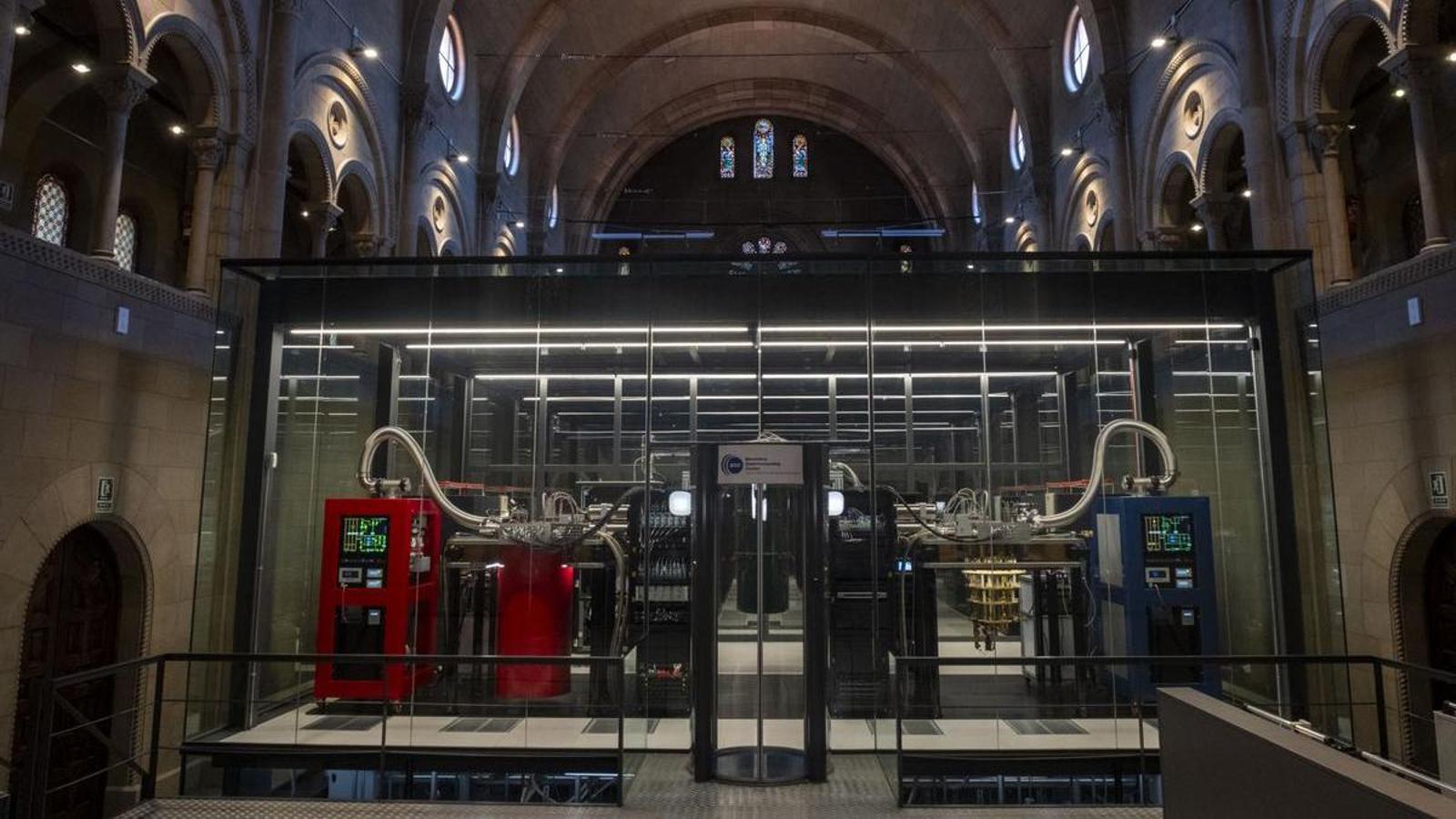
According to the document prepared by Acció, 52 companies dedicated to the quantum industry are already operating in Catalonia, thirty more than there were seven years ago, in 2019, when the last sectoral survey was conducted. Among the most notable profiles born in the Principality is Qilimanjaro, a spin-off from the Barcelona Supercomputing Center (BSC) that ewas responsible for the design of the institution's third quantum computer, presented at the end of May. Also Quside, emerging from the Institute of Photonic Sciences, dedicated to quantum photonic chips, or LuxQuanta, spin-off from the same center, specializing in quantum encryption for secure communications. In total, according to the public agency, they employed about 470 people two years ago. Still in the initial phases, more than half of the quantum companies located in Catalonia are small and medium-sized, and only 2% of the businesses generate more than 10 million euros.
In search of expanding leaps in the market, the Government has announced that it will mobilize 2.5 million euros per year from 2027 onwards in initiatives to boost the quantum market. The objective, they explain from the department, is to expand specialized companies, improve the training of technological talent, and activate demand from the sectors that can benefit most from it, from finance to industry 4.0, including aerospace or telecommunications.
In fact, in the words of the Minister of Business and Labor of the Generalitat, Miquel Sàmper, the quantum sector is "one of the few fields in which Catalonia is at a similar level to the USA or China", since "we have all started from the same point", and the local research network is of a particularly high level. In this regard, Sàmper aims to turn "the evident scientific leadership" of this industry in the Principality into "business leadership to generate industry".
A "counterintuitive" technology
Quantum technologies, as explained by Guiomar Ibáñez, an expert in identifying technological opportunities at the Catalan agency, are those capable of leveraging the "counterintuitive" characteristics of subatomic particles. The main technical applications of the sector are found in computing, secure communications, and sensors.
Quantum computers are capable of solving "problems too complex for traditional computers," with variables that are difficult to grasp, and can be used to develop new drugs, detect particularly hidden financial fraud, and simulate realities with a very high volume of data in precise digital twins, among many other applications. Quantum communications, thanks to the technology known as quantum key distribution, allow for absolute security in digital contacts between two points or users, and multiply protection in industries with particularly sensitive data, such as healthcare, air mobility, or the banking sector.
For their part, quantum sensors ensure much more precise measurements than traditional ones, and can be used to detect complex biomarkers, in the design of new materials, in aircraft navigation systems, or even, in the future, in consumer technological devices.
Regarding this multitude of use cases, the consulting firm McKinsey, in its recent quantum technology monitor, reported a global market size forecast of over 215 billion dollars by 2040, with computing as the main protagonist. The calculations of the North American firm, it should be noted, include both the turnover of companies and the investments that will be dedicated to them. The world's leading technology companies are already dedicating themselves to developing foundations, infrastructure, and solutions for the quantum era, with giants of the caliber of Amazon, Google, or Microsoft in leading positions.
For Sàmper, these applications will be essential to guarantee the performance of the Catalan economy in the medium and long term. "Catalan industry needs quantum to be more competitive," he assured. In this regard, at a meeting with various companies in the sector, he called to "walk hand in hand with everyone who can contribute something." On behalf of the administration, he committed to creating an "easy path" towards business growth.
