The gap through which the civil industry wants to participate in the defense pie
The sector recognizes that the investment boom in dual technology has reinforced the link between the two fields

-
CAT -
CAST
MadridWhich came first, the chicken or the egg? This classic dilemma easily arises when the focus is placed on so-called dual-use technologies and infrastructures, that is, technologies and infrastructures for both civil and military use. The concept has been popularized by governments and companies in the midst of an investment boom in the defense sector, especially in Europe – Spain, for example, has committed to reaching 2% of GDP in defense annually, although NATO believes it will have to spend 3.5% –. At the same time, it has been one of the member states that has most appealed to this dual use. The fact, however, is that it has always been part of the military industry.
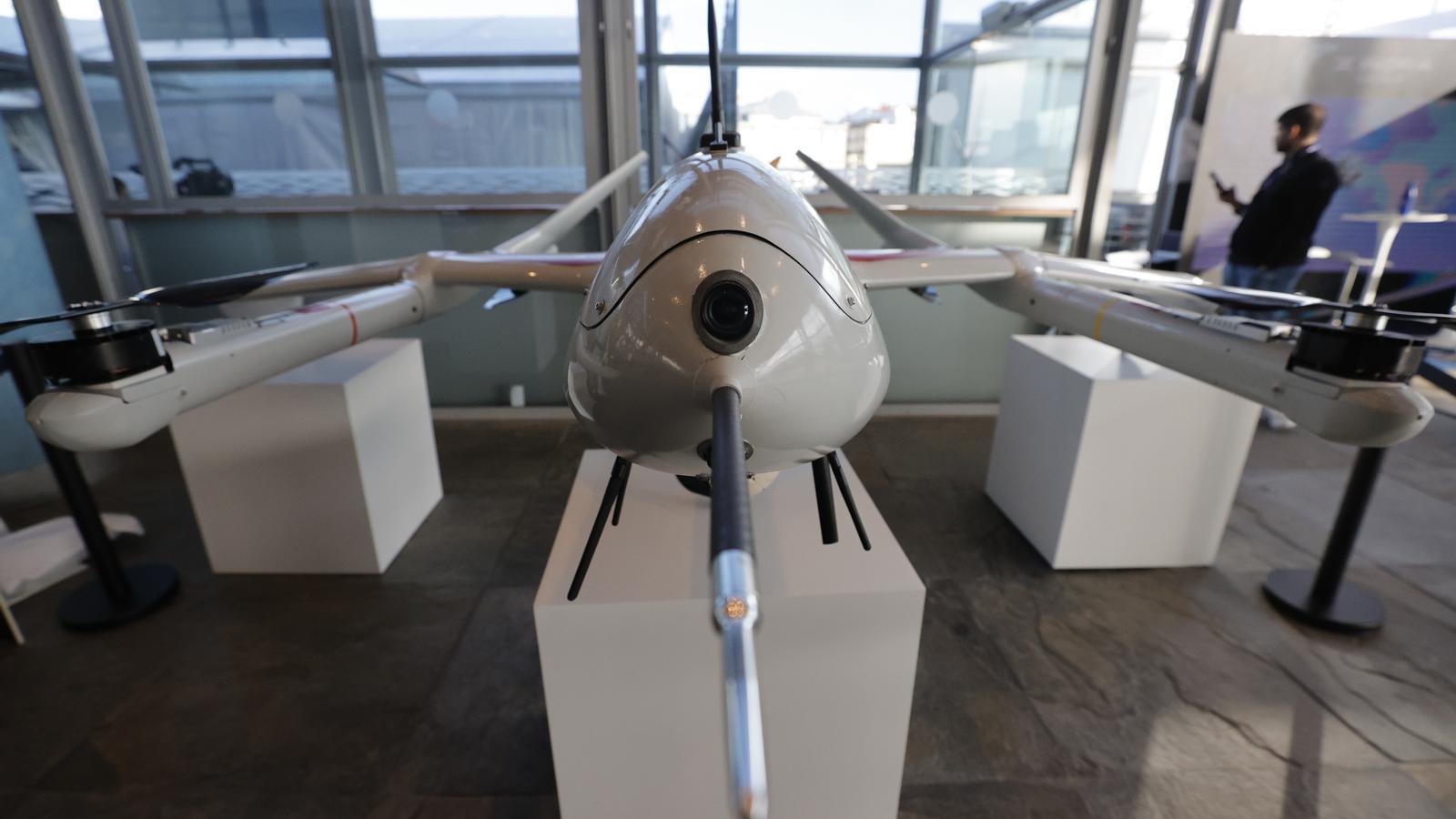
The clearest example is bridge-laying vehicles, which basically serve to allow a combat vehicle to cross trenches or obstacles. Its origin dates back to trench warfare and the development of the first tanks during the First World War. Over time, however, they have ended up being used in contexts of natural disasters such as earthquakes or floods to help the passage of large vehicles. Recently, the Ministry of Defense has presented drones with which the UME will be able to monitor fires at night. Previously they were used to inspect critical infrastructures, such as power lines, but also in combat operations.
However, in this context of a flood of millions, the sector acknowledges that the relationship between companies in the civil and military spheres has been strengthened, which has resulted in new agreements between companies from both worlds. However, "dual technology" is not positioned as the main motive behind the push for investment. An example is the agreement between the defense company Indra and the Catalan multinational Ficosa, dedicated mainly to the manufacturing of vision and detection components for automobiles, signed in October 2025.
It is also acknowledged that, as a result of the surge in demand – orders mainly from governments – and its sophistication, attention has been paid to how other civil industries have advanced, for example the automotive one, to explore possible synergies.
Business and army, divergent needs
All of this, however, also presents limits, admit different voices consulted by the ARA, starting with the real duality of some of these technologies. That is to say, even if a program, for example a GPS one, or a component for the field of cybersecurity could serve for services such as communications or healthcare and at the same time for a missile system, the requirements demanded will be, in practice, different, which makes their quick and simple application difficult. "Military applications prioritize reliability and resistance in demanding environments, while civil ones usually seek a balance between cost and performance. These differences can generate divergent development trajectories and cause a technology to lose its dual application," is noted in an analysis by the Elcano Royal Institute prepared by the expert Carlos Martí. At the same time, it poses a challenge regarding the monitoring of direct investment in this activity, the military one, in particular by companies.
In the Spanish case, the third point of the Industrial and Technological Plan for Security and Defense of the Spanish government approved in 2025 had among its main objectives to promote, precisely, "dual technologies so that they help consolidate the good progress of the economy and the modernization of our productive fabric," as can be inferred from it. Sources in the sector believe that this is a lure for some industries that until now had not been interested in defense to start getting interested in it. We are talking about those linked to space and aeronautics, with a focus on satellites and drones. Also cybersecurity – telecommunications and communications, programming or computing –, electronics and, finally, the automotive industry. "The duality, later, will have to be demonstrated," indicate the same sources, who warn that converting a civil technology into a military one is "complicated." Furthermore, the former are usually much more expensive. In fact, it is common for the civil sector to be the one that contributes to the development of dual technologies.
However, the defense sector acknowledges that it is also a way of presenting defense investment in a more "friendly" manner, especially in those territories that have historically shown more sensitivity towards this activity. Catalonia, for example, is playing a key role in this sense because it is the territory in the crosshairs of this dual-use and at the same time "soft" technology. "It is not the same to talk about communications control as it is about ammunition. Catalonia will never make missiles," asserted a voice from the sector to ARA. For Pere Ortega, a researcher at the Delàs Center for Peace, it is still a "fallacy": a technology conceived for a war context is presented as "civil" technology due to having a secondary function.

And when the war ends?
As a backdrop, the cycle the sector is experiencing. Companies dedicated to the military and defense field take it for granted that spending will peak at some point. Faced with this scenario, the industrial reconversion that many countries already suffered after the fall of the Berlin Wall and the subsequent collapse of the Soviet Union does not go unnoticed. "That was very socially costly," reflects an advisor in the sector. "Now everyone sees it as the deal of the century, but when the war in Ukraine ends, what then? And what if an agreement is reached with Iran? Well, perhaps the risks of an armed conflict will decrease and states will turn off the tap again and demand will fall," adds this source.
