The European Parliament unblocks the digital euro
The European Parliament wants to boost a European alternative to transaction services through cards offered by US brands
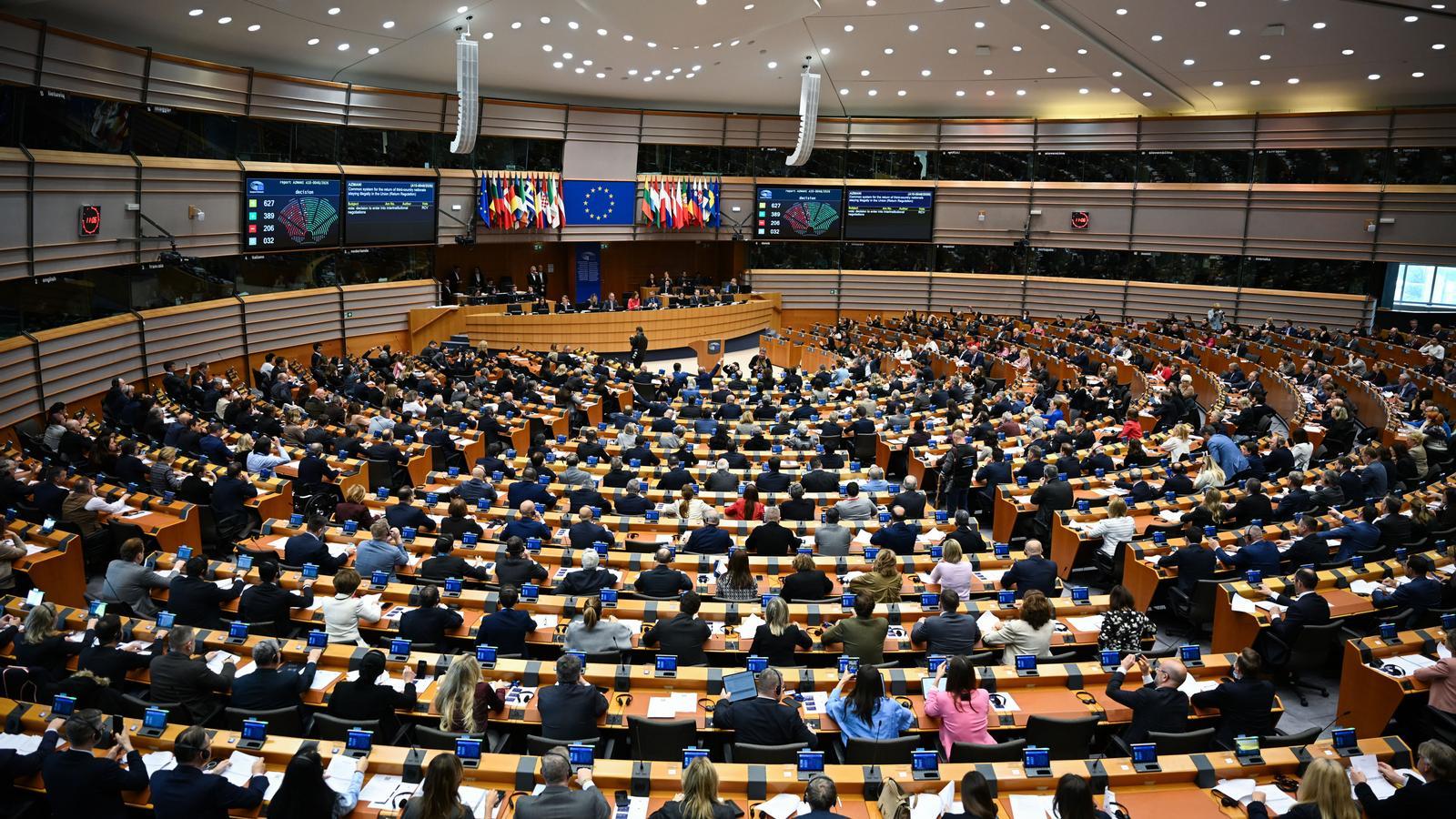

BrusselsThe constant threats and humiliations from Donald Trump against the European Union are accelerating the European bloc's process towards greater autonomy. The European Parliament's Committee on Economic and Monetary Affairs has voted in favor – by 43 votes to 14, with 1 abstention – to proceed with the creation of a digital euro, an initiative that had been stalled in the community chamber for years.
The measure aims to ensure that EU citizens can have an alternative to US companies that manage card transactions. In fact, the objective of the measure is for European institutions to stop depending on private companies from foreign powers, especially the United States. According to the ECB, 70% of payments made in the community territory are through Visa and Mastercard; a further 10% are processed through card networks such as Discover or American Express; and only 20% are managed with European state systems, but these cannot be used in other countries of the European Union itself.
The European Parliament wants there to be two versions of the digital euro, one that is connected to the internet and one that is not. Both will be legal tender, for both online commerce platforms and traditional stores. However, the creation of the currency that will not be connected to the internet, which will be the first in the world, will be a direct transaction between mobile devices, without going through an infrastructure that settles the payment and, therefore, can record the operation. In fact, it will have the same privacy as cash transactions.

Regarding the internet-connected version, the European Parliament intends for it to offer more features, and banks will be able to integrate it into their offerings. In this case, the European Central Bank will act as an intermediary and, although it will not know the identity of each user, it will be able to access the transaction register in case of suspected fraud, among other things.
The cost of transactions
The cost derived from managing transaction payments will have to be borne by the merchant and the companies that sell through internet platforms. And, therefore, opting for the use of the digital euro will not have any extra cost for the consumer. In fact, at present, the cost charged by US companies like Visa and Mastercard is also borne by the companies.
On the other hand, the European Parliament also supports setting a limit on the amount of digital euros a single user can hold. In this way, the Eurochamber wants to prevent citizens from deciding to convert their traditional deposits into digital euros at the beginning, which could cause problems in the solvency of institutions, as well as financial stability.
However, the Eurochamber intends to give final green light to the initiative in the July plenary. Then it will be able to negotiate with the Council of the EU – the body representing the member states – and agree on the final legislative text of the measure. And, in this way, the legislative institutions of the EU will have already given permission to the European Central Bank (ECB) to issue digital currency, as it has been demanding for years. In fact, the European Commission presented the legislative proposal three years ago, in the summer of 2023, and the national governments already gave it their approval at the end of 2025. The only institution that was putting obstacles was the European Parliament.
