Flexibility in aid and coordinated purchases: the EU presents the plan for the energy crisis
Brussels rules out generalizing the windfall tax on energy companies requested by Spain to the entire EU

-
CAT -
CAST
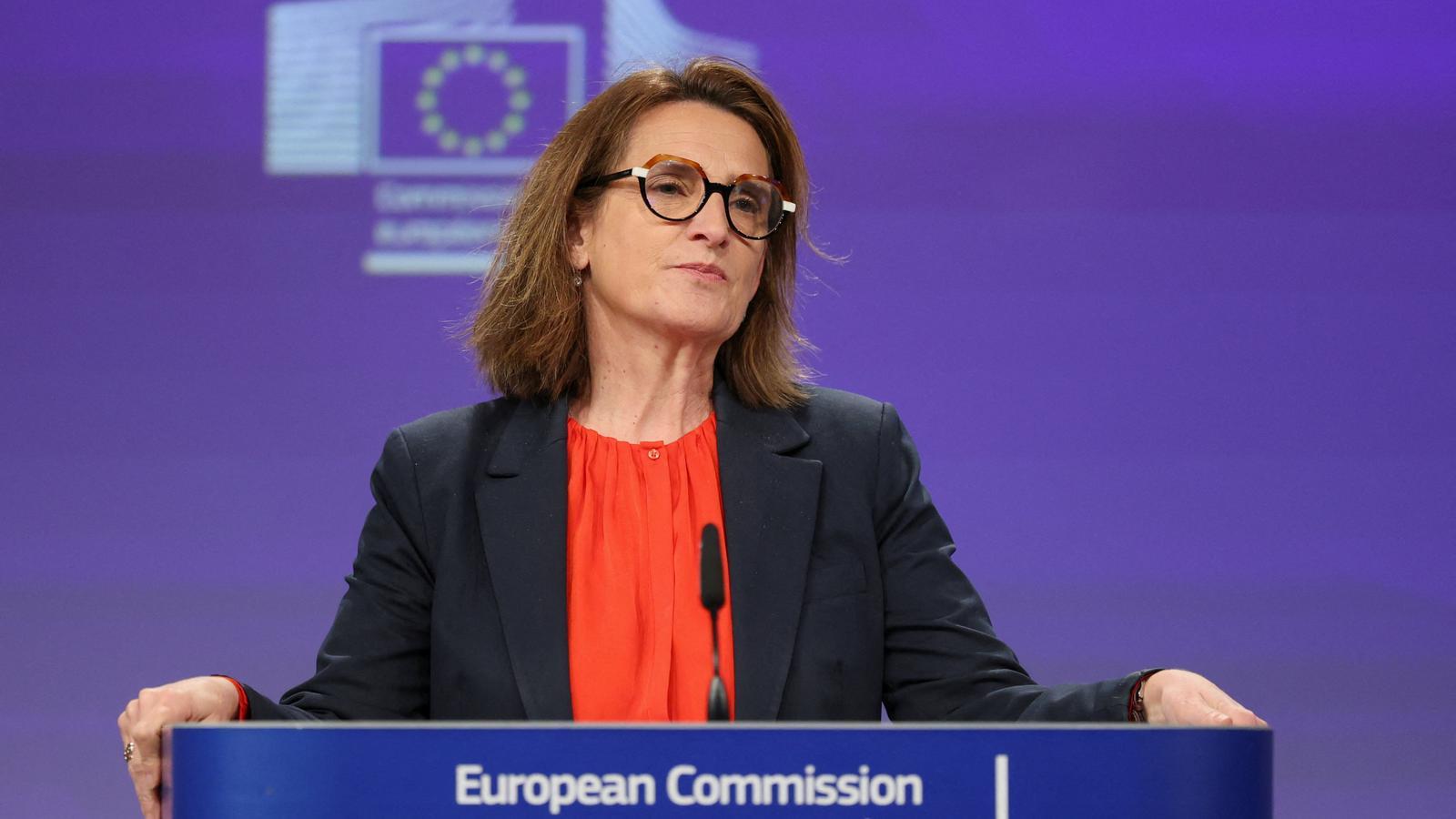
BrusselsWeeks after the blockade of the Strait of Hormuz and the resulting energy crisis, the European Commission has presented the long-awaited plan to try to mitigate its consequences. The main point is the flexibility of aid that state and regional administrations can adopt to reduce electricity bills, as well as greater coordination between countries in the purchase and storage of fuel to avoid competing with each other. On the other hand, Brussels has ignored the request of Pedro Sánchez's government and rules out generalizing the imposition of an additional tax on what are known as the electricity companies' "windfall profits", the additional profits they make when fossil fuel prices skyrocket.
Brussels will give member states more legal flexibility to apply exceptional and temporary measures, such as subsidizing part of the electricity bill or approving aid for sectors particularly affected by the rising prices of fossil fuels. Among other measures, the EU executive also allows, and recommends, subsidizing the electricity bill for the most vulnerable households and citizens, removing taxes on the installation of photovoltaic panels in homes, heat pumps or electric batteries, as well as tax incentives for the purchase of electric vehicles.
On the other hand, the European Commission will promote better coordination between member states in the purchase and storage of fuels, both to help each other and to avoid competing with each other when going to third countries to acquire energy. A similar measure to the one Brussels already promoted at the beginning of the war in Ukraine and the lack of gas in the European Union, which caused a much more pronounced increase in electricity prices than the current one.
Nevertheless, fossil fuel prices, which ultimately determine the overall price of electricity, are increasingly increasing the windfall profits" of energy companies. And, with the aim of preventing the economic effort of the consumer from ending up partly in the pockets of electricity companies, some member states, such as Spain or Italy, have requested to apply an additional tax on these profits.
“I am sure that [the European Commission] will respond to this challenge so that we can help consumers at this very difficult time”, insisted Sánchez this very Tuesday. For the moment, however, the European Commission has ruled out proposing the application of this extra tax on the exceptional profits of energy companies, although it has opened the door to allowing member states that wish to do so to apply it individually.

It is worth remembering that, at the beginning of the war in Ukraine, Spain and other member states had already adopted temporary taxes on the extra profits of energy companies on their own initiative. In fact, it was not until 2025 that Congress definitively rejected this tax measure in the State, after companies like Repsol threatened to withdraw investments in Spain.
In the longer term, the European Commissioner for Energy, Dan Jørgensen, has insisted that "the only way to stop depending" on third countries and to be "so vulnerable" to international conflicts, such as the war in Iran, is to accelerate the green transition and for the EU to "become an autonomous power in energy matters." "[The current crisis] is a wake-up call. It is now more evident than ever that clean energy means security, affordability, and independence," the community leader pointed out.
Along the same lines, the Vice-President of the European Commission, Teresa Ribera, has insisted on accelerating the energy transition to prevent the European Union from again being a victim of the "blackmail" exerted by some powers with energy. "It cannot continue to be a tool of war," pointed out the head of Net Transition of the community executive.
Goodbye to teleworking
At first, the European Commission had also studied the option of issuing a list of recommendations to citizens to reduce energy consumption in the European Union, but it has finally withdrawn it from the plan presented this Wednesday. Among other measures, Brussels proposed that companies that wished to could oblige their workers to telework one day a week and that state, regional and municipal administrations subsidize public transport, or even offer it for free. Furthermore, the European Commission has also considered recommending that citizens reduce air travel and lower their speed on roads to avoid consuming so many fossil fuels, in addition, for example, to closing public buildings when possible.
