Dies at 100 years Alan Greenspan, the neoliberal 'Maestro' who ended up admitting he was wrong
The former president of the Federal Reserve defended financial deregulation and tax cuts

-
CAT -
CAST
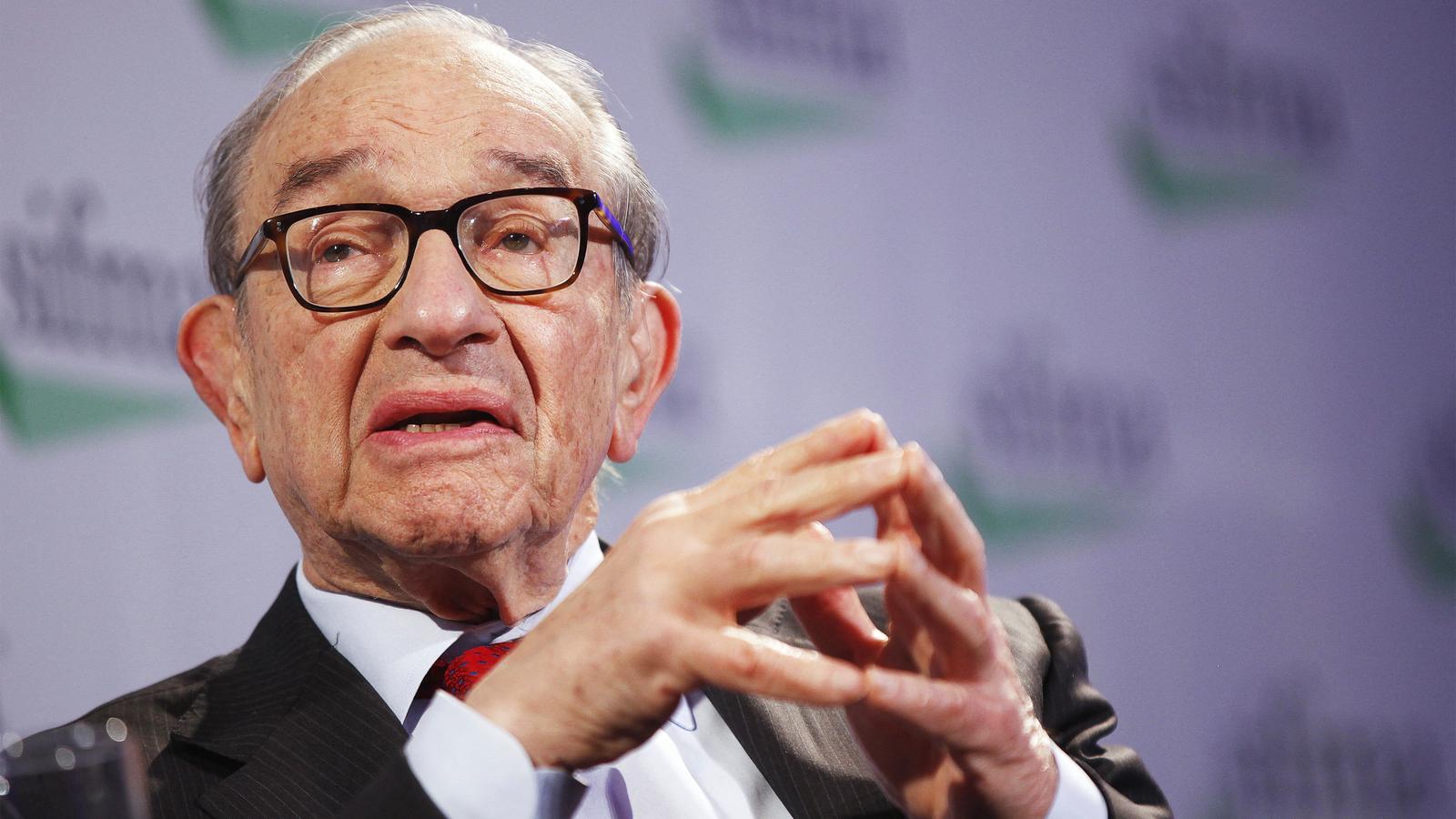
BarcelonaAlan Greenspan, the influential economist who led monetary policy in the United States during his five terms as chairman of the Federal Reserve (the Fed, the US central bank), died this Monday at the age of 100 from Parkinson's, as reported by NBC News. Greenspan was one of the most influential economists of the second half of the 20th century and one of the most prominent names within the neoliberal economic paradigm that began in the 1970s, which advocated for the independence of central banks, financial deregulation, free trade, tax cuts – especially for large fortunes and companies – and the privatization of public services.
The economist was appointed as the head of the Fed in 1987, at the suggestion of Ronald Reagan, who was then occupying the White House. He maintained the position with three successors of Reagan in the US presidency: George Bush Sr., Bill Clinton, and George Bush Jr. He was replaced by Ben Bernanke as head of the Fed in 2006.
For much of his tenure at the Fed, he became an almost unquestionable voice in public debate – he was known as theMaestro–, also in the political arena, despite being a strong advocate for the independence of central banks from governments, separate from elected governments. However, after nearly two decades at the helm of the Fed as a champion of laissez faire in the markets, part of the American public opinion turned against him, considering that his policies of deregulation of the banking sector had played a central role in the implosion of the financial industry that culminated in 2008.
Independence without neutrality
Born in New York in 1926 to a Jewish family with roots in Eastern Europe, Greenspan was spared military service in World War II in 1944 due to a lung condition. Four years later, he graduated with honors in economics from New York University and, after earning a master's degree from Columbia University, he began working first at a Wall Street bank and then for a business lobby. By 1955, he was already president of the consulting firm Townsend-Greenspan, a position he would not leave until 1987 to chair the Fed, with the sole exception between 1974 and 1977, when he led the Council of Economic Advisers for U.S. President Gerald Ford.
At the Fed, Paul Volcker, the first central banker of a technocratic and independent profile, fiercely fought against the high inflation of the 1970s and 1980s with interest rate hikes that caused severe recessions in the U.S. and sent unemployment soaring. With prices more under control, Reagan appointed Greenspan to replace him.

At the head of the institution, Greenspan maintained the idea that central bank independence is crucial for ensuring the proper functioning of the economy. An independence, however, that was not translated into political neutrality, as one of the criticisms Greenspan received most from the American left is that he always sided with liberal policies, such as privatizing social security or tax cuts. He didn't hide it much either: he openly declared himself "a lifelong libertarian Republican".
His management of the Fed is one of the reasons that explain the decade of uninterrupted growth that the US experienced between 1991 and 2001. Greenspan promoted financial deregulation like no one else, lowered interest rates that Volcker had raised, and pressured governments to open borders and markets to foreign competition. He found allies in the three Republican presidents with whom he coincided (Reagan and the two Bushes), but also in the Democrat Clinton.
It was precisely with Clinton that what, over time, his opponents have considered one of his "biggest mistakes" – in the words of Nobel laureate in economics Paul Krugman – occurred: the repeal of the Glass-Steagall Act, the law that prevented commercial banks used by citizens from engaging in large speculative investments. Greenspan strongly pressured Congress and the government in favor of the repeal, which opened the door to the explosion of the American financial sector.
The Fed's policies under Greenspan were defined as "easy money" and were combined with the little regulatory vigor of large banks, creating a perfect storm that exploded in 2007. US banks were able to grant mortgages freely, including millions of subprimes(mortgages given to people with little capacity to pay them), while large investment banks packaged these dubious credits into complicated financial instruments that were sold worldwide to other banks. When the real estate bubble burst, the banks continued until they were bailed out.
This is where Greenspan's second major dark spot of his 1999 term is reached: when he joined forces with Larry Summers, then Treasury Secretary under Clinton, against Brooksley Born, president of the CFTC, one of the regulators of the financial sector in the US. In tense discussions in Congress, the former Fed chairman and the now disgraced Summers managed to prevent Born from imposing controls on the banks that were developing those financial instruments that would end up spreading the problems of the North American mortgage bubble throughout the global banking sector and causing the worst global recession since the Great Depression.
The financial meltdown did not catch Greenspan at the Fed. He had resigned a year earlier, but the financial hecatomb put him in the spotlight even in retirement. Initially, he defended his management, but he ended up confessing, in a statement to Congress, that the crisis had shattered his ideological frameworks: "Those of us who have looked out for the interest of banking institutions to protect their capital, especially myself, are in a state of disbelief," he said. When a congressman asked him if he had discovered that his ideology "was not correct," the Maestro replied: "Absolutely. That is precisely the reason why I was in shock, because for more than 40 years I had worked with considerable evidence that it worked exceptionally well".
