John Hoffman: "20 years ago there was almost no local technology sector and now there is"
President and director of GSMA Ltd.
-
CAT -
CAST
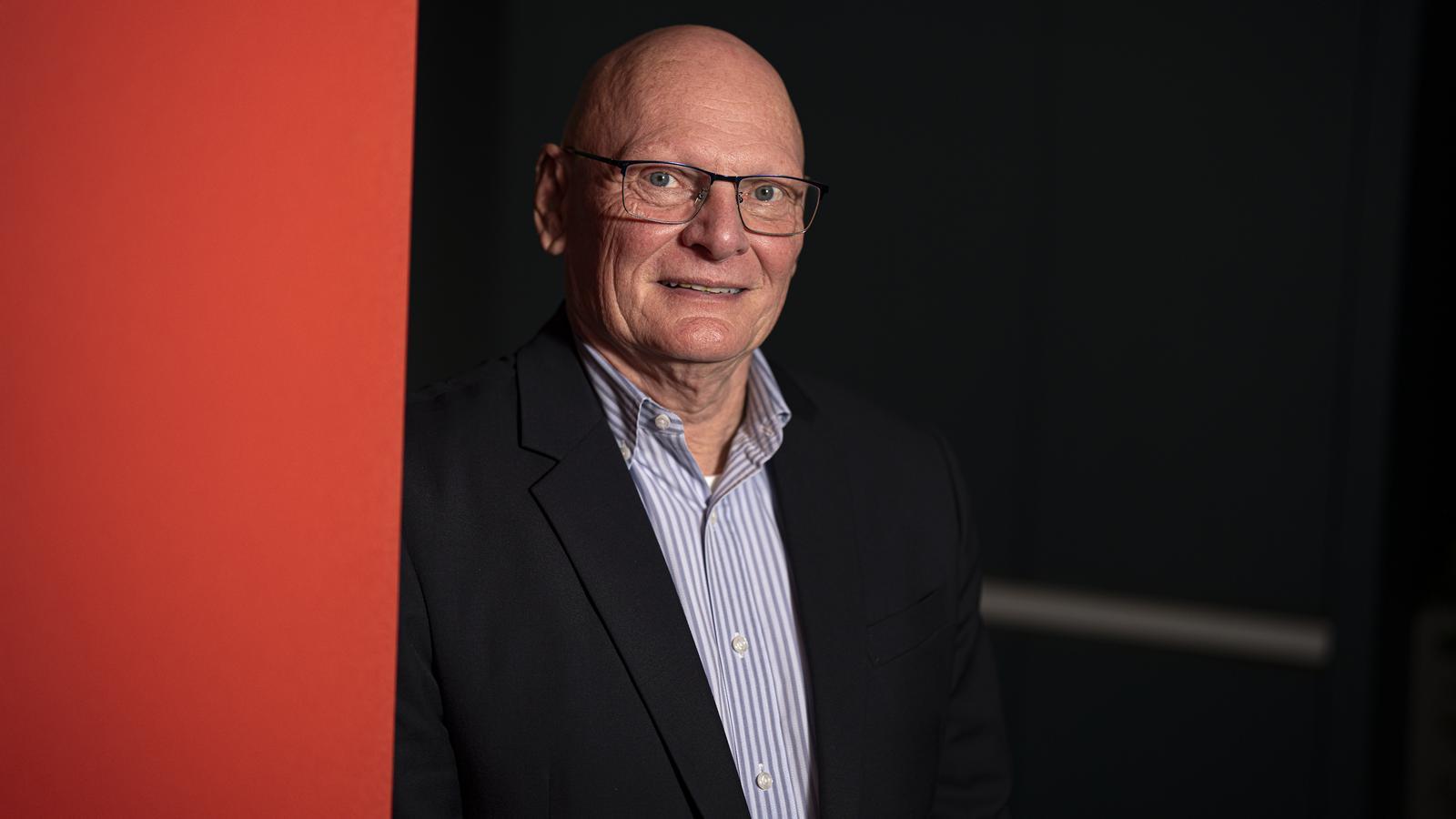
BarcelonaJohn Hoffman will face in March 2027 the first MWC after his change of position. The president and CEO of GSMA Ltd. stepped down from the day-to-day management of the congress organizer last summer, but remains the visible face of an event that has gone from being a mobile industry trade fair to being the meeting point for cutting-edge technologies from all over the planet. He meets with ARA after presenting the first novelties that will mark next year's edition, to talk about artificial intelligence, the fit with Barcelona and the relationship between the congress and Catalan deep technologies.
How has the planning of MWC 2027 been affected by the fact that it does not yet have the additional surface area of the future Hall Zero of Fira de Barcelona?
— It has forced us to innovate and optimize, and that is a good thing. Instead of thinking only horizontally, we have had to be creative, and think vertically as well. This means putting spaces one on top of the other, and using every square meter; it is a good exercise.
Is it a beneficial enough change to keep once the new space is available?
— We shall see. It is very positive to have an additional 60,000 square meters; but it is also a challenge to occupy the 60,000 square meters at once, because you have to create some demand beforehand. This is one of the reasons why we have focused on thematic verticals: the health program, the automotive one and the aviation one, we had started incubating them in previous years, so that, once we had more space, we could expand them and use the new square meters to grow quickly.
I was saying that verticals are gaining weight. Can we expect growth in the coming years? Within those that are already working, but also new ones.
— Yes, we would like to increase them. The first vertical we explored, surely more than 10 years ago, was that of financial services. The concept of money on the mobile, the possibility of using the device as a digital wallet. And, afterwards, we have focused on industrial applications. E-government is also an interesting vertical that we have not yet been able to fully explore.
You mentioned that some exhibitors have wanted to grow, but have not been able to due to space availability. Have opportunities been lost because of this?
— I do not believe any opportunities were missed in terms of exhibitors. But there are certainly things that could have had a larger scale. It has meant that some companies have had to focus on maximizing the space they have available.
Do they think it will be complicated to fill all the additional space in 2028?
— I remember when we made the leap to Gran Via from Montjuïc. Long before we moved there, people told us there was no way we would fill it, that it was too big a space. And it turned out that it was not. We have expanded our footprint to occupy all the available space. And, later, with the passage of time, we have optimized the space to make it as functional as possible. So I am worried to a certain extent about filling the 60,000 square meters, but it does not keep me awake at night.
What is the ceiling of the congress with the new space? Is there a risk that it will grow beyond the current capacity?
— No, I do not see any risk. I believe we must be attentive to remaining relevant. This is the great risk: if we are not relevant to the ecosystem, the exhibitors, the thought leadership program, the ministerial program, the startup program, the talent programs... Then there is a risk of decline.
Is it a concern for the future? Or do you notice an erosion in the relevance of the latest editions?
— I haven't noticed it. But every year we have to worry about being relevant. There were those who said that mass events would not return after the pandemic. Luckily, they were wrong; and we understood that there is a human need for interaction, and that the MWC is where our ecosystem meets.
The fit between the congress and Barcelona, then, enjoys good long-term health.
— I hope so.
What role does an institution like the GSMA, or the MWC itself, play in the debate on the regulation of artificial intelligence?
— GSMA has always been in a unique position. We do not pick winners and losers. We try to show paths to move forward; to develop highways, if you want to put it that way, for technology to evolve and succeed. And that involves many factors: regulation is one component, but also the evolution of technology, innovation... And the MWC provides all these things, in a very neutral context where differences of opinion can be expressed and compromises can be reached.
Has it been complicated to organize the congress at a time of such debate surrounding technology, with positions often contradictory to one another?
— It is a bit more complicated to do so because, as I was saying, we must remain relevant. We have to be careful not to let ourselves be dazzled [by a technology]. For example, ringtones: many years ago it seemed like they were going to be a major component of the future, but they have gradually faded away. We must embrace technology, but not do so excessively. The metaverse is another good example.
— The GSMA seeks the balance between the real levers of the future and finding ways to bring them together. And this is where connectivity becomes unique: without connectivity, everything remains alone. And what we want to do is provide an ecosystem to connect it.
Does it worry you that there are such different positions in the debate on the deployment of artificial intelligence?
— Fragmentation causes us a lot of concern. Convergence in the mobile industry took many years; we did not have global ubiquity until the fourth generation. And we do not want to have islands again. If you have an island, you do not have access to economies of scale, you do not have opportunities to design systems in one place that are used across the whole planet. Convergence is our goal.
They have announced the presence of SoftBank at the 2027 edition. What is the role of this type of large investor?
— It is proof that our ecosystem is attractive. Getting a company like SoftBank, with the investment capabilities it has around technology and cutting-edge computing, to be interested in coming to the MWC is a vindication of everything we are doing. We are still unique, we are still the best place in the world to discover opportunities.
You spoke about the importance of being relevant. How do you assess the state of the technology ecosystem in Barcelona? Is it evolving at the pace set by the congress?
— I do not think it is for us to judge. We provide a catalyst and put the spotlight on the sector. We have gone from being there for one week a year to keeping them there all year round, with the Mobile World Capital. The government and the industry have chosen Barcelona as one of the hubs of the deep technology sector, and I think it is going very well for them.
Are you satisfied with the growth of the deep tech sector in Barcelona?
— We are beneficiaries. A few weeks ago I was talking to people from the Barcelona Supercomputing Center, which is at the forefront of technological evolution. The key is to keep moving forward, because everyone wants to take your place. And I hope that Barcelona can maintain itself at the highest levels.
What can MWC and Mobile World Capital do to help maintain this pace?
— We are a tool for our ecosystem and we try to cover its needs. But we are also one for Barcelona, for Catalonia and for Spain. This was the great change that the creation of the Capital entailed: we went from being an event to being an organizer of technological forces. Mobile is at the core, it always will be: but Barcelona, Catalonia and Spain have grown in the deep tech sector and they have done so alongside the MWC.
Are you optimistic regarding the use that will be made of this tool?
— Yes, and it's fantastic, because it's part of the cycle. The more the local sector grows, the stronger the congress will be. And the stronger the congress is, the more opportunities there will be for the sector to grow. If we go back 20 years, there wasn't much of a local tech sector or a start-up community. And now there is. Is it the biggest in the world? No, but it is growing a lot. And it helps the economy and the citizens and creates jobs.
