Mozart and Jordi Savall: good taste and elegance at the Liceu
The maestro directs the revival of David McVicar's production of 'La clemenza di Tito'
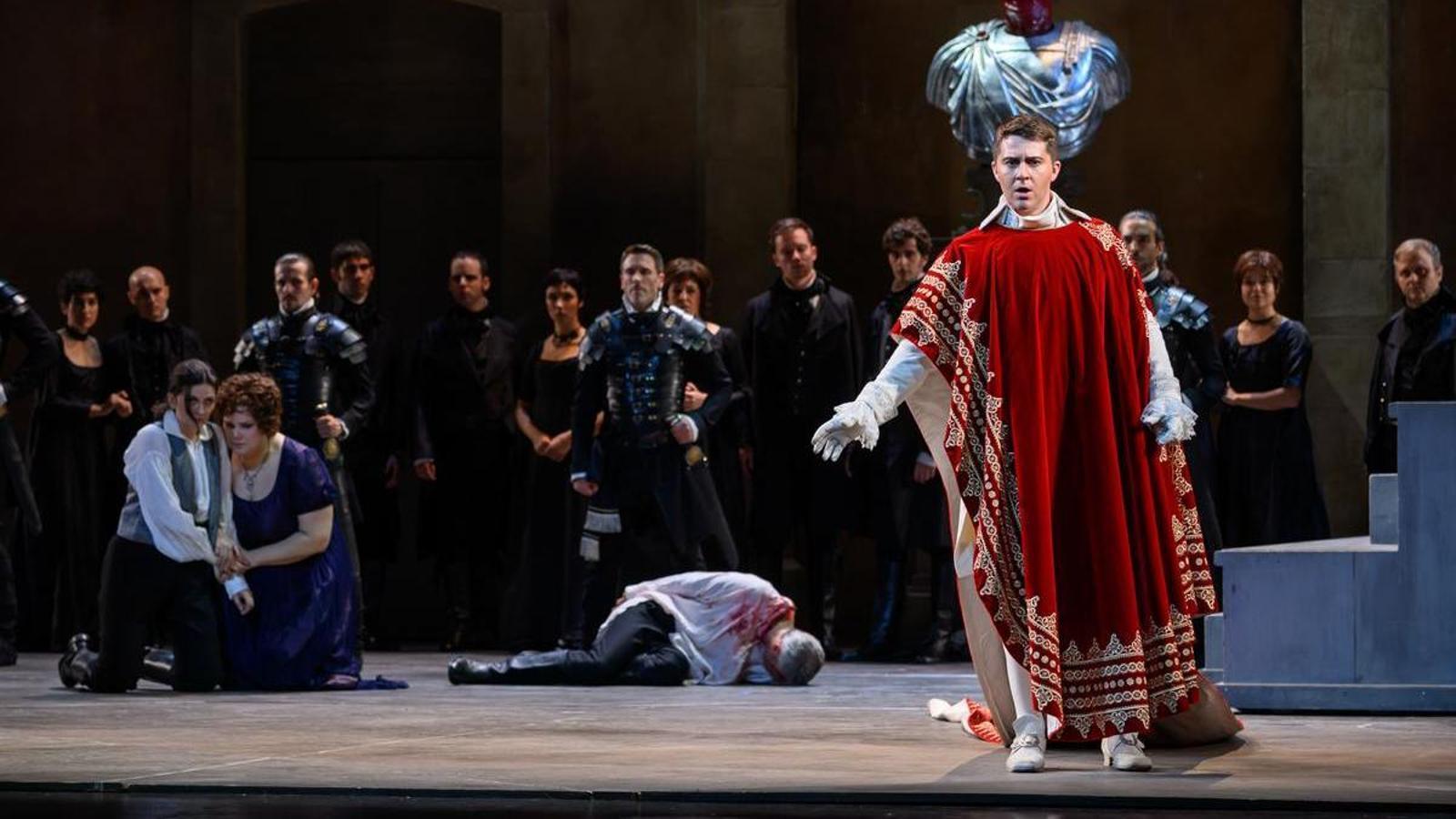
- Music: Wolfgang Amadeus Mozart.
- Libretto: Pietro Metastasio and Caterino Mazzolà.
- Musical direction: Jordi Savall.
- Stage direction: David McVicar. Revival: Leo Castaldi.
- Performers: Jack Swanson, Aurora Marthens, Marianne Crebassa, Lina Johnson, Marianne Beate Kielland, Gabriel Rollinson, David Greeves, Le Concert des Nations and the Capella Nacional de Catalunya.
Six years after having last been seen, La clemenza di Tito, the last opera in Mozart's catalog (though not the last one premiered), has returned to the Liceu. An opera written while the musician was finalizing the composition of The Magic Flute and which is a look at power; it was written on the occasion of the coronation in Prague of Leopold II as Emperor of Bohemia. It is said that, at that first performance, the monarch's wife, Louise of Bourbon, commented that the work was a “porcheria tedesca” (“German trash”). Perhaps the fact that Metastasio's libretto (arranged by Caterino Mazzolà) was being used for the fortieth time sounded like a déjà-vu to the Bourbon in question. Furthermore, and taking into account the recent outbreak of the French Revolution, the view towards the monarchy tends more towards Montesquieu and less towards Machiavelli: one must govern from compassion and not from authoritarianism. Another thing the empress did not understand. Nor did her descendants, who do not seem to be much up to the task either.
Luckily, today La clemenza di Tito is no longer a rarity and its virtues are appreciated despite the cardboard-like stage action. Perhaps that is why Jordi Savall has opted for rather slow tempos. And for preciousness rather than theatricality or dramatic expressiveness in stellar moments such as the climax of the end of the first act with the burning of the Capitol and the mourning of those present, with a background chorus that announces the imminent (and unfinished) Requiem. The version signed by the maestro (his first Mozart at the Liceu) is well-finished in the hands of Le Concert des Nations and the Capella Nacional de Catalunya, well-oiled by Savall's usual assistants, Luca Guglielmi and Lluís Vilamajó. Both as a whole and in the two numbers for obligato instrument – clarinet and corno di bassetto (bravo, Francesco Spendolini!) – the orchestral formation has signed a version in which good taste and elegance have taken over the pit and the chorus. But Mozart's theater always demands more.
David McVicar's production aptly emphasizes the weight of power that besets Emperor Titus, threatened by a praetorian guard during the final chorus which hints at his future assassination. We had already applauded it six years ago and now we have done so again, as often happens in the Scottish director's shows.
Jack Swanson is a tenor who occasionally produces throaty sounds with vibrato, but his Tito responds well to the demands of the score, overcoming the pitfalls of arias such as Se all’impero. Marianne Crebassa is, by far, the best soloist of the performance, with a Sesto featuring velvety low notes in passages like Parto, parto and in the concerted numbers. Her sinuous timbre and attention to ornamentation make her performance a true musical luxury.
At a greater distance, Aurora Marthens' Vitellia seems to hold back throughout the first act and does not improve much in the second. And, although she seems to unleash her full potential with Non più di fiori, the high notes sound splintered and the low notes suffer from inhomogeneous changes in color. Marianne Beate Kielland performs well as Annio, and Lina Johnson is a more than sufficient Servilia. Correct and little more than that is the Publio of bass Gabriel Rollinson.
