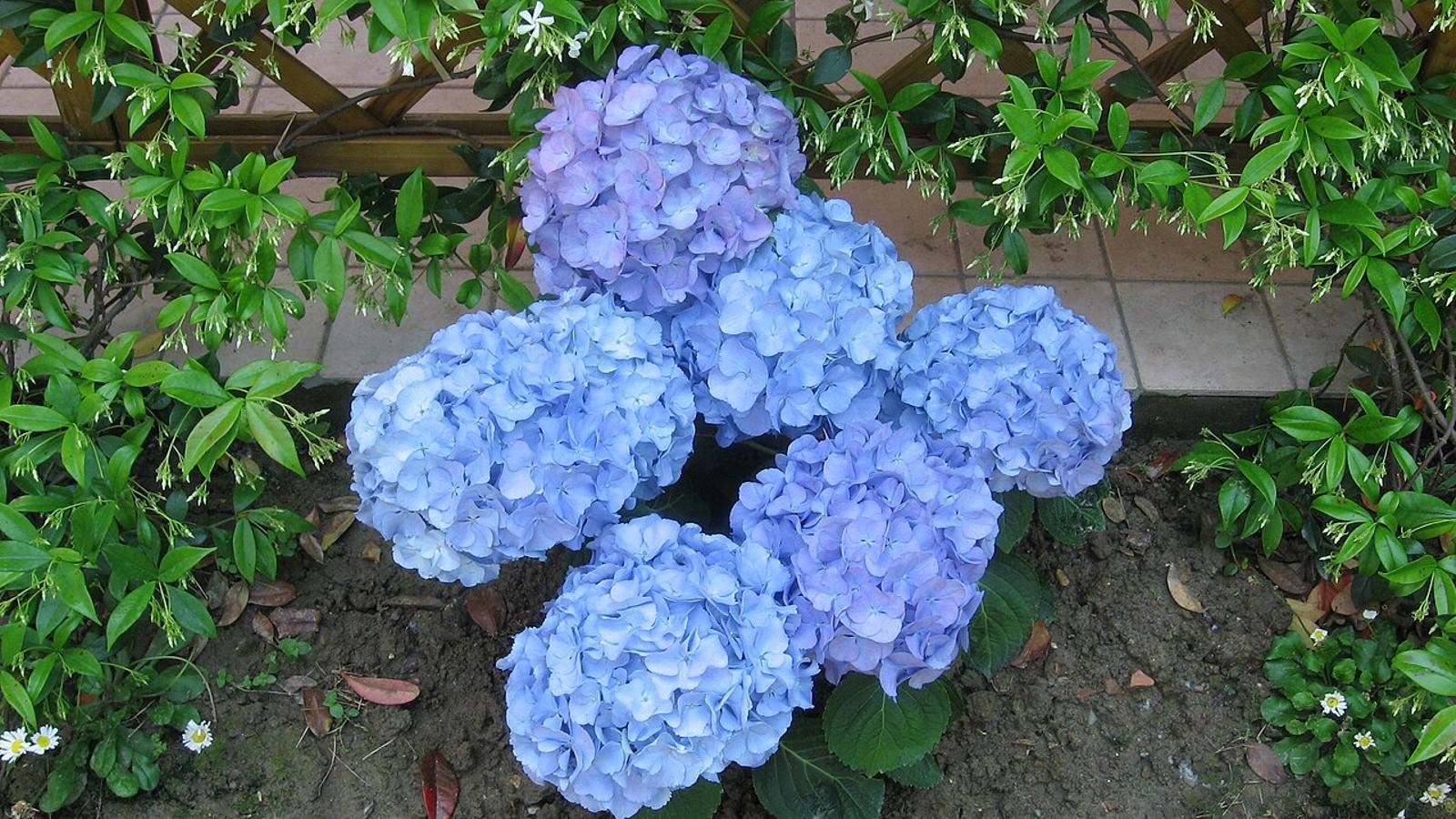
When the hydrangeas were blue

-
CAT -
CAST
BarcelonaThis summer we went to Brittany to rediscover a landscape that seduced us years ago and, above all, to be able to rest for a few days from the suffocating and overwhelming heat we had at home. We achieved this goal because the Atlantic air stopped the thermometers during the day and cooled the nights by the sea.
Despite fleeing the extreme heat, it was impossible to escape the so-called eco-anxiety, because in Brittany we found a situation we did not expect: a drought that had erased the green from the meadows and private gardens, which caused severe water restrictions and had altered the beauty of a landscape presided over by lush hydrangea bushes that were neither pink nor white – as Catalan ones usually are – they were an intense blue, sometimes lilac, which gave the area a very special personality. There I learned the trick one must use for hydrangeas to have such an intense blue: burying pieces of iron near the plant. Since what determines the color of the flowers is the acidity of the soil, gardeners add substances like aluminum sulfate dissolved in water; but the Breton ladies who spoke to me about it years ago used iron directly. This summer there was no trace of blue in the Breton hydrangeas. They were all burnt and the image they offered was desolate.
Desolate also, needless to say, was the scarce presence of Breton, only present – a symbolic presence – on road signs.
While I was there, I remembered the novel Les naufragages du coeur, by Benoîte Groult (published in Spanish by Asteroide with the title Los naufragios del corazón, we still don't have a Catalan translation), a wonderful love story between a young Parisian woman and a Breton fisherman (also the encounter between "civilized" Paris, which eliminated the local language with signs of "no spitting and no speaking Breton" and wild Brittany).
In the 1980s, complacent France was scandalized by Benoîte Groult's female protagonist, who acted guided by her desire and freed herself from the rigidity in which she had been educated.
I thought I would reread it with a different perspective and I recommend you discover it. The shipwreck of the title made me think of the shipwreck of the world we knew, when summers were not a torment, Breton was very much alive and the hydrangeas were blue.
