Valentín Roma promises an “incisive” Macba to flee from ‘photocall’ museums
The new director of the facility sets a plan until 2029, with a new reading of the collection and the goal of returning to 320,000 annual visitors

-
CAT -
CAST
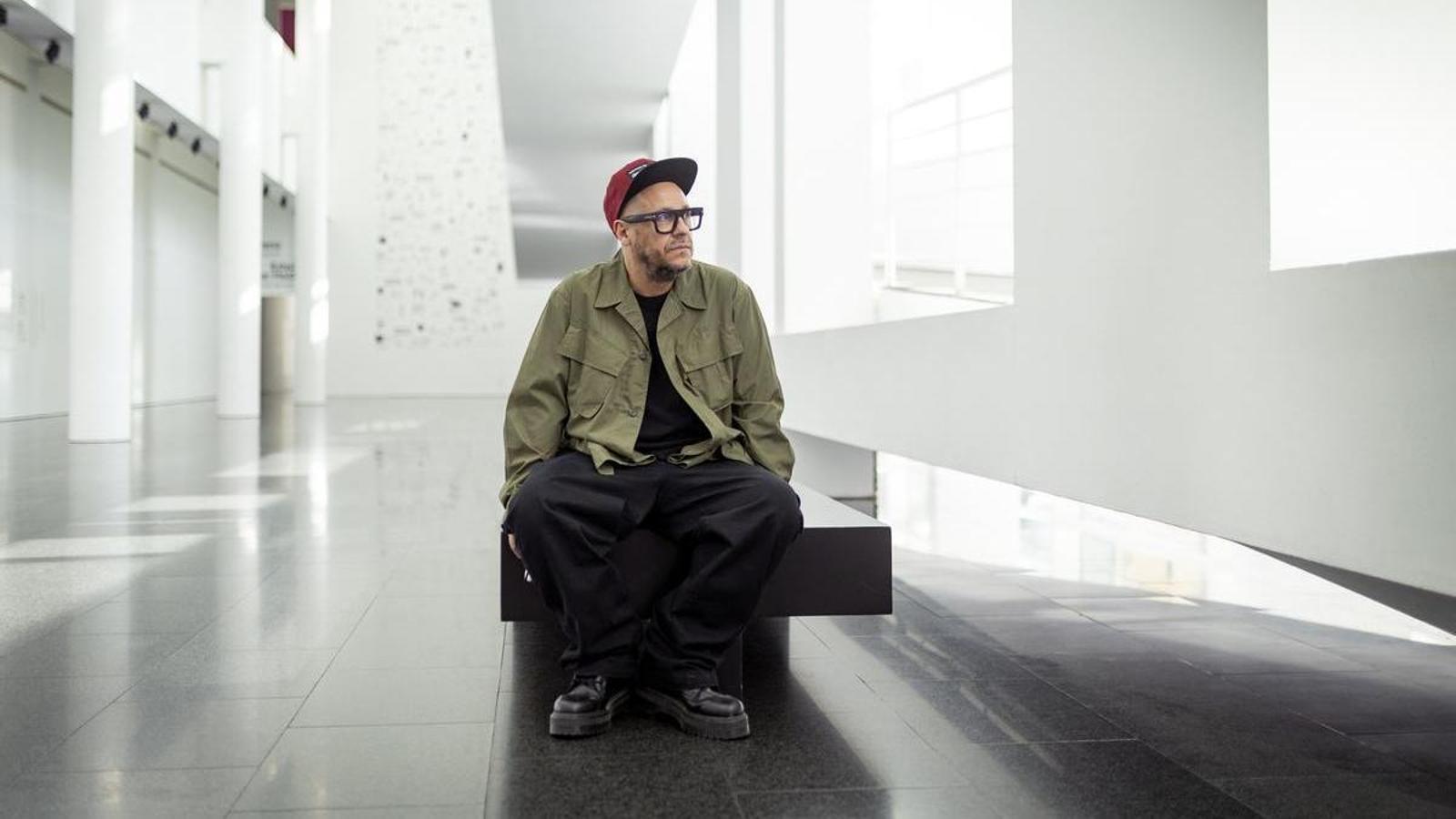
BarcelonaThe change of era at the Macba is becoming a reality. This Tuesday, the first speech by Valentín Roma as director sounded spot on: among the novelties he has put forward are a three-year master plan and the desire to change the contents, to go from the 200,000 visitors of last year to the 320,000 from before the covid pandemic. "In 2025, the Macba was visited by 200,000 people and that is clearly insufficient. We will not look the other way regarding this issue. We will face a growth process that will neither be easy nor immediate, but it will certainly be among our priority objectives," said Roma. Furthermore, he wants to develop "specific heritage plans" to exhibit the collections beyond the parameters of the "inventory," and an archive plan.
Even so, Roma has assured that he will not wipe the slate clean. "We are not drawing up a project for the refounding of the museum. We do not intend, in any way, to make tabula rasa nor a heroic amendment to the whole. On the contrary, this management wants to be tremendously respectful of the Macba's institutional memory and its work teams. That is why we are establishing lines of continuity that gather and give meaning to the best that has been done at the museum from 1995 to today," explained Roma, who in the presentation was accompanied by the Secretary General of Culture of the Generalitat, Josep Maria Carreté; the Secretary of State for Culture, Jordi Martí; the Councilor for Culture of the Barcelona City Council, Xavier Marcé, and the president of the Macba Foundation, Ainhoa Grandes.
In the next three years, there will be two stages at the Macba. The first will be from January 2027 to June 2028, during which Roma will roll out a dozen thematic axes and present the collection differently. The second will run from September 2028—when the inauguration of the museum's expansion is scheduled—to December 2029. "If we look at the history of the Macba, we will see that this museum has been a protagonist, a pioneer, and relevant when it has abandoned any of the multiple niches that, in the last thirty years, have surrounded museum institutions of our same scale," the director said. "When the Macba has built and above all sustained its own voice, its own institutional ideology, its own work philosophy, and especially its own critical vocabularies, that is to say, when the Macba has opened unforeseen paths and has been insubordinate to theoretical automatisms, when it has absented itself from the interchangeable nomenclatures that politically empty institutions, the Macba has been an incisive and at the same time decisive museum," he noted.
For Roma, the Macba is lucky that it is a museum that can still be defined "by the contents it proposes or investigates" and not by collateral elements like "a marketing idea or a star work or a target of visitors." "That is why we need to work with long-term perspectives, which allow us to take on proposals of great complexity with the resources we have at our disposal and without omitting any of the demands that are expected of us as the country's main contemporary museum institution," he said.
During the question period, Roma expressed his support for the museum's expansion and expressed his willingness to engage in dialogue with those who oppose it: "I believe very much in the expansion. But I believe the expansion is also dialogue. Museums tend to relate to social realities from their own nomenclatures. This is not a debate that is solved with nomenclature. We will have to explain, listen, and negotiate with other elements that are not the language of art."
Against museums as 'photocalls' for political conflicts
Roma has said that the uses of the museum will be key in her tenure, and recalled the title of the book by Alexander Kluge and Oskar Negt History and Obstinacy to reclaim obstinacy as a strategy to move forward: "We are working on a Macba that separates itself from the reactionary thinking that besieges culture today, but also from those tendencies that aim to turn museums into a kind of photocalls where political and historical conflicts are declined in the manner of harmless hashtags", she warned. "A Macba that publicly enunciates itself outside the slangs characteristic of the art system and that understands that museums occupy places of tension in the public sphere —continued Roma—. A Macba that faces its role within the ecosystems of our country and that aspires to occupy non-mimetic or simply reproductive places in the plots of international art. A Macba that relates to its territorial environment without paternalism and without retreating into endogamic rhetorics, with a proactive will and, above all, with tools that allow for understanding the diverse social realities".
All in all, Roma has defined a red line: she wants the word localto never be used again in her Macba because "besides being intellectually lazy, it is a term that is usually used as a synonym for quota, or to separate what is aristocratic from what is proletarian, that which deserves to be remembered and that which simply needs a quick glance".
