The secret journey of Penelope Fitzgerald: in search of an inheritance in Mexico
Jessica Francis Kane recreates an unknown episode to create a portrait of the British writer
-
CAT -
CAST
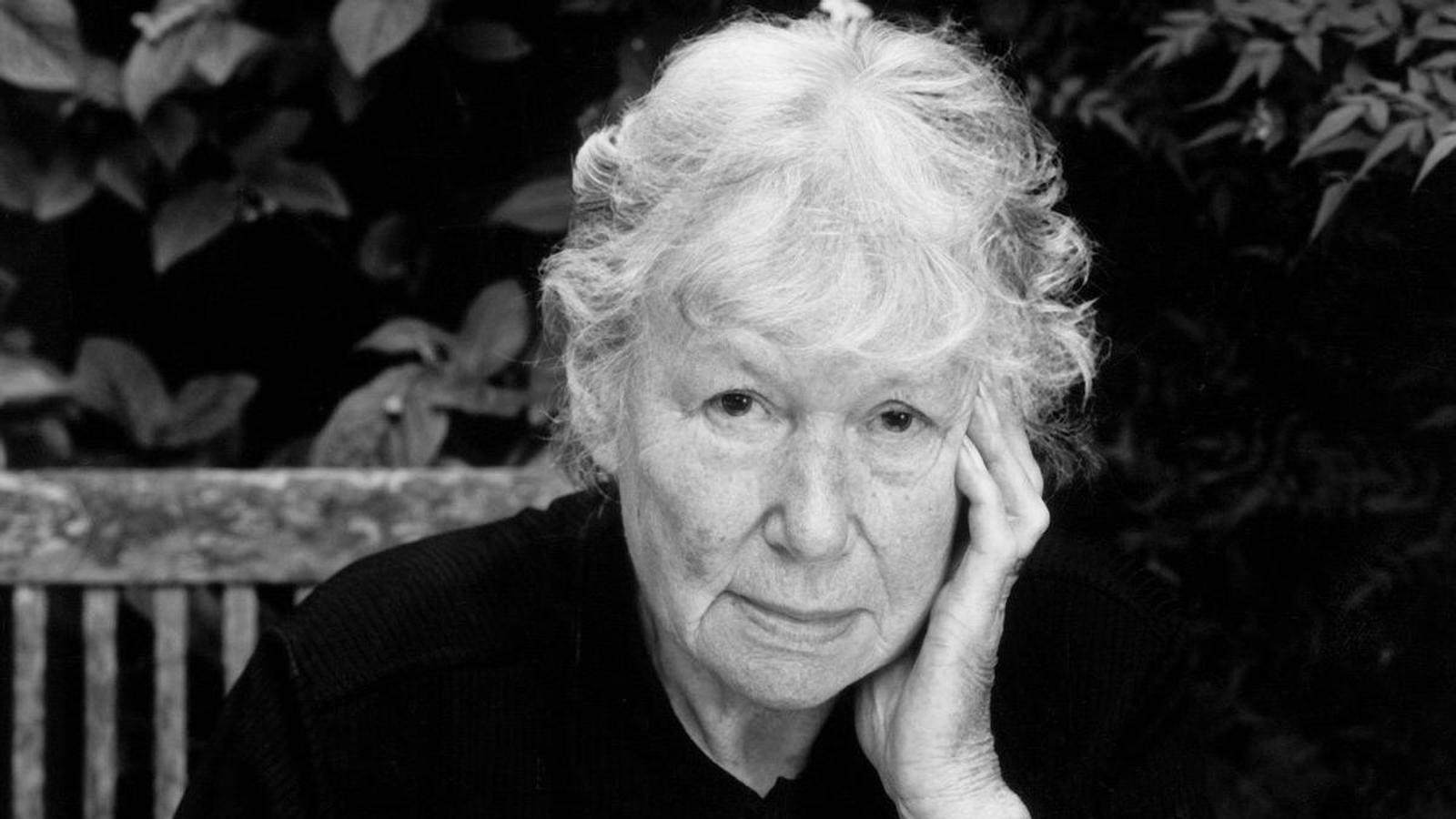
BarcelonaPenelope Fitzgerald (Lincoln, 1916 - London, 2000) began writing in 1975, when she was 58 years old. She debuted with a biography of the Pre-Raphaelite painter Edward Burne-Jones, and later wrote another about her father and uncles (the Knox brothers). Two years later, she published the novel The golden child, a detective story set in an antiquities museum that satirizes the bureaucracy and absurdities of the art world. This was followed by other splendid works such as Innocence (1986), set in Florence with Gramsci as a secondary character, and The beginning of spring (1988), which narrates the life of an Englishman exiled in Moscow.
Her characters often live on the fringes or are a bit lost. The writer explained in an interview that she wrote her first novel to entertain her husband, who suffered from alcoholism. Both shared a passion for literature and founded a magazine, but they always lived on the brink. American Jessica Frances Kane, born in 1971, is fascinated by Fitzgerald. That's why she decided to delve into one of the most unknown chapters of one of the most admired English writers of the 20th century. In the book Fonseca (Navona/Impedimenta), translated into Catalan by Esther Roig, she imagines what her trip to Mexico was like. Pregnant with her third child and accompanied by her eldest, who was five years old, Fitzgerald went to live with the Delaney sisters, two elderly Irish women who owned a silver mine in Mexico, in the hope that they would leave her an inheritance. "I have always considered her my favorite writer. When I discovered the trip, a gap in her biography, I thought there was room for fiction. She was 36 years old and not yet the great writer she would become, but she already considered herself one. I was interested in exploring it: she was having an adventure and wanted to write, but she still had years to publish," assures Kane, who draws inspiration from biographical data, Fitzgerald's novels, and a text the English writer published in 1980: Following the plot, in which she briefly mentions the trip to Mexico. “In the first paragraphs, she introduces the setting: the house, the women she met… and I thought I could expand all this with imagination. There was a story to be created about what she must have felt, seen, and lived during that period,” says Kane.
During the three months Fitzgerald lived at the Delaney sisters' house, she met all sorts of characters who aspired to the same thing as her, the promise of money. It is a bizarre microcosm, where Fitzgerald has to learn to relate and reflects on art, money, motherhood, landscape, everyone's ambitions, and love.
The attraction to a stranger
It is a mystery why Fitzgerald decided to make such a long trip pregnant and with such a small child without knowing or knowing practically anything about her hostesses. According to the author, there were several possible reasons, all plausible: "Her family was going through financial difficulties and an inheritance was tempting. She liked to travel, and her relationship with Desmond, her husband, was complicated. He was becoming an alcoholic. I tried to imagine how she must have felt and if she hesitated to go back to him," says Kane. At Fonseca's house, Fitzgerald meets a man surrounded by mystery and ambiguity who presented himself as the heir to the family. "I included it because, according to her own writings, she was attracted to him. In her novels, people often fall in love unexpectedly, at the wrong time or with the wrong person. I thought what happened in Fonseca could inspire some of her works," she says.
Nevertheless, the relationship with Desmond shows mutual respect and support, a contrast with the marriage of the painter Edward Hopper (also present in Fonseca) where he belittles his wife's artistic work and everything revolves around him. “Fitzgerald had a husband who believed in her and in her writing. That was very powerful. Mutual respect might be what kept them together,” explains the author.
In the novel, references to economic precariousness are also constant. “Fitzgerald wanted to be a writer, but she had no money. She had to wait to dedicate herself to writing and art while supporting her family. Many artists have to put their dreams on hold for economic needs, and that is interesting to explore,” says Kane.
The title of the book comes from the fictitious name Fitzgerald gave to the Mexican city: Fonseca. “There is no Fonseca in Mexico. In Latin it means "}dry well. It is a joke about the search for the inheritance she did not achieve. This made the title obvious: Fonseca, a magical and mysterious place,” says Kane. In the novel, many characters are invented to enrich the story and reflect types of people Fitzgerald might have met. Only Valpy (the writer's son), Penelope, the Delaney sisters, and the Hoppers are real (they were in the same city, but we don't know if they met).
"The novel is an exercise in reverse engineering: starting from her adult works, I try to imagine the life she had at 36 years old," explains Kane. With the collaboration of the family, the author intersperses the correspondence she had with her two sons, she investigates the trip to Mexico. Even so, the mysteries persist, because Fitzgerald never spoke much about it. “We can only speculate. Perhaps out of love, out of shame for pursuing money, or because it became a dream that did not end well, she revealed almost nothing. All this is part of the mystery and what makes her figure fascinating," concludes the author.

