The 'Espinàs bank'
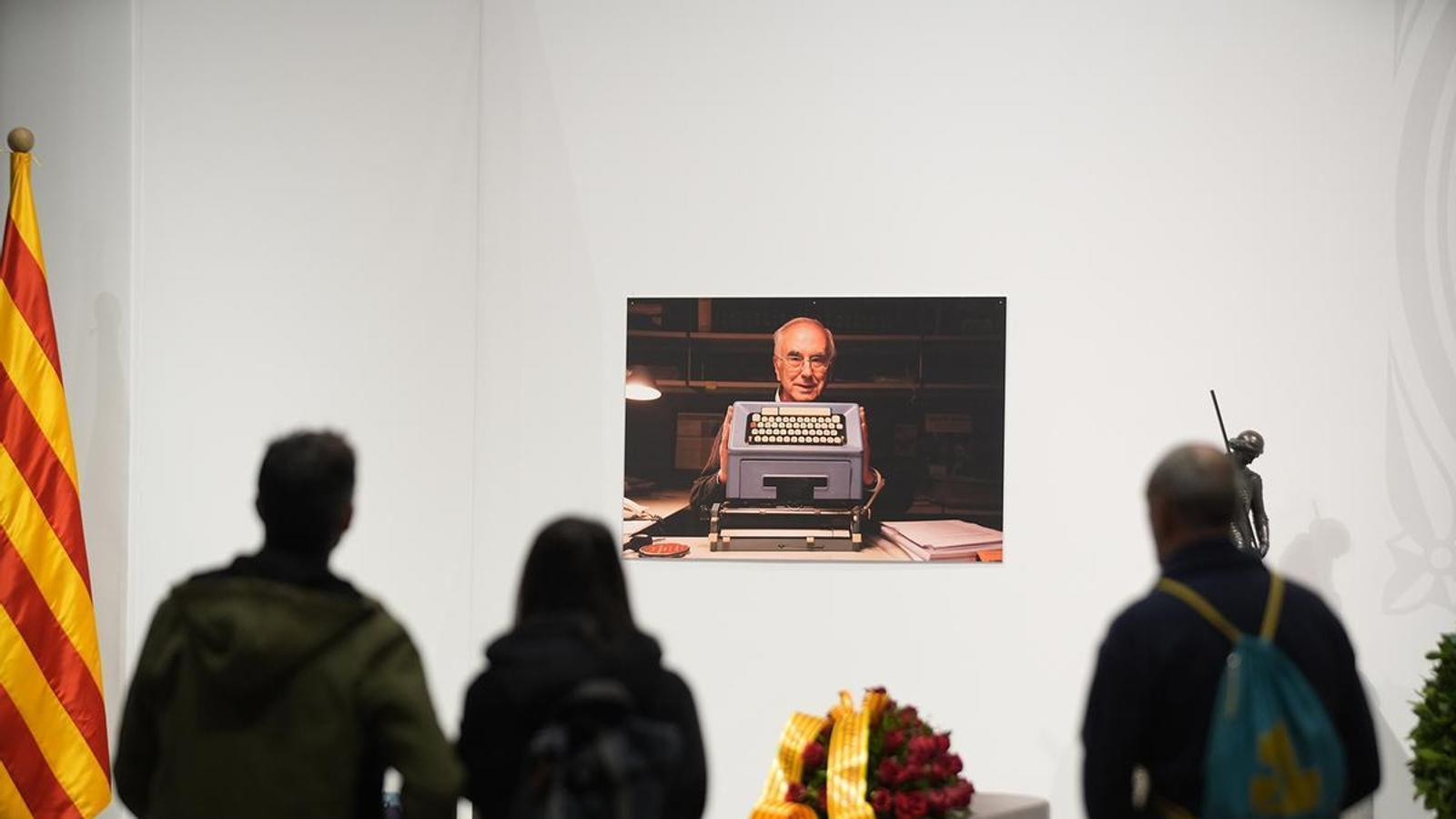

When Josep Maria Espinàs arrived in a town of the kind he portrayed in his walking tours, he would go straight to the square where people were sitting on a bench. He too would sit there without saying anything, looking in the same direction as them, and after a while he would make a simple observation, such as: “It looks like it might rain.” Then the bench companions, eager to train the stranger, would give him all sorts of explanations about the direction of the wind, the movement of the clouds, and the amount of rain in the area. And so began a conversation that would naturally delve into the most intimate corners of the local identity he had come to discover.
A bench, knowing how to ask and knowing how to listen. We talked about it at the presentation of Correllengua 2026 by the Coordinator of Associations for the Catalan Language (CAL), now that the centenary of Espinàs' birth is approaching. His editor, Isabel Martí, explained that when the writer died, she went to see the Minister of Culture to propose an original idea, one hundred percent Espinàs-like: instead of naming a street after him, why not offer towns and cities that wanted it the chance to install an Espinàs bench, a place to sit and talk about everything and nothing, as befits the public square, with a small plaque explaining that the bench was a reminder of one of the greatest contemporary Catalan writers and the setting for his conversational ability? The proposal was very well received, but nothing more was ever heard of it.
Wouldn't it be interesting for the Generalitat or the provincial councils to revive the idea to celebrate Espinàs' centenary?
