Stephen Colbert's final metaphor
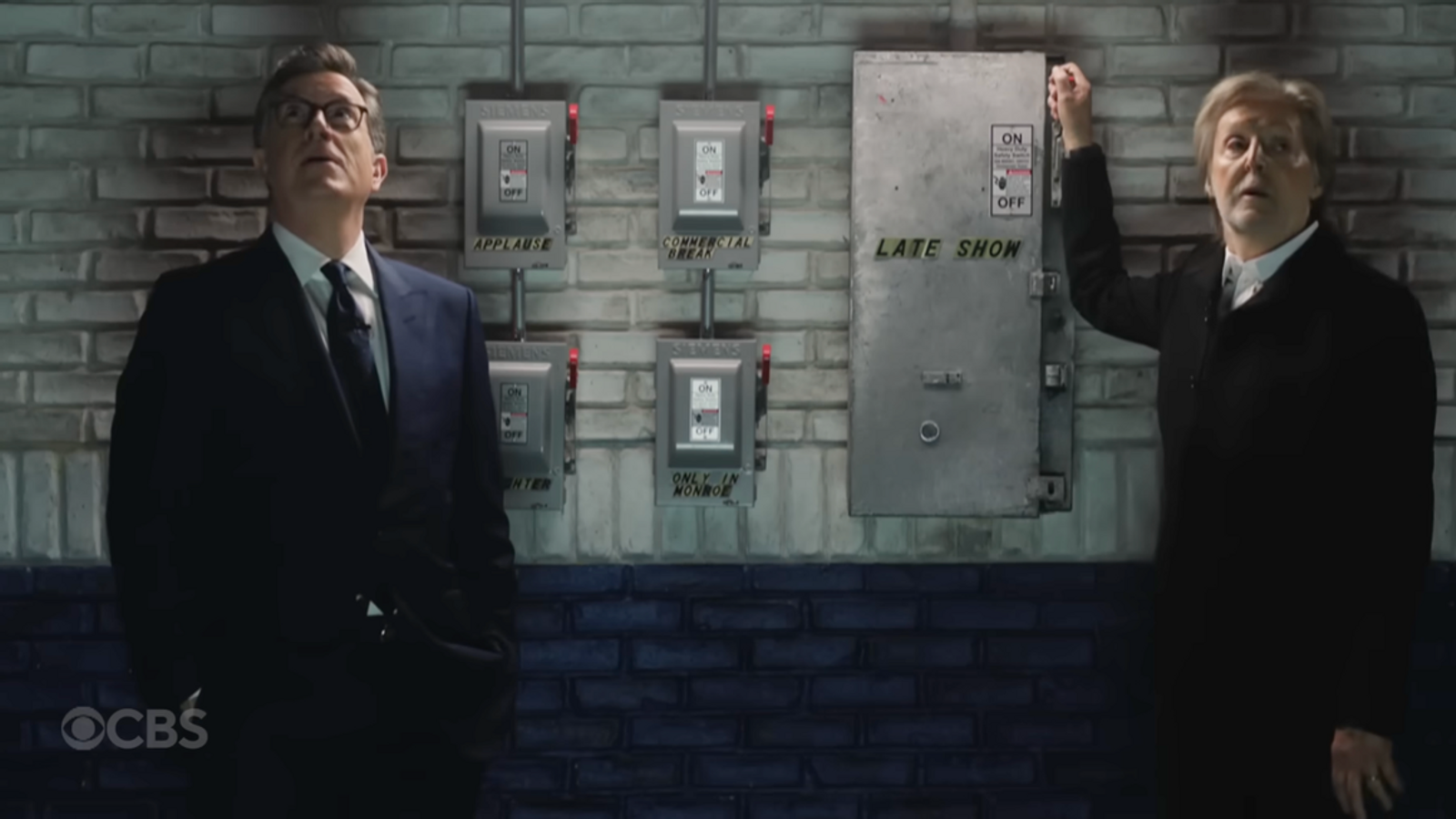

On Thursday night, the The late show on CBS closed its doors. Stephen Colbert is already on vacation, and a historic era of television late night is considered to be over.The presenter began by explaining that they wanted to have a normal broadcast, without solemnity or self-congratulation. He appealed to one of the founding principles: to consider the program a joy machine, a machine of joy based on what they have called a "reciprocal emotional relationship," defending a bond with the audience that fed back into the show. The result, therefore, was more emotional and symbolic than combative. Despite clear evidence that political pressures have ruined the program, Colbert avoided caustic comments against Donald Trump. And they were missed. After all the analytical capacity the program has shown, of the ideological substrate it has managed with such intelligence, the ending was steeped in an insubstantial and soft spirit. The aim was to enhance the friendly and festive tone without bitterness. But the last program did not do justice to its capacity for influence and, above all, to its critical and demanding spirit. More biting wit and less foolishness were expected.Paul McCartney was the main guest. The choice also had an allegorical meaning: the Beatles debuted on The Ed Sullivan show 62 years ago. The show, however, was full of fleeting appearances by good friends of Colbert: Brian Cranston, Paul Rudd, Ryan Reynolds, Elijah Wood... And, of course, his professional colleagues: Fallon, Kimmel, Meyers and Oliver. And a Jon Stewart who was in charge of giving him the farewell. All this shows that the nocturnal television universe is eminently masculine, and that they all do things among themselves and laugh at each other's jokes.Colbert sang Hello, goodbye with McCartney: "You say «goodbye», I say «hello» / You say «stop» but I say «go»" are verses that refer to this struggle of opposites, but also to this beginning of a new stage. The lyrics allow for multiple interpretive readings.Colbert opted for a symbolic ending. An enormous luminous hole leading to a parallel dimension threatened the presenter. Astrophysicist Neil deGrasse explained to the protagonist that the cancellation of his show was causing a kind of cosmic anomaly. When McCartney disconnected the electrical panel, that energetic void sucked up Colbert and the entire building. An indisputable metaphor. The late show ended up reduced to a small snow globe in the middle of the street, sniffed by a dog, as if the television universe were collapsing and being reduced to a kitsch, not very useful object. A simple souvenir from New York. Just a memory. As if the cancellation of the show were also the closing of a media culture, the end of an era for a certain mainstream television that is disappearing and being reduced to a charming relic of the past.
