The Reus director who debuts at Cannes with a science fiction dystopia
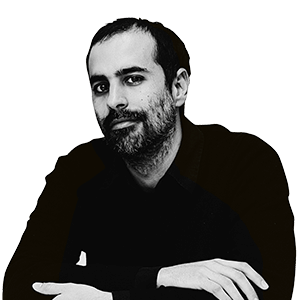
Maria Martínez Bayona premieres at the festival 'The end of it', about a future in which humanity has conquered eternal life

-
CAT -
CAST
Special correspondent to the Cannes Film FestivalA Viva, the film with which Aina Clotet has won the revelation award at the Critics' Week in Cannes, the protagonist is a biologist who studies how to extend life to 120 years. And, almost as if it were a sequel to this film, in the other opera prima by a Catalan director premiered at the Cannes Film Festival, The end of it by a Catalan director premiered at the Cannes Film Festival, The end of it begins with the protagonist's birthday, an artist who reluctantly celebrates reaching 250 years old because she is tired of the perennial joy that surrounds her, of her friends, and of living forever. So her new artistic project, which will also be her last, will consist of dying, an announcement that shocks the entire society. For the director, we live in a world that “denies and tries to hide death” and in which youth is idealized as if it were the only desirable state of life. “It is absurd to think of youth as the peak of life, because in reality it passes very quickly –points out Martínez Bayona–. Organizing life like this doesn't help much to continue valuing what you do and who you are.”
Martínez Bayona's first feature film breaks away from the naturalistic and autofictional line of most recent Catalan female directors' debuts, starting with the science fiction premise and a medium-to-large production value, but above all for the international cast led by Rebecca Hall and with Gael García Bernal, Noomi Rapace, and Beanie Feldstein. The director is based in England, where she went to study ten years ago on a scholarship, and began the project of The end of it
during the pandemic with the Catalan production company Fasten, which this year has three titles at Cannes. “Financing was very complicated, because we knew that with a single country it would not be possible and it ended up being a puzzle of many forces and people who bet on making a film of these dimensions and with such a hybrid tone and genre,” she explains.
The fluctuating tone between drama and satire is precisely one of the virtues of a film that projects Martínez Bayona's central conviction onto a dystopian plot that “the only possibility of immortality is to leave an artistic legacy”, although in the protagonist's “deep gesture” she also reads “a touch of ego and narcissism”. Also notable is the work of Rebecca Hall, who dives into the excesses and complexities of an uncomfortable character. "Rebecca is a kaleidoscopic actress, unafraid to embrace the darkness of characters, but she is always present and lets her vulnerability show. And she is an artist in every sense, so she was perfect," praises Martínez Bayona.
Despite having debuted with a film like The end of it, Martínez Bayona does not consider herself “a genre director”. For her, science fiction was not an end in itself but a context “to develop a series of existential and profound themes, but with humor and absurdity, which is the tone that life has for me”. The director is already preparing another project with Fasten that will be shot in Catalan, but she would like to alternate projects at home with international ones. "But first I have to rest –she affirms–. It has been many years working on this film, I need to restore myself internally before shooting again".
