Rosario Peiró: "Picasso's contradictions are what make him very current"
The new director of the Picasso Museum of Barcelona will renew the collection to "return the museum to the citizens"

-
CAT -
CAST
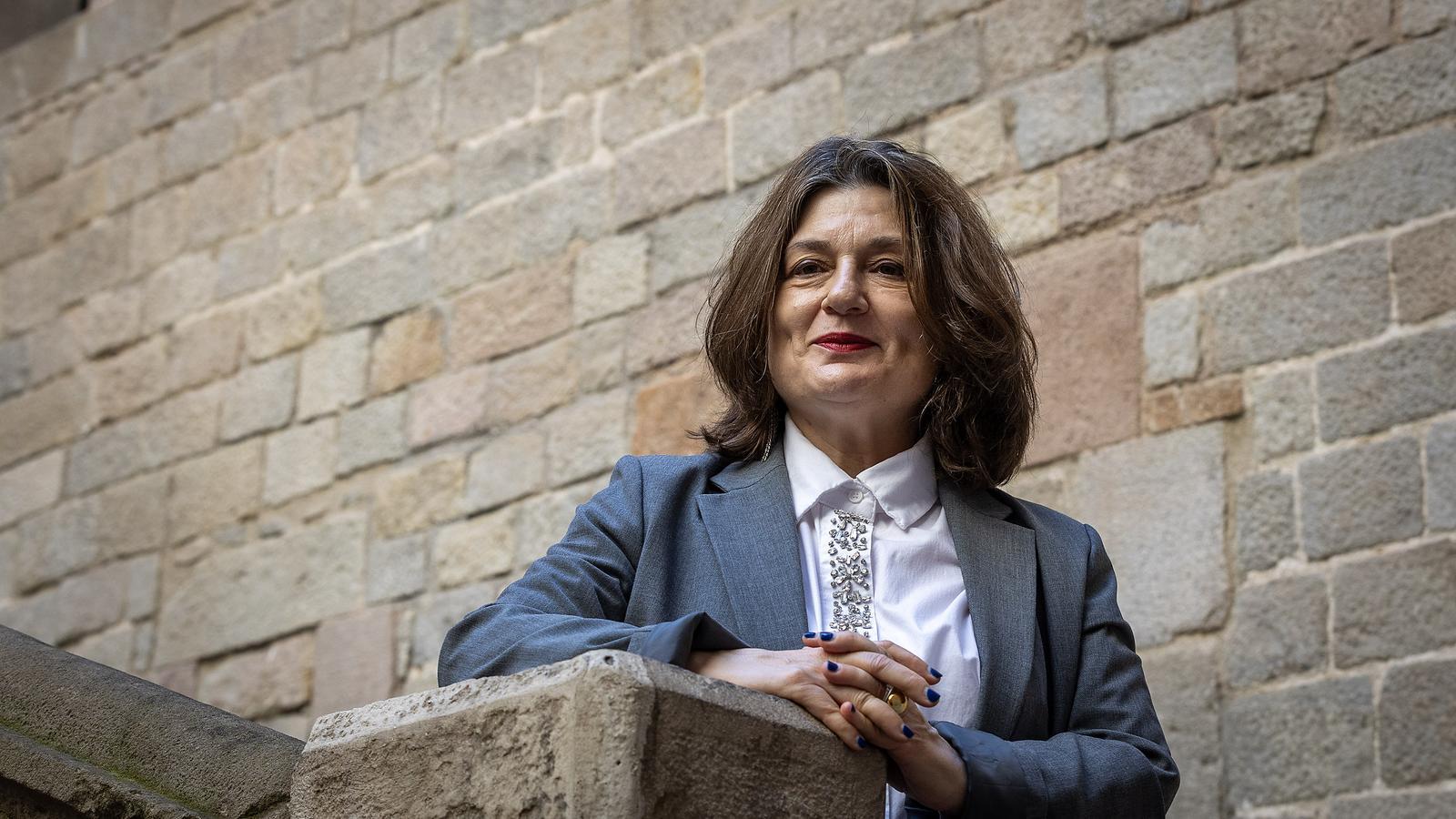
BarcelonaThe new director of the Picasso Museum of Barcelona, Rosario Peiró (Beniarjó, 1968), has arrived at the institution with an ambitious project. One of the cornerstones of the strategic lines she made public this Friday is the complete overhaul of the permanent collection. A common place to justify the collection's shortcomings is to say that the Picasso Museum of Barcelona is the best for understanding his formative period. Now Peiró wants to go beyond this period and represent the entirety of Picasso's relationship with the city.
"The museum's collection is, of course, the best in the world for Picasso's early years, and that's what sets it apart — says Peiró —. But this collection and this museum were created to talk about Picasso's relationship with the city, which extends to his death, including the creation of the museum itself and the frieze on the facade of the COAC, and all the exhibitions he held in Spain, Catalonia, and Barcelona, including those in the years 1936, 1955, 1959, and 1960. "There is a lot of work to be done. That's what I want to do. That's what Picasso wanted, and that's what needs to be developed".
The renewal of the collection is part of Peiró's effort to reinforce the museum's civic character, which is one of the most visited in Barcelona, but has little local audience. "The most important challenge is to return the museum to the citizens, and I don't just mean bringing people to the city —says the director—. I mean recovering that sense of belonging to society that the museum had in the years of its formation. In a time of lack of freedoms, Barcelona society worked together with great enthusiasm to achieve what seemed impossible in the midst of Francoism, to make the museum of the most important artist in the world a reality in the city." And this does not mean favoring the local public over the tourist. "It's not about driving anyone out so that someone else can come in. I believe that everyone fits. I am more than happy that this museum is the Picasso Museum of Barcelona, but at the same time I want it to be even more so, with specific programs for the people of the city and, above all, with a transformation of the collection, to create again a relationship or a sense of belonging that I believe has been lost over the years," she says. According to Peiró, it is necessary to "work on this sense of belonging, of pride, of enthusiasm." "And I believe that the collection, which is our heritage, which is our history, is the way to reclaim it," she emphasizes. Her intention is to present these changes between 2030 and 2031.
Rosario Peiró graduated in Geography and History from the University of Barcelona, and worked at the Macba before moving, in 2008, to the Reina Sofía Museum in Madrid, where she arrived at the hand of Manuel Borja-Villel as head of collections. She assures that returning to Barcelona is "returning home." "I got married in Barcelona, I had a daughter in Barcelona - she emphasizes - I was born in a small town in Valencia, but sometimes when I'm asked where I'm from, without realizing it, I say I'm from Barcelona."
Picasso's current affairs
to Brazil during the II Biennial of São Paulo in 1953. It also aims to give centrality to the figure of Picasso's friend and secretary, Jaume Sabartés.
Peiró plans to begin her programming in February 2028. She will open a line of small-format exhibitions and experimental devices —1 or 2 annually— in which current artists, mostly women, will address concepts such as gender, the treatment of the body, and violence, presenting an "active and open" reading of Picasso and being able to respond to him artistically.
To do all this work, Peiró would like to count on loans, donations, and purchases. "We are not talking about the Picasso that was sold a few days ago in New York for 43 million, but about other things that may be considered secondary in a traditional conception of art, but which are very interesting in the new art history and new museography, such as prints, artist's books, and even paintings," she explains.
Research, at the center
Peiró plans to collaborate with universities, research centers, and academic institutions locally, nationally, and internationally. The project also plans to create and strengthen networks with Picaso-related museums and high-level art study centers. One of the priorities of the new phase will be to reactivate the Museum's Research Center, which will become the main hub for the Museum's research.
Among the exhibition lines, Peiró wants to shift the focus beyond the first avant-garde and delve into the period after World War II, “an era particularly connected to the present where Picasso actively participates in debates such as abstraction and figuration, historical painting, or the relationship between art and exile”. This chronological shift also coincides with the globalization of the artist's work, with moments like the exhibition of "Guernica" in Brazil during the II Biennial of São Paulo in 1953. He also wants to give centrality to the figure of Picasso's friend and secretary, Jaume Sabartés.
