The musician from Banyoles who creates the soundtracks for Albert Serra
Marc Verdaguer, regular composer in all the filmmaker's works and member of the group Molforts, has just participated in Ingrid Caven's project premiered in Locarno
-
CAT -
CAST
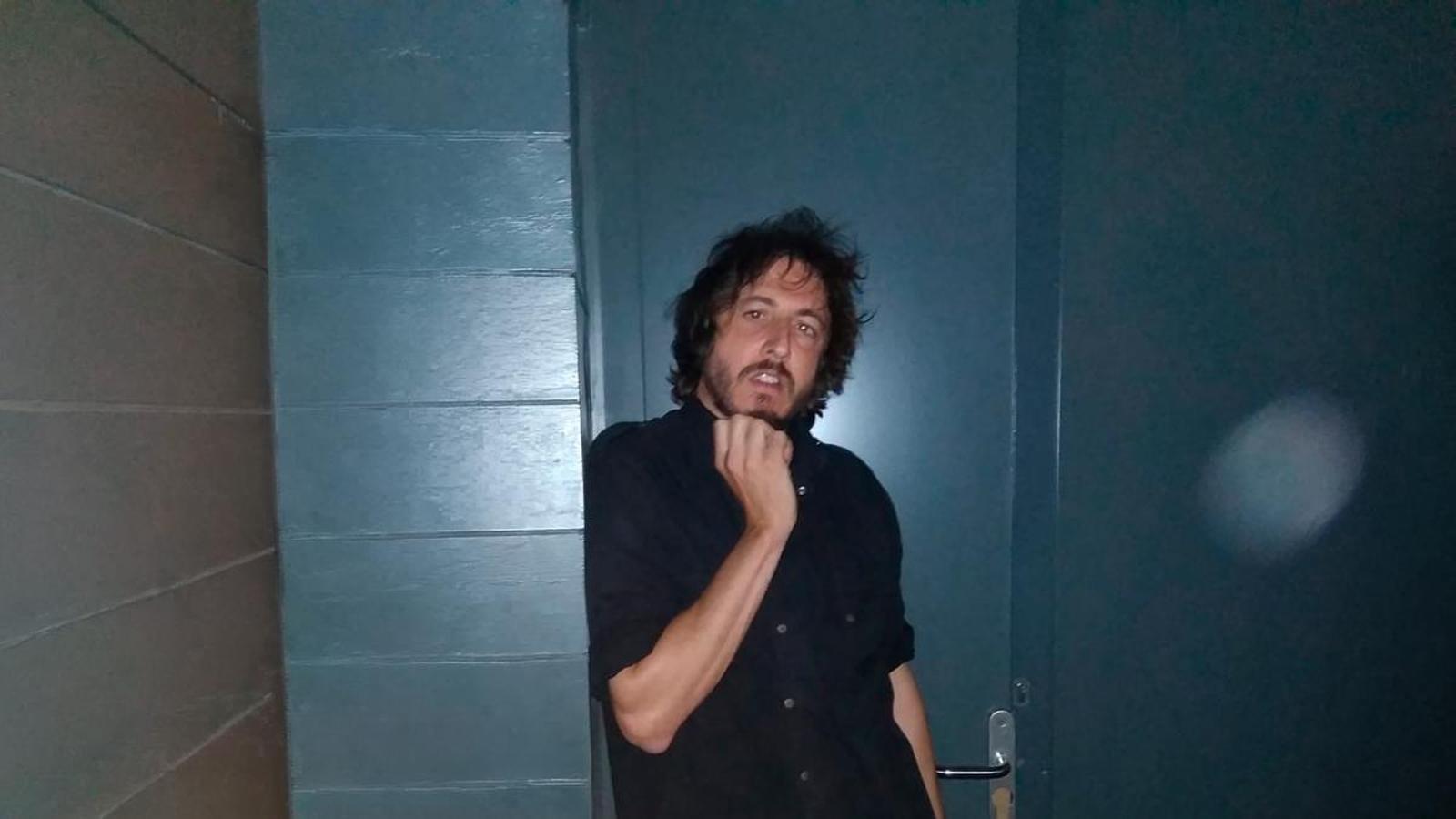
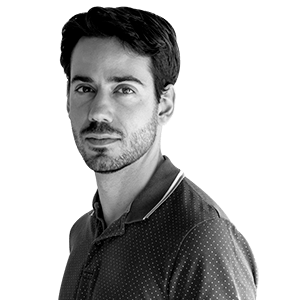
GironaMarc Verdaguer is one of the regular names within Albert Serra's particular creative universe. A musician and member of the Banyoles-based group Molforts, he has worked on all of the filmmaker's soundtracks, from the embryonic Crespià (2003) to his latest work, Out of this world, still in the final editing phase. He has also signed the music for films by other directors, such as Alain Guiraudie, produced by Andergraun Films, and has collaborated on experimental and performative audiovisual proposals by artists such as Jordi Mitjà and Vagina Dentata. He has just premiered the film Seize moments de ma vie,at the Locarno Festival, an extravagant concert with the legendary actress Ingrid Caven and Molforts, recorded in Paris by Serra himself and which will be seen in Barcelona at the In-Edit Festival.
The musician and the filmmaker met in a night bar in Banyoles around the year 2000. Following that meeting, Verdaguer was encouraged to participate in the filming of Crespià, a kind of very zany rural musical, and since then he has been part of Albert Serra's artistic troupe troupe. In the works of the Banyoles director, nothing is conventional. Neither is the music. So, when he composes the notes that accompany the films, Verdaguer does not work with footage from the shoot or with very precise orders; instead, Serra, a specialist in generating confusion and bewilderment in his entire team, only transmits quite vague ideas or themes to him. Afterwards, the composer creates freely, sends hours of sound material, and everything is finalized during the editing process, which is key to the filmmaker's creative process. "In Pacifiction, for example, Albert told me he wanted a mix of electronic music and music from Polynesia. With these indications, I began to research, with a lot of intuition, looking for sounds and always fleeing from any stereotype," explains Verdaguer.
This freedom to create without apriorisms and to flee from any yoke that limits creativity and originality is an absolute maxim in Serra's way of understanding art. Verdaguer agrees with this, and that is why their two ways of working match very well. The composer, far from being bothered by this lack of coordinates and instructions, values it positively. "It is a deliberate lack of communication; it allows me to open paths and prevents the music from falling into clichés. I imagine the worlds he describes to me and I look for a sound for them," highlights the composer.
"The soundtrack is like the smell of the movie"
In Verdaguer's compositions, music and sound are quite indistinct terms, since, in Albert Serra's films, the soundtrack is not made of great melodies, recognizable themes, or harmonic progressions in the style of the great Hollywood masters. It is rather a soundscape or an auditory atmosphere that accompanies and dialogues with the images. This is how the musician defines it: "The soundtrack is a sensory part of the film, it is like the smell of the film. And each project requires a different smell, whether to reinforce a situation or, conversely, to seek a contrast".
In fact, Verdaguer defines himself as a "painter who mixes colors", selecting sounds and instruments until finding the sonic concept that will later fit with the images. He does not work with a conventional score, with notes, time signatures, and harmonic tonality, but rather, starting from the possibilities of synthesizers, the musician spends hours combining instruments, rhythms, harmonies, and melodies until the final result. "If a leitmotif appears, it appears; if a certain harmony works, it is kept, but I don't think about notes or harmonies, I leave that to the masters. I prefer not to block myself and let everything happen and emerge naturally", he argues.
This way of working is quite unique, but the musical and cinematographic references that feed it come from very diverse traditions. "I have listened to a lot of music and, of course, it has filtered into everything I do. They are little things from each one", he acknowledges. From Baroque classical music to Schoenberg, from Ennio Morricone's soundtracks to the epic tunes of classic cinema. Also the rhythms and reverberations of seventies electronic music from France, America, and especially Italy, with names like Piero Umiliani and Alessandro Alessandroni.
The first album by Els Molforts
After debuting the project with Ingrid Caven, Verdaguer continues with many projects in hand. Serra has already spoken to him about a future film, still very embryonic, and this summer he is recording his first album with the Molforts. They are four musicians (Ferran Font, Enric Juncà, Joe Robinson and Marc Verdaguer), friends from Banyoles, who often meet in a studio to improvise and make music together without any prospects of concerts or recordings. Following the project with Ingrid Caven, however, they have had to develop a more orderly and efficient rehearsal dynamic, so they want to take advantage of the momentum to translate their own tracks into an album produced in good conditions. "The intention is to capture this sound that until now has circulated in a dispersed way in rehearsals. It is a matter of self and poetic justice and we believe it would be nice for us to give ourselves this self-gift", concludes Verdaguer. For the moment, they already have seven songs in the bag.
