September, I will have to make sure I haven't committed suicide: the ripped melody of Josele Santiago
The singer of Los Enemigos publishes the memoir book 'From the cot'
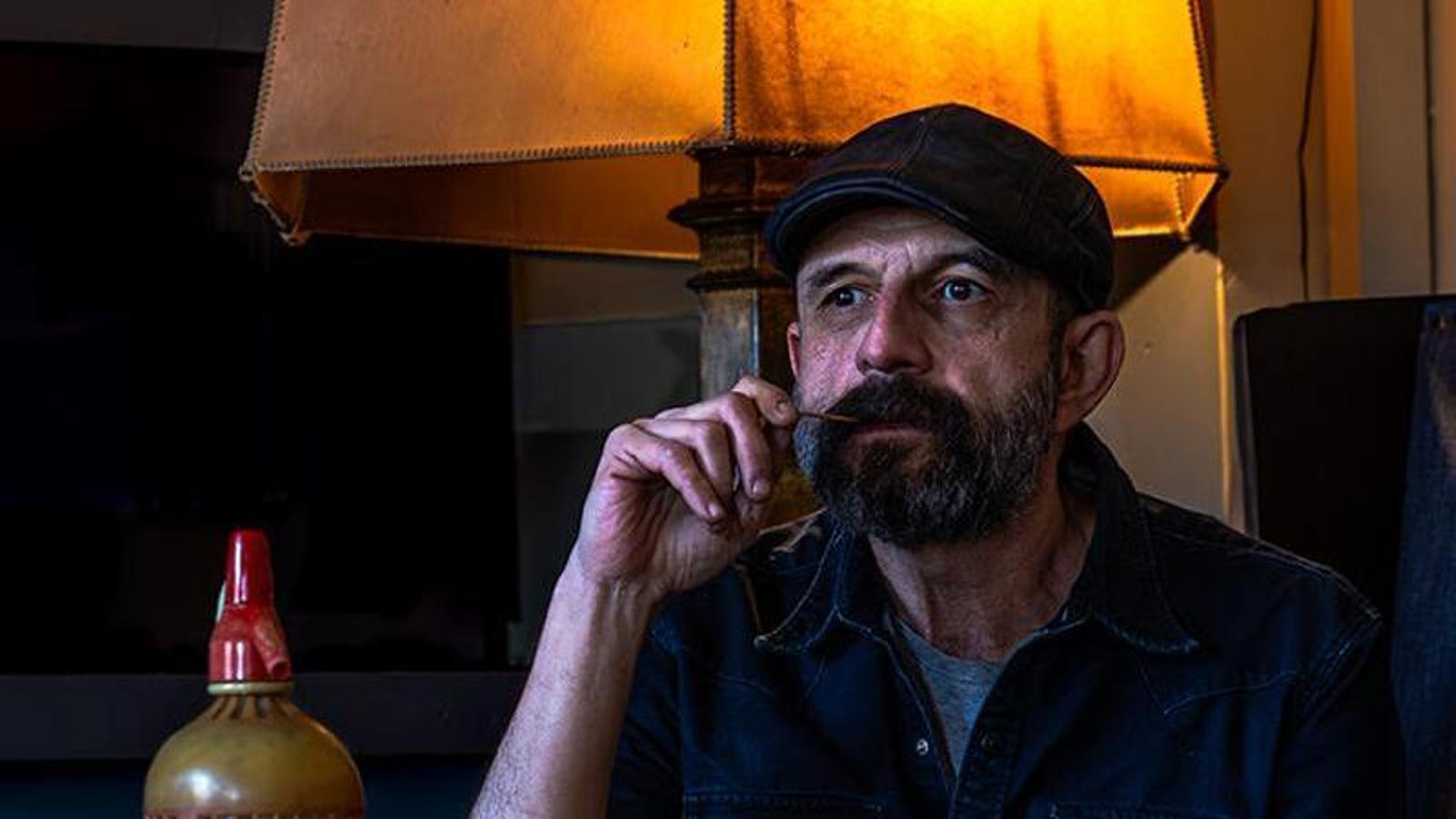

Barcelona"I will have to make sure I haven't killed myself", writes musician Josele Santiago (Madrid, 1965) in the book Desde el jergón (Contra, 2026). The singer and guitarist of the group Los Enemigos signs a musical autobiography extraordinary for what it tells, for how it is written, for the tone, for the point of view and for the way music, life and dreams walk together in the text. Each chapter is born from a song by Los Enemigos, first-rate material as befits one of the best Spanish-language rock bands. And each chapter grows sentence by sentence, combining personal and social biography. There is rage and disappointment, also wonder and amazement, various pains and passion. And love is not lacking, like the one that exploded when he met the Barcelona-based screenwriter Núria Torreblanca. "And I ended up settling in Catalonia", he says, "madly in love".
Musical reflections full of life also abound, such as the defense of melody, the explanation of the impetus provided by "the trucker's rise" (raising a tone in the last stanza of the song), the joy of playing with Xarim Aresté and the Very Pomelo in the smoky cave, the fervor of the second rebirth with the album Bestieza (2020), the legacy of the Stooges, Dr. Feelgood, Hüsker Dü, Charles Mingus and the Beatles or the description of a pop song: "Three minutes of glory on high prepared to rescue you whenever needed". And he does not shy away from the years of heroin addiction, but he talks about it with extraordinary lucidity: without wallowing in the clichés of sensationalism and overacted repentance, without giving himself over to nostalgia for the narcotic paradise. "It's strange to see how everyone gets fed up with you and you don't care [...]. Addiction has conquered the stronghold of your priorities", he says, recalling the downfall.
"I'll have to make sure I haven't committed suicide," writes Josele Santiago in the chapter dedicated to the song Septiembre. "I'm going to wear a new tie today", he sings from the suicide's neck. Septiembre is part of La vida mata (1990), the album that killed the eighties, or at least the album that best expressed the rift opening up in Felipe González's Spain, the Cobi, the Curro, and the intermediaries. As in his songs, Josele Santiago writes the book with a judiciously savage humanism. I deliver pertinent blows, especially against the disloyal, but I neither condemn nor celebrate, nor do I flee the scene with nihilistic rhetoric. He does something more difficult: he moves by touching the raw nerve, even if it's rotten. "The optimist's humor is only good for children," states a composer who always has the window open to humor and perplexity and who considers that ""God is a great supporting character in songs".
The dead man as a plot thread
Josele Santiago stirs the poetry of rare flowers that grow on asphalt because Los Enemigos are a weed that succeeds against all odds. It is with this down-to-earth perspective that he portrays the guest nobody wanted at that party of exultant democracy: death. "The plot thread of "Life kills is death", he assures. And he unfolds it with "the classic structures of rock and roll" and "the arrogance" of skeptical youth. The final great cramp, "the song of the Apocalypse", is exactly that. Los Enemigos of 1990 are very angry, tired of going to so many friends' funerals. It is the horror of AIDS. "People started to drop like flies. In my neighborhood, only the few of us who hadn't shared needles escaped it," he recalls about the song "}Ouija, vocal harmonies that pray for the memory of the fallen and implore a more just world among riffs of maximum rhythm and blues.
"I'll have to make sure I haven't committed suicide", says Josele Santiago, a man who is a ripped melody and a point of view. It makes sense that the book is titled "From the straw mattress, because it is the title of one of Los Enemigos' songs that most eloquently shows the melodic sensibility and power of Santiago's perspective. From the straw mattress, one of the cornerstones of Life kills, it is a prodigy of five stanzas, two of which function as choruses that do not seem so, all in minor art and first person. He sings from the point of view of a prisoner who laments bad luck and who is impatient for the drug not to take effect. He only needs one verse to have the listener in the cell.
The origin of the song Desde el jergón, as explained in the book, is a visit to Alcalá Meco prison. The context is Josele Santiago telling the inmate a few things about how things are on the outside. "We miss you. Your brother sells toilet paper door-to-door. He says it gives him enough to pay for his habit [...] Emiliano doesn't get out of the damned car even to sleep [...] Julito has stationed himself at the market entrance to help the maris with their shopping carts [...] Someone from the Lucero neighborhood robbed the Banco de Bilbao with a box of watercolors in one hand and a paintbrush in the other: 'The money or I'll paint you!'. Paulino told me about it, laughing hysterically, but I don't find it funny at all. I don't know what's happening, I never understand anything. I'm outside, and yet I'm more scared than you are." The context, which could be another memorable song, speaks of a run-down setting that Josele Santiago describes with realistic sensitivity, without accentuating its sordidness. Further on, in the chapter about the song Esta mañana he vuelto al barrio (from the album Gas, from 1996), and recalling the temptation of crime, he recalls a dialogue that explains a lot. "You like the neighborhood because you don't belong to it yet," he says to his friend Carmelo. A timely slap to avoid the trap of romanticization.
"I will have to make sure I haven't committed suicide," writes Josele Santiago to make it clear that he is not the protagonist of Septiembre, the other monument of La vida mata. "Before they throw me out, / I prefer to leave. / Even if it's by opening / the back door", he sings with the impetus of the final challenge. He is a suicidal Bartleby without any bullshit. As a lyricist, more than facts, what has always interested him is the point of view. It could be that of the masturbating adolescent in Qué bien me lo paso, that of a prisoner angry with God and consumed by desperation and boredom in Desde el jergón, that of a condemned man who mocks the priest in Traspiés, and, of course, that of the suicide in Septiembre. But in every choice there is an intention. "Rock and roll feeds on impressionable souls," he says. And he is impressed by pretty tough things. "Go get the bread and milk, because I'm not going to," said the note left by a 17-year-old before hanging himself from a pine tree. Josele Santiago read it in a Galician newspaper, and an exceptional song came out of it. If in Desde el jergón he places the listener in a cell, in Septiembre he makes them dance at the feet of the hanged man. "I almost always write in the first person because I find more arguments by lending my voice to the protagonist than by testifying to their adventures. But at this rate, I'll have to make sure I haven't committed suicide," he writes in the book.
Septiembre, the song about someone who is fed up, has a paradoxical life when it plays in a bar or at a concert. Josele Santiago himself admits that he experiences "contradictory sensations observing the audience jumping and singing the tremendous story narrated in Septiembre". "It doesn't stop bothering me the burst of joy in the stalls while on stage the thoughts of a kid before taking his life are sung at the top of his lungs," he admits. And he himself points out the contradiction: "It's the rage, stupid. Anger. The margin. Rock and roll. What do you want? For them to cry?".
September arrives, and Josele Santiago can assure that he is very much alive. Los Enemigos will release the album Canciones chulas on October 2nd and will return to the stage. And we will sing Septiembre.
