Schools in Spain that still maintain the names of dictatorial leaders
In Andalusia, Madrid and Extremadura, dozens of centers in memory of figures of the regime survive
-
CAT -
CAST
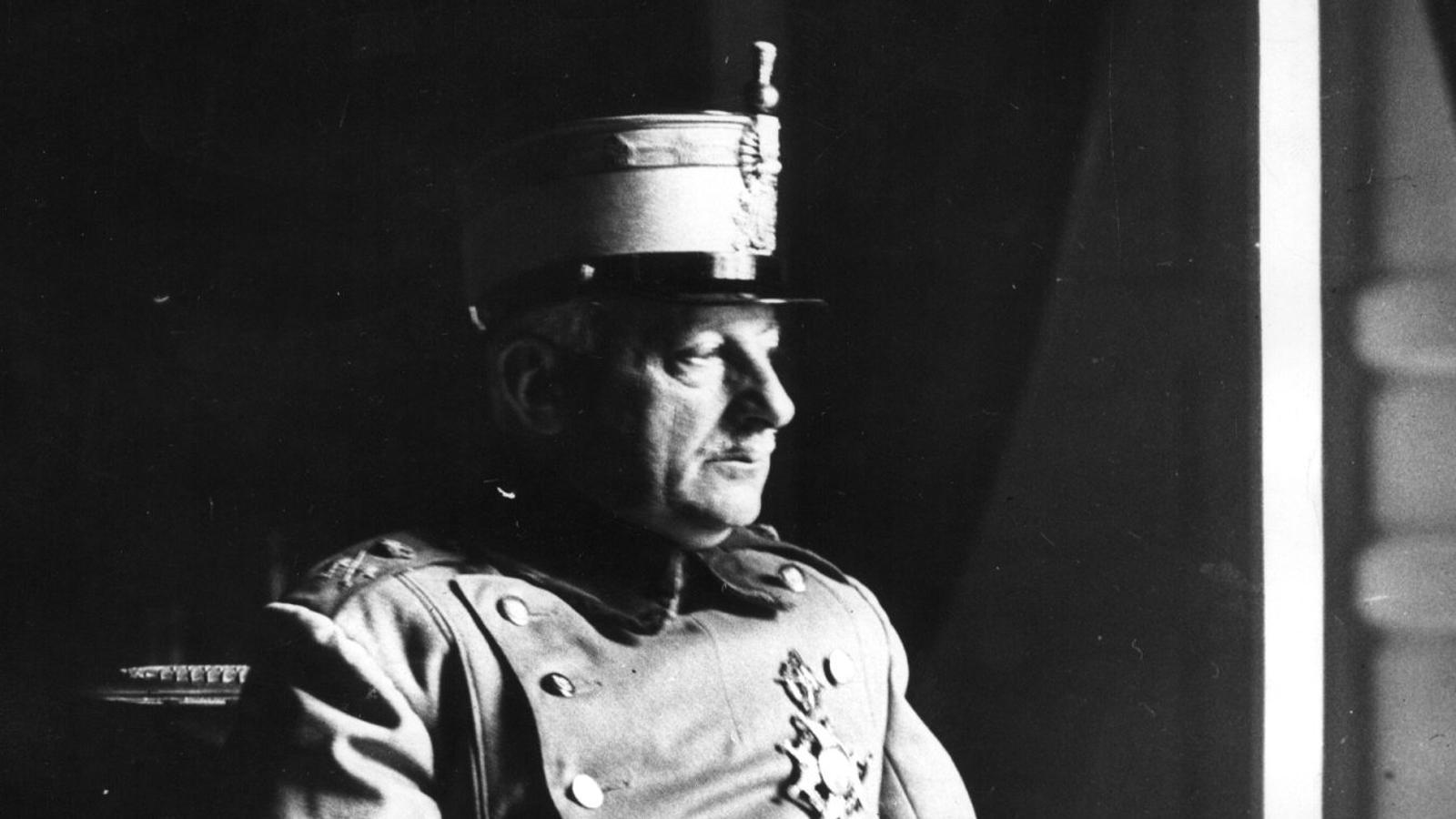
BarcelonaAfter fifty years of state, autonomous, and municipal governments of all political stripes, there are still educational centers with names of Francoist leaders and from the dictatorship (1923-1930) of Miguel Primo de Rivera. It is not just a matter of slowness, but also controversy. This Monday, the newspaper El País reported that in Alcántara (Cáceres) controversy has erupted because the educational community has been fighting for a year to remove the name of the dictator Miguel Primo de Rivera from the facade of the public school. The school has encountered threats from the far-right, insults to teachers, and obstruction from the City Council (PP) and the Junta de Extremadura (PP-Vox). The argument of the popular mayor, Mónica Granados, for not proceeding with the name change is to preserve "social peace".
Miguel Primo de Rivera, father of the founder of the Falange, was consistent with his designation, military dictatorship, which he did not hide: he declared a state of war for more than two years; he banned political parties; he suspended many rights and freedoms; he repressed, exiled, imprisoned, fined, and impunity pursued all political, trade union, and other opponents; he implemented radical and arbitrary censorship on the press, telephone, and telegraph; he governed personally and authoritatively, aspiring to control the private lives of citizens, and he practically militarized all public offices. The case of Alcántara is not isolated because in different parts of the State, dozens of schools dedicated to Falangists and Francoist ministers still exist. This is the case of CEIP Primo de Rivera in Alicante, CEIP José Antonio in Murcia, or centers in memory of key figures of the regime's ideology such as José Luis Villar Palasí in Madrid and Malaga, Adolfo Díaz-Ambrona in Badajoz, Pedro Laín Entralgo in Teruel, Manuel Lora-Tamayo in Seville, etc.
No Francoist names in Catalan schools
To this list of official tributes are added several educational centers that still bear the name of Bishop Leopoldo Eijo Garay. Designated directly by Francisco Franco as national counselor of FET y de las JONS and procurator in the Courts between 1943 and 1946, Eijo Garay was a key figure of national Catholicism: from his position as Archbishop of Madrid, he promoted the dictator's attendance at religious ceremonies under a canopy, a liturgical gesture reserved for royalty and the Blessed Sacrament that represented the Church's maximum endorsement and submission to the regime. In Catalonia, according to the consultation carried out by ARA on the list of non-university educational centers, no Francoist name survives in educational centers. This information, however, could not be confirmed because it is unknown to both Education and the General Directorate of Democratic Memory.
In Catalonia, in 1979, with the first democratic town councils, it was decided to reverse the Francoist nomenclature imposed during the postwar period. In some municipalities faster than in others, Francoist names were gradually replaced by names referring to Catalan culture or democratic fighters. One of the last names to be changed was in 2018, when the Institut Joaquim Bau in Tortosa – named in honor of the Tortosa merchant who held important positions during the dictatorships of Primo de Rivera and Franco – was renamed Institut Dertosa.
"The dictatorship was very quick in changing names. In the case of Barcelona, on August 16, 1939, many school names were already changed to Generalísimo Franco, José Antonio Primo de Rivera, Calvo Sotelo...", explains historian Ricard Conesa, author of "The city that remembers. Memories of war and dictatorship in Barcelona's public space (Icària - Barcelona City Council). "In Barcelona, all the names on the nomenclature that the Second Republic had put in place were erased in just one year, between 1939 and 1940, and with the Transition it was a slow trickle to change them back. Furthermore, there was a lot of fighting from both the neighborhood movement and the Congress of Catalan Culture," adds Conesa. "It is very surprising that even today there are names of Francoist leaders, considering that it is a way of recognizing and honoring lives that are considered exemplary. It is in total contradiction with the democratic memory law," says Conesa.
