More than nostalgia: the Filmoteca connects 50 years of women filmmakers and collective struggle
The exhibition 'Filmic Feminisms 1976-2026' brings together works by Carla Simón, Mar Coll, Eugènia Balcells, and Emma Cohen to rethink the present
-
CAT -
CAST
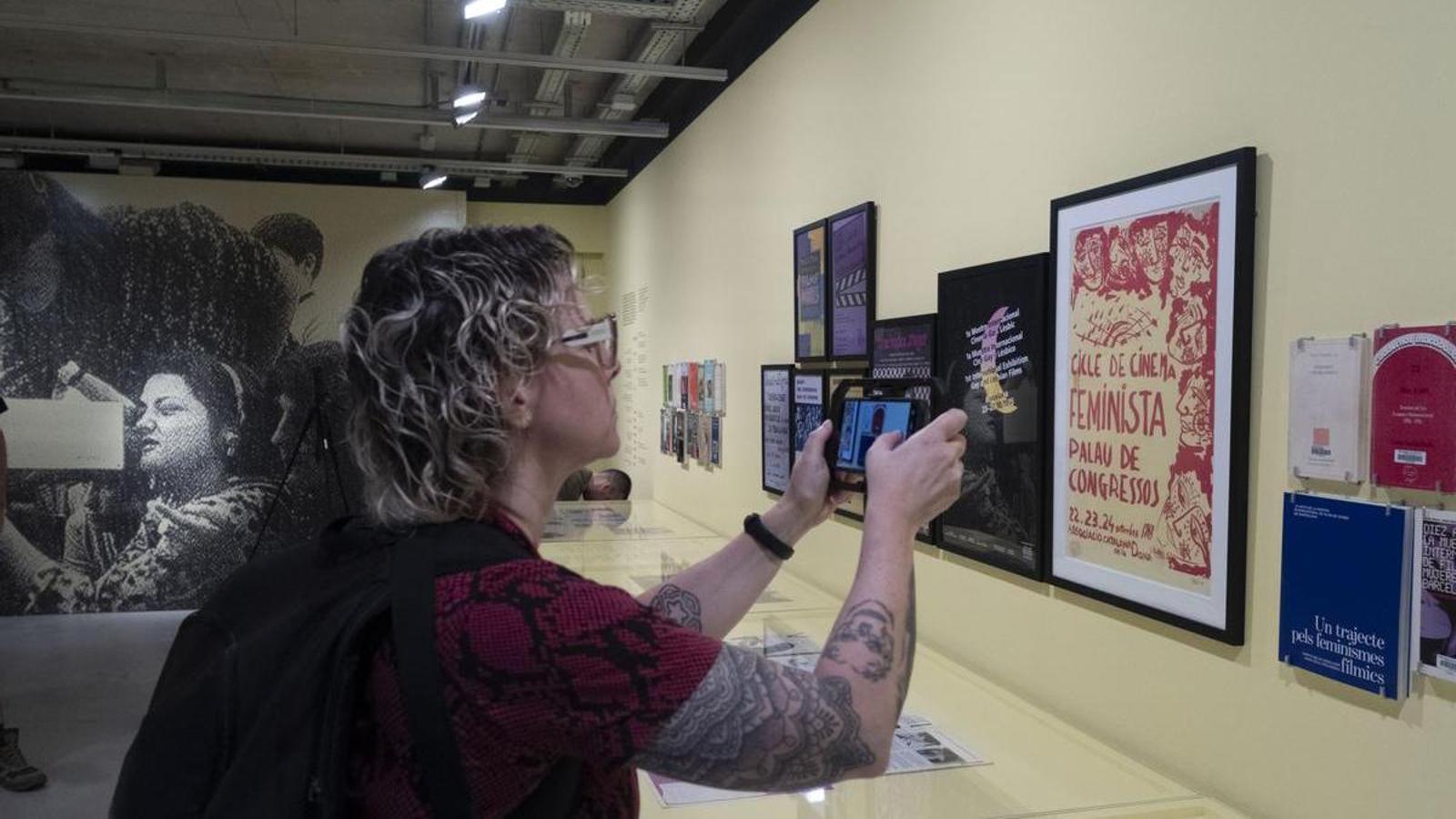
BarcelonaBetween May 27 and 30, 1976, the paranimph of the University of Barcelona brought together more than three thousand women who crowded a space where current legislation today indicates a maximum permitted capacity of four hundred people. The success of the First Catalan Women's Days was overwhelming. Women came from a dictatorship that had relegated them and aspired to many changes. Furthermore, they went hand in hand with the most diverse social and political sectors. Fifty years after that milestone, the Filmoteca de Catalunya has not wanted to limit itself to an exercise in historical nostalgia, but rather proposes a dialogue between generations and an inspiration to imagine futures. The exhibition Filmic Feminisms 1976-2026, curated by Alexandra Laudo, with the advice of Anna Solà and Marta Selva and the film editing by Pilar Monsell, demonstrates how the camera can break down walls and inspire new futures. It can be visited until November 29.
"When I started to delve deeply into the First Days, I was not sufficiently aware of their relevance or impact, nor that they made possible many of the rights enjoyed by women of the generations that came after –explains Laudo–. We have not opted for the gray aesthetic that is sometimes used with archival material, because we wanted to recover that spirit, which was committed and combative, but also the feeling of joy, celebration, and confidence in collective strength. Archives do not speak of the past, but rather are a repository of illusions and a place of possibilities for the construction of the imaginary", she adds.
In the exhibition there are nine projection spaces, articulated around a square, each dedicated to one of the main axes debated in 1976: work, neighborhoods, family, education, media, politics, legislation, rurality, and sexuality. The discussion on gender-based violence, which at the time inherently permeated the debates but did not have its own space, has been intentionally maintained as an invisible transversal axis that runs through the entire exhibition. "We did not want to take a historicist view, but rather to challenge our present –states the director of the Filmoteca, Pablo La Parra Pérez–. The Days act as a catalyst for navigating the collection, and what we can see is an agora where 55 female filmmakers dialogue; it is a great conversation between generations", he adds.

From Eugènia Balcells to Carla Simón
The work of some of the artists who were part of that moment is included, such as Eugènia Balcells (Barcelona, 1943), Fina Miralles (Sabadell, 1950), Emma Cohen (Barcelona, 1946 - Madrid, 2016) and Mari Chordà (Amposta, 1942), and others born in democracy, such as Hajar B. Boujtat (Morocco, 1995), Carla Simón (Barcelona, 1986) and Mar Coll (Barcelona, 1981). Each space shows fragments of films, video art pieces and television reports created exclusively by women. All material comes from the Filmoteca's own archives. "They are fragments, but it is also an invitation to delve deeper, a prelude to getting to know many of the films and books kept in the Filmoteca's library," says Laudo.
"Feminism promotes new ways of looking and creating, a new language and new perspectives. It is committed cinema made by committed women who move us, but who are also capable of moving wills. At times like these, we lack a critical perspective," assures the Minister of Culture, Sònia Hernández Almodóvar. For her part, Carmina Gustrán, commissioner of the Spanish government's program Spain in freedom. 50 years of democracy, emphasizes the importance of reviewing the past in the current context. "We must rethink what memory is for and how it helps us build the future. Especially at a time of democratic setbacks, it is important to remember all this energy, the feeling that change was possible," she assures.
The exhibition also contextualizes the conferences that took place in the auditorium of the University of Barcelona. That year, 1976, there was much discussion about how to communicate, how to publicize the debates and, above all, how to go beyond the university precinct to expand the discussion with the aim of having a social and political impact. Imaginative and creative practices were used to give visibility to everything that had previously been silenced. Spaces were created to facilitate creation and meeting, such as the first Women's Bookstore in the State (on Lledó street in Barcelona) or the mythical feminist bar-library La Sal.

