Mario Gas stages the reasons of a suicide to live and to die
'The cheerful pessimism', by Henri Roorda, is a "hedonistic and libertarian" monologue that arrives at the Sala Beckett
-
CAT -
CAST
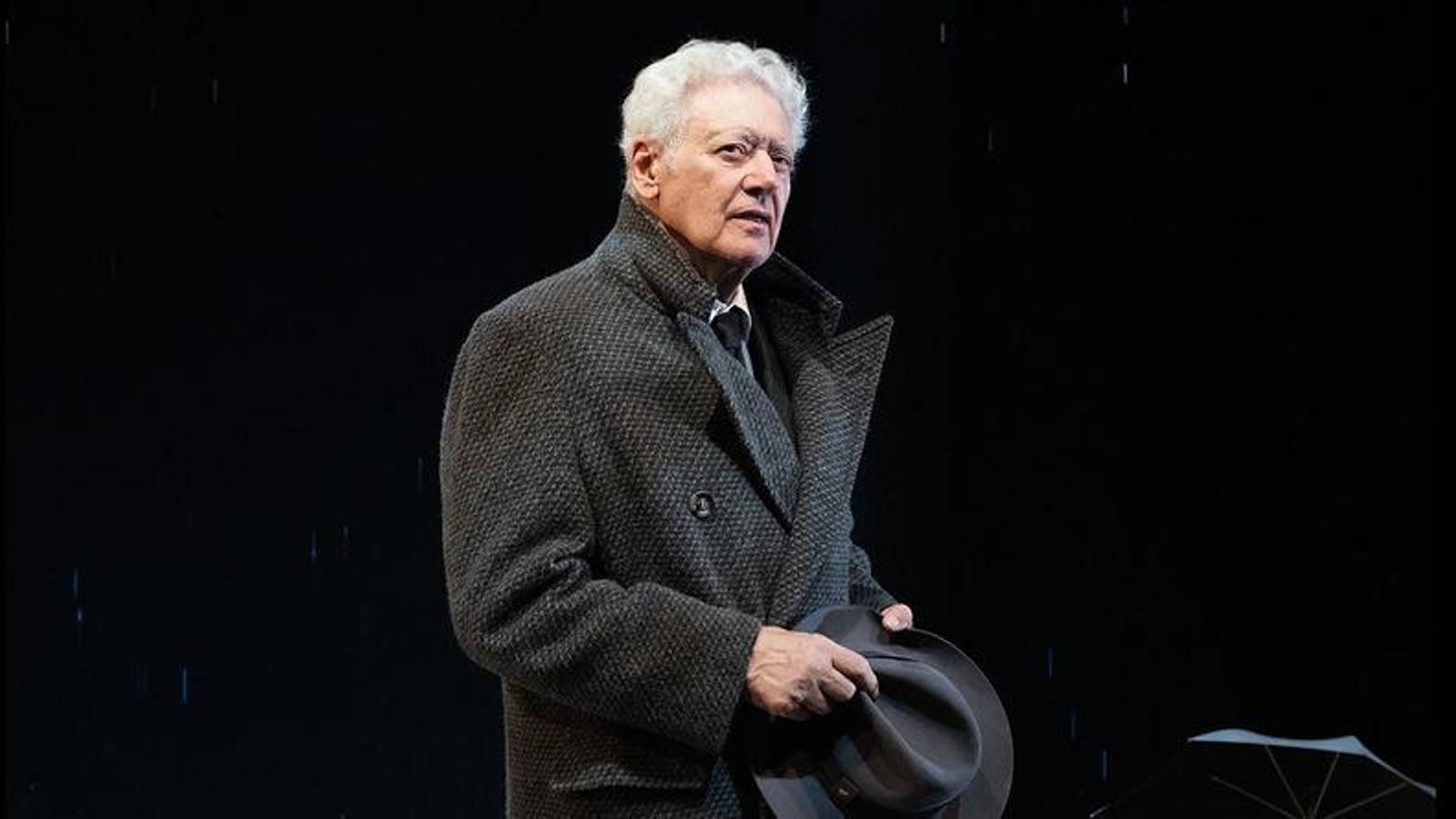
BarcelonaShortly before November 7, 1925, the educator and writer Henri Roorda (Brussels, 1870 - Lausanne, 1925) left a note for a very dear friend in which he announced that he would soon take his own life. Shortly before, Roorda had written a short book that he titled My Suicide, in which he laid out the reasons for living and for dying. Twenty years ago, Mario Gas and Fernando Bernués turned that text into a stage monologue that premiered in Madrid and ran for a hundred performances, but did not reach Barcelona. Now the two artists have set out to settle that debt and have relaunched the production, which premieres this Friday at the Sala Beckett under the title of Cheerful Pessimism (My Suicide). And it will be on stage until October 10.
"This is a monologue that directly challenges the audience and allows you to be very direct, fleeing from interpretive manicheanisms," says Gas, who takes the stage alone –under the direction of Bernués– and who, with this show, debuts at the Sala Beckett as an actor. Although Roorda ended up committing suicide, Gas stresses that his text "exudes a fascinating anarchic hedonism," because he "is not deeply depressed" but rather "believes in life, in love and in the human being." The educator's words refer to his experiences and reflections on couples and intimacy, but also on the role of school, society, and capitalism. "He is a libertarian who is against a conventional society. He reflects with brutal sincerity and sharpness on these topics; he could have written it today," points out Gas.
While in the first version of the show, two decades ago, they reproduced a classroom on stage, this time they have opted for an exercise in simplification. "We have kept the platform and the study table, nothing else. Everything is surrounded by a black box and it is raining in the background. We want the speech to arrive much more directly," explains Gas. According to the director, Roorda's text "is a masterclass with all the pearls of the author's thought," which is why they have decided to strip it of scenography and give all the weight to the word.
A play about fame from the absurd
While Mario Gas occupies the lower hall of the Beckett, the young company Al Dente will be installed in the upper one with their second show, Fama Fomo Fumu!, from October 7th to October 18th. "I discovered them at an open mic session and was absolutely fascinated. They mix divertimento and bad blood in a kind of revival of Ionesco's theater of the absurd," states the director of the Sala Beckett, Toni Casares. The production approaches the idea of fame through two friends (Claud Hernández and Zaida Lloveras) with strong ambition.
"As young people, we face great difficulty in dedicating ourselves to what we are passionate about. Fame is a vehicle, because the more you are known, the more you work," explains Luca Roma, who is the third pillar of the company and plays various characters on stage (from a waiter to a friend of the protagonists). The piece is presented as a sitcom and takes place in three scenic spaces: a bar, a house, and a casting room. From there, the company seeks to experiment with the formality of theater. "We want to tear up what we have been taught over the years, look for what lies beyond, and play with all scenic languages," highlights Lloveras.
