María Oruña: "It took me years to realize I was living the dream of many writers"
The writer delves into art heists in the crime thriller 'The Chamber of Wonders'
-
CAT -
CAST
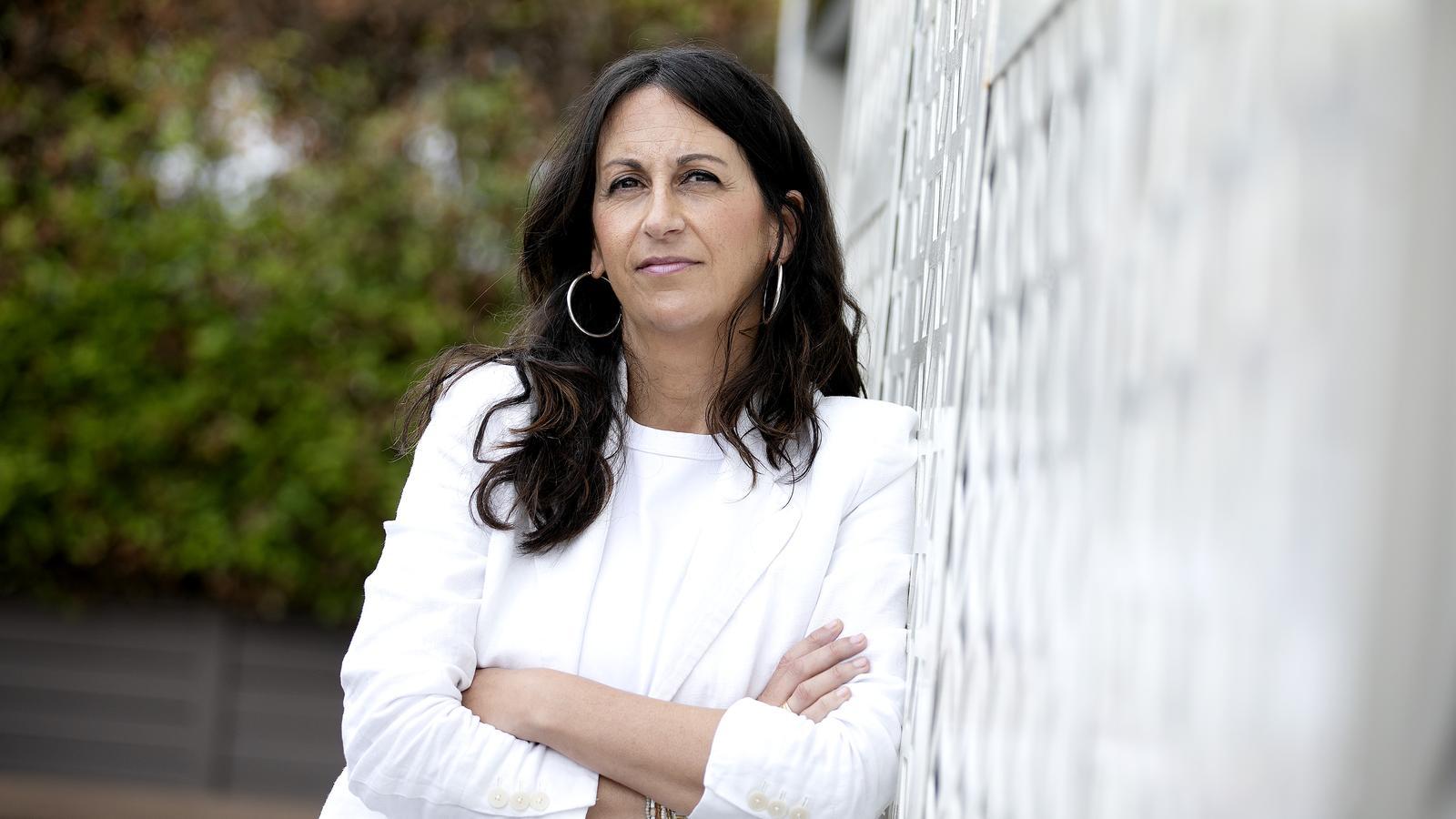
BarcelonaThe year she got pregnant, María Oruña (Vigo, 1976) planned everything. She left her job at an international law firm because she worked too many hours and couldn't balance her personal and professional life, opened her own office, created a website, and wrote an essay on labor law with advice and guidance for people who might need it. She had planned to take a year to write that first book, but in the end, she only spent four months on it. And with the time she had left, she started writing something to entertain herself. That draft eventually became Puerto escondido (2015; Port Amagat, in the Catalan edition by Columna), the novel that catapulted her to become one of the best-selling authors in Spain. But the beginnings of a literary phenomenon are rarely easy or quick.
"I didn't know any editors or anyone in the book world. I sent the text to all the literary agents in Spain and received no response. Until, eight months later, an agent told me to send her the first fifteen pages of the manuscript. Two days later, she asked for the whole thing, and suddenly, the rights were being sold in Germany while I was working peacefully in my office," explains Oruña. The novel became a mystery series, and then came new titles in various genres such as Los inocentes (Destino, 2023) and L'albatros negre (Rosa dels Vents, 2025), which have crowned her as a mass-market author with over 1.5 million readers.
Since Oruña has made literature his vocation, he has dedicated himself to writing about what interested him. The latest project has been the book "Lladres de guant blanc
Since Oruña made literature her vocation, she has dedicated herself to writing about what interested her. The latest project has been the book The Chamber of Wonders, which Rosa dels Vents has just published in Catalan with translation by Mireia Alegre, Imma Estany, and Imma Falcó. The novel, set in present-day Madrid, revolves around a disturbing theft at the home of one of Spain's great art collectors. The heist occurred during a party where a supposedly rehabilitated white-glove thief, Dimas Chevalier, was also present as a guest. "In my previous novel, I featured a character from the National Police's Historical Heritage Brigade. It was a secondary character, but many readers mentioned him to me, so I decided to write about that police unit," Oruña recounts.
The writer was clear that she wanted to pay homage to white-glove thief stories, but in a "contemporary and credible" way. That's why she immediately incorporated the character of Chevalier – who makes the reader doubt his intentions at all times – and imagined a wealthy family with a spectacular chamber full of artistic treasures and an intricate security system. "I have visited many museums and analyzed how an artwork could be stolen. At the Prado, for example, there are cameras even inside the elevators. I have also done research through interviews and statements from famous thieves, like the French Spiderman," says Oruña.
Through the characters, the novel reflects on the ownership of artworks and looting over the years, especially during the 20th century. "I am very surprised that there are assets acquired with colonial impunity, or thanks to a war conflict, and that we are not talking about it enough. If you were given a work of art as a gift but threatened at gunpoint, that is not a gift," points out the writer. As a backdrop to all of this, Oruña places a reflection on the desire to possess beauty: "It is impressive that a painting or sculpture created by someone who died centuries ago can move you. But around this there is also the will to differentiate oneself from others by being able to say, for example, that I am the one who has a Picasso in the bathroom, not you."
