Air conditioning: a luxury turned necessity
30% of vulnerable people in the Barcelona metropolitan area cannot afford this cost

-
CAT -
CAST
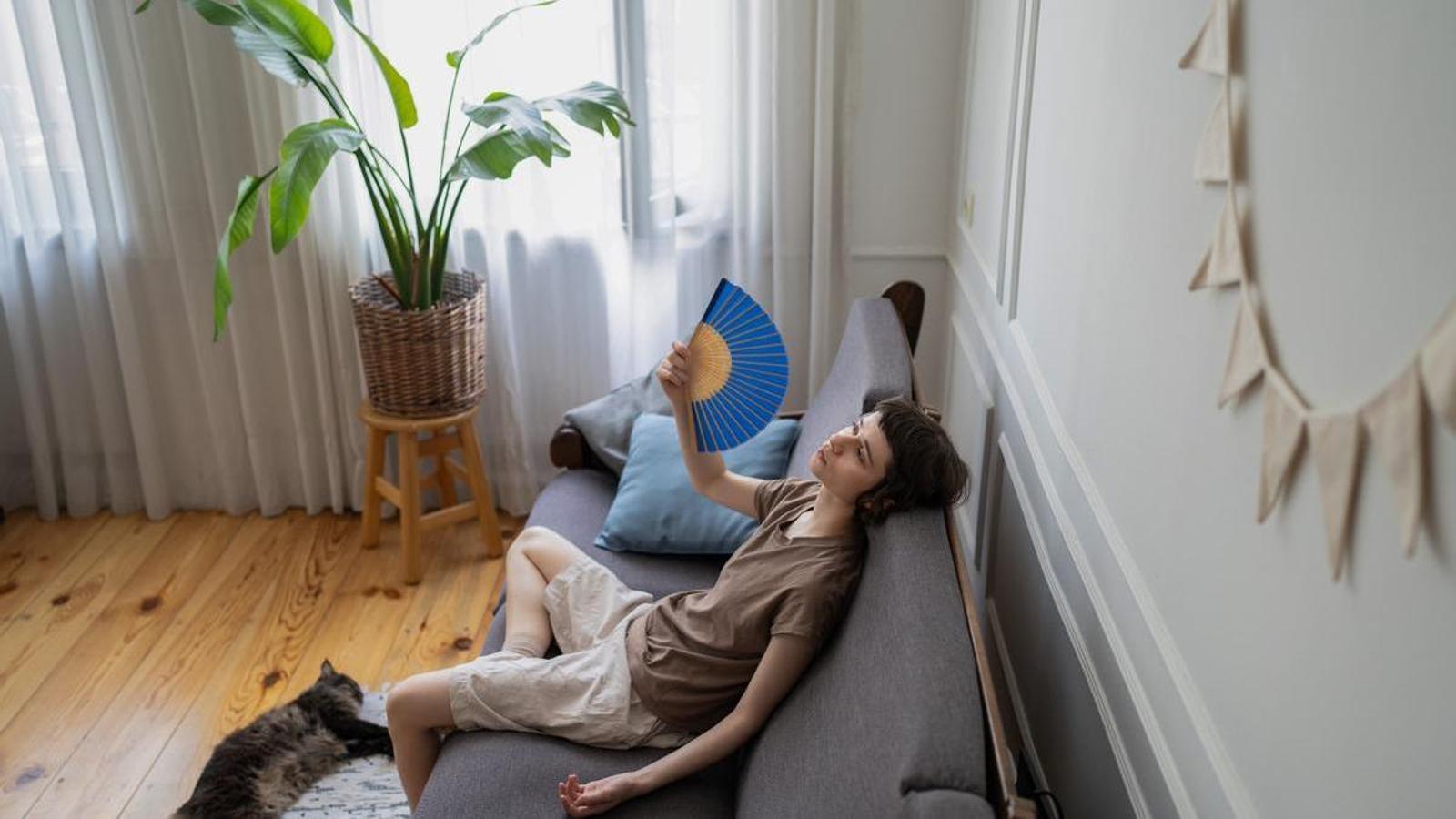
Years ago, houses used to be the most common refuges to protect oneself from the heat. Far are those times when grandma would prepare you a cold infusion of water with mint or place a bucket of ice in front of the fan as home remedies when you came back all sweaty from playing in the neighborhood square. Today the situation is quite the opposite. Now these home recipes fall rather short in the face of premature and record-breaking summers that force us to seek refuges everywhere. Before summer arrives, children and the elderly fill the squares, libraries, and neighborhood centers to try to alleviate the stifling heat. The idyllic postcard of a neighborhood network contrasts with the image of sweaty neighbors leaning between the bars and ledges of windows, especially in the poorest neighborhoods of Catalonia, where nearly 30% of vulnerable people cannot afford air conditioning. Inequalities are increasing, and the capacity of certain sectors of society to cope with heatwaves is becoming increasingly limited.

Catalonia broke a heat record last June, surpassing the threshold of 200 heat-related deaths. This is 218% more than during the same month last year, when 88 people died. Energy poverty has reached historic levels, with nearly 520,000 people living in heat-vulnerable areas unable to maintain their homes at an adequate temperature – around 26 degrees Celsius according to the recommendations of the Catalan Institute of Energy – during the summer, as indicated by the latest surveys from the metropolitan area of Barcelona and the Metròpoli Institute. This represents a 7% increase compared to 2022.
Air conditioning is a luxury in many areas of Catalonia, especially in densely populated neighborhoods. In Barcelona city, the districts of Ciutat Vella, Horta-Guinardó, Nou Barris, and Sants-Montjuïc are those that concentrate the majority of people who do not have this prized appliance from June to September. High urban density and energy poverty coincide with global warming, which has taken the Mediterranean basin and especially Catalonia as one of its favorite victims. Our territory has become one of the European regions that suffers the most heatwaves. Tropical nights, even torrid ones, have become the common denominator in recent summers with record figures exceeding 26 degrees at midnight, a phenomenon typical of subtropical countries.
Blanca Paniello, a doctoral student at ISGlobal and Pompeu Fabra University, warns that the focus must be on vulnerabilities. “Energy poverty is directly linked to a higher risk of heat mortality, and this has to do with people's socioeconomic level. The neighborhood you live in affects risks because some have better healthcare and more resourced social facilities,” she points out. In this regard, Paniello suggests that measures such as increasing climate shelters or having air conditioning are not a panacea. “Urban planning plays a fundamental role. It is evident that a larger park of trees and reducing paved surfaces reduces the heat island effect. However, we need to rethink how we build our cities. The inequality between neighborhoods is perceived, for example, in the materials with which buildings are constructed. Therefore, reducing risks requires a more efficient housing policy,” she explains.
Seeking alternatives
The demand for air conditioning is increasing year after year, and more and more families are scraping by to buy one. But, apart from air conditioning, many homes are not designed to achieve good ventilation. There are increasingly smaller apartments and in more congested neighborhoods. For this reason, from ISGlobal they opt to find alternatives to a device that, in addition to representing an extraordinary cost for a significant part of the population, contributes to air pollution. "Access to air conditioning has the obvious advantage of reducing the temperature of the home, but it is not ecologically and economically sustainable," he explains. "A good solution requires designing homes that promote cross-ventilation, for example. It is a middle ground that already drastically reduces thermal stress," he adds.

Beyond the economic capacity to have adequate acclimatization of homes, reducing the physical and, above all, psychological effects of this phenomenon is not within everyone's reach. Clinical psychologist Mayra Ariza warns that heat generates stress that alters the brain itself and our cognitive abilities. Ariza talks about how a physical reaction causes a direct reaction in our social and affective environment. "Extreme heat not only destabilizes us for physiological reasons, but also emotional ones. When we live as a couple, the phenomenon of thermal incompatibility usually occurs," she explains. This causes social distancing between people as a result of a sudden rise in cortisol and adrenaline. Consequently, in summer, people become more irritable and confrontational. Ariza insists on the need to understand sleep as a key issue in times of thermal stress. "It is essential to prioritize rest through lukewarm baths, not cold ones, as excessive thermal contrast can trigger the activation of the hypothalamus. The workplace is another risk factor, such as professions that involve exposing workers to sunstroke, such as agriculture, construction, or delivery drivers. For this reason, Ariza recommends slowing down the pace of work compared to other times of the year.
However, there are certain dinner table debates about air conditioning that generate more confusion than certainty. Everyone has heard someone say that the air conditioner has left their throat dry, or that their bill does not correspond to the use they have made of the air conditioner. It is true that the use of this appliance is reflected in the electricity bill, but bad practices have spread when using it that can be corrected to reduce costs and risks to health and the environment.
- 1. Avoid relying on the device's automatic mode We tend to associate greater comfort with a lower temperature, but the reality is that dehumidifying the air is more efficient and requires much less energy consumption.
- 2. Installation This should always be done in an open space protected from the weather. This way, we extend its lifespan.
- 3. The orientation of the device is a key factor. It should never directly touch people, so avoid installing it above the television or the headboard of the bed. The optimal solution is to place the units in hallways to create air currents that climate the entire home.
- 4. The type of device Look for air conditioners with a heat pump and an external unit or compressor, as alternative devices tend to consume much more energy and do not cool efficiently.
