Kazuo Shinohara: an architect against Ikea's comfort
The King Martí Deposit hosts an exhibition about one of the most important Japanese architects of the 20th century
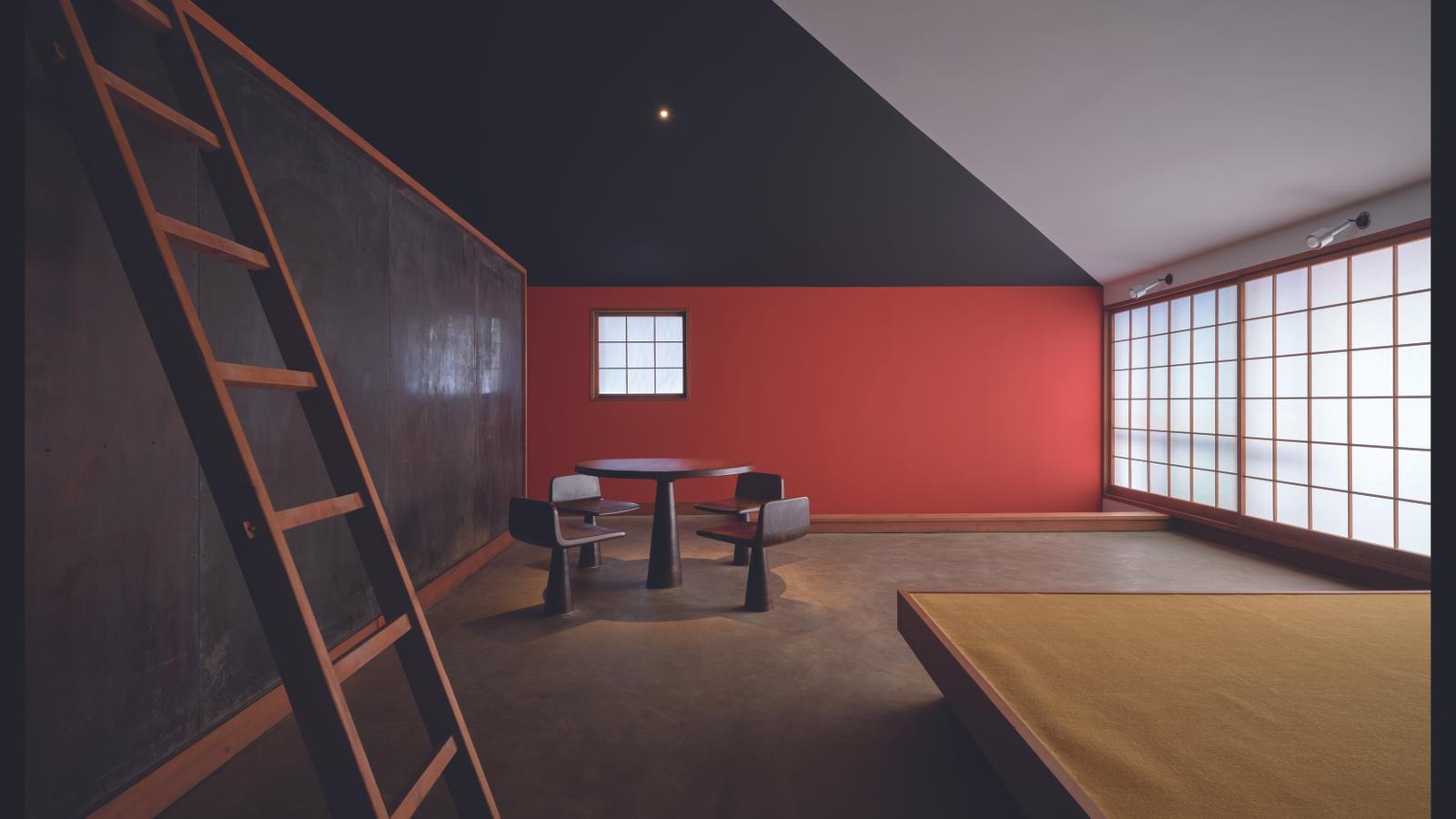

- King Martin's Deposit (Bellesguard street, 14, Barcelona)Until May 18th.
For the Japanese architect Kazuo Shinohara (1925-2006), the house is "art", as he himself wrote in one of his best-known texts, included in the exhibition dedicated to him by the King Martí Deposit until May 18, precisely titled Kazuo Shinohara. The House as a Work of Art. Shinohara is one of the most important Japanese architects of the 20th century and one who most influenced established architects such as Toyo Ito and Kazuyo Sejima, both Pritzker Prize winners, the Nobel Prize of architects, and others subsequently. But he is still little known to the general public. So the exhibition, which is included within the World Capital of Architecture in Barcelona, is a good opportunity to delve into his legacy.
"We have reached a point where we must affirm that the house is art, even at the risk of being misunderstood and rejected," Shinohara used to say. "This means that the house must be separated from the territory of architecture. It must be moved to the realm of art, to which painting, sculpture, literature, and other disciplines belong," he warned. This vision also had a combative character. "I believe that residential design can be a critique of civilization —the architect would say—. But this cannot happen when the house is either deliberately with society or diametrically opposed to it." "Exaggerating, from the House with an underground bedroom all Japanese architecture of the last fifty or sixty years emerges," says the exhibition's curator, architect Enric Massip-Bosch, who worked with Shinohara in 1987 and 1988.
Throughout his career, Shinohara designed over thirty single-family homes, many of them small. In them, he poured all his experimental drive and reflection on "domesticity," as Massip-Bosch states, who has conceived the exhibition as a display primarily of texts, plans, and photographs. "It's extraordinary that so many of Shinohara's houses have survived, because many are very small and built with very economical means," says Massip-Bosch. A curious case is that of the Casa Umbrel·la, which has been installed for years at the Vitra Campus in Switzerland. It must be taken into account that in Japan, by law, after thirty years buildings have no value and only the land does. Thus, the renewal of the built environment is constant. "They are not easy houses, and the fact that they are still cherished says a lot about the emotional value they generate in their users. One of the main values of Shinohara's houses is that they always demand a reaction from you, imbue them with an emotion that generates an awareness of being in the world. It was against comfort understood in the Ikea way, which in the end bewilders our senses. Thus, we are not aware of what is happening and have no real connection with the world," says Massip-Bosch.

In the context of Japanese architecture, Shinohara adopted a very personal stance on modernization and Westernization after World War II. "With the North American occupation, this debate comes to the forefront. There are two lines, one advocating for modern architecture like that done in California in the 1950s. And another based on making modern architecture, but Japanized —explains Massip-Bosch—. Shinohara went against this, and valued Japanese architecture as it is, not necessarily its form, not necessarily its imperialist tics, but yes its values and especially its elements. With some elements of tradition, he achieves absolutely unknown spaces".

One of these cases is the rammed earth paving he did in a house commissioned by a couple made up of a documentary director and a screenwriter, the House of the Earth. On the other hand, the second house commissioned by the poet Shuntaro Tanikawa, Shinohara placed it at the top of the slope of the plot, so that nature would enter directly. Tanikawa had commissioned it with a poem: "Winter house or pioneer's cabin (house) / Summer space or chapel for a pantheist (not necessarily a house)".
Another of his most famous houses is a dwelling he built for himself in Yokohama, now disappeared: the dwelling consisted of an old wooden house he had saved from a plot where he himself had built a house, where he put the studio, and a new kaleidoscopic volume. And also emblematic is the project for a small refuge for him and his family in the mountainous region of Nagano, on which he worked for ten years, until his death. The tour ends with various non-residential works and projects, among which the building for the Centenary of the Tokyo Institute of Technology stands out, considered a historic work.
