Isaac Bashevis Singer, so old and so modern
In the rehearsals of 'Old truths, new clichés', the author unfolds a surprisingly gymnastic range of interests, encompassing from the Jewish diaspora and Zionism to artistic postmodernity

-
CAT -
CAST
- Isaac Bashevis SingerQuaderns Crema / AcantiladoTranslation by Mar Vidal296 pages / 22 euros
The richest (and most entertaining to observe) literary intelligences are usually the most tentacular, that is, those that touch on many subjects, use a broad and varied palette of interests and resources, and are fed by sufficiently diverse influences. Tentacular literary intelligences, naturally, can only prove themselves to be so if they are accompanied by an equally tentacular literary talent. Better said: versatile. We would find exceptions, but I would say that in general only authors who write well, with expressiveness, precision, and depth, in all kinds of genres and formats can think and explore well, with insight, rigor, and originality, all kinds of subjects. Isaac Bashevis Singer (Radzymin, Poland, 1904 - Surfside, United States, 1991), the most prestigious figure in modern Yiddish literature, Nobel Prize in Literature 1978, author of novels, short stories, children's literature, and thousands of journalistic articles, was a prolific and considerably eclectic writer. The eighteen articles or brief essays that make up the volume Old Truths, New Clichés, originally written in Yiddish, translated into English under the meticulous supervision of the author himself and now translated for the first time into Catalan by Mar Vidal, amply confirm this eclecticism.Among the influences that Bashevis Singer acknowledges are “the Torah and the sacred books”, the philosophy of Spinoza and Hume, the Kabbalistic texts of venerable rabbis, the works of the most colossal giants of 19th-century French and Russian novel writing (Balzac, Flaubert and Zola, Dostoevsky and Tolstoy), the occultism of Conan Doyle and Flammarion... His interests are equally surprisingly gymnastic, ranging from the Jewish diaspora and Zionism to artistic postmodernity, which he criticizes and despises without using the term. We can also add: Soviet totalitarianism; children's literature; the past, present and future situation of the Yiddish language; the Jewish reality in old Central Europe and the raison d'être of Hasidic Jews in the New York neighborhood of Williamsburg; the fire of faith and the possibilities of mysticism; the hopes of humanism and the dangers and limitations of rationalism...A divided life
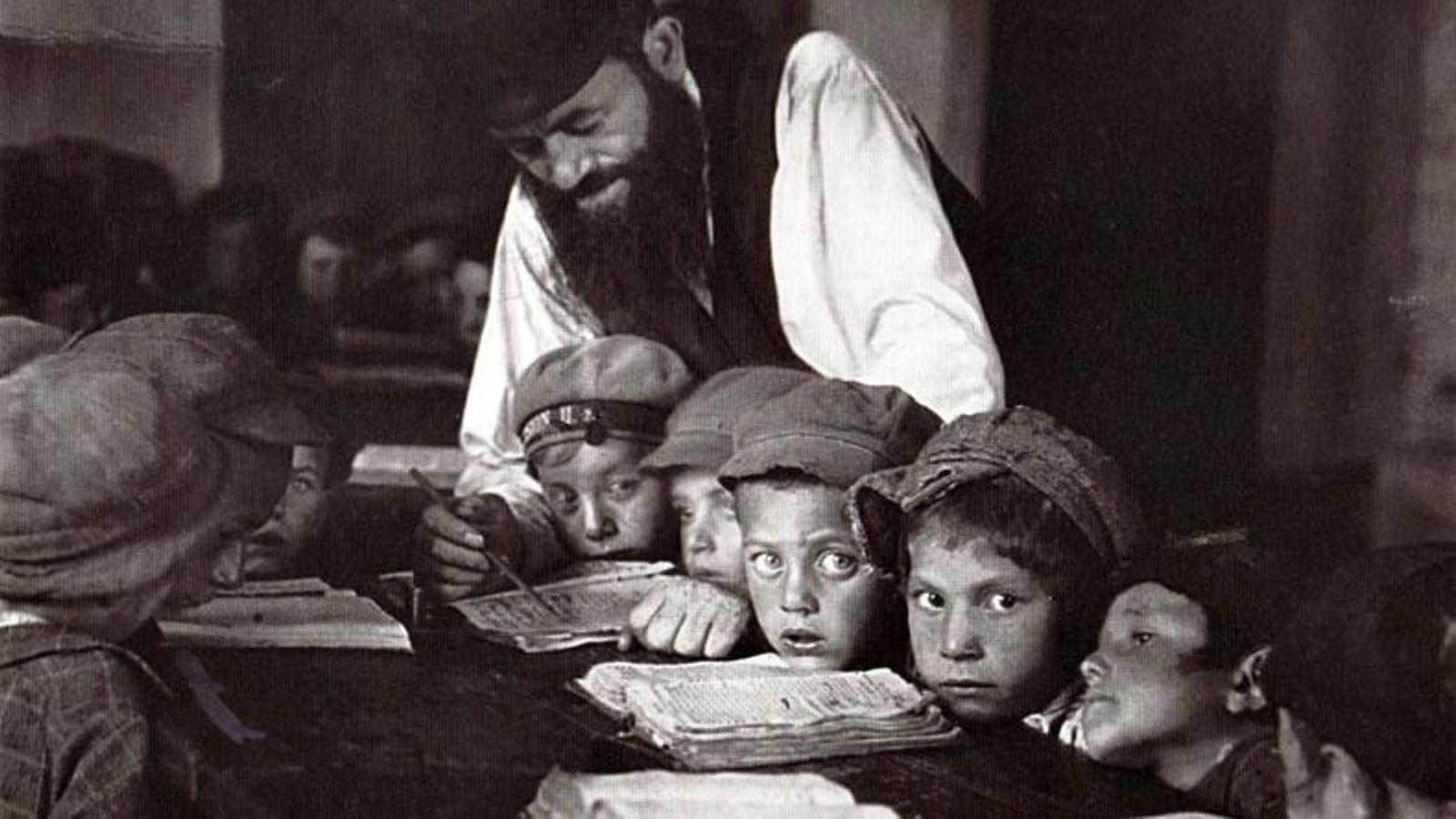
All in all, I believe it reveals the profile of an intellectual who is very old and at the same time very modern, who also had a life split in both the intimate and biographical plane as well as the cultural and intellectual plane. Son of an orthodox rabbi, Bashevis Singer was saved from a more or less certain death at the hands of the Nazis when, in 1935, he fled Poland to go into exile in the United States, where for decades he built a literary work in which, especially when he wrote fiction, he recovered, preserved, and recreated the daily life of the shtetl. This multiple split could have disoriented and denatured him as a writer. Instead, it conferred upon him a cosmopolitanism without pretension, almost against his will, the imagined and deliberate rootedness of someone who has been uprooted, which made him a reclusive traditionalist who was at the same time open and very modern.He says so in one of the most interesting articles in the volume, titled Yiddish, the language of exile: “People must be at the same time themselves and part of a whole, faithful to their home and their origins and deeply respectful of the origins of others”. And he adds: “For the Yiddish artist, yesterday is as real as today: those who died are not dead, destroyed cities still teem with life”. It is one of the most fascinating aspects of Bashevis Singer, the naturalness with which he interprets the double role he feels he must play, the grace and skill with which he carries out the double mission he has set for himself: to be the custodian of a secular and traditionalist legacy without diluting or relativizing it and at the same time to make it live in modern society, the world of atomic energy, technological advances, dissolute morality, art and culture understood as a chaotic and vibrant mêlée in which everything seems to be valid and everything seems possible.At times pompous and naive, at times sharp-wittedly malicious –“at no other time has a lack of talent operated with so many theories as in ours”–, often with haughty but also generous and magnanimous wisdom, Isaac Bashevis Singer is a singular and tragically unrepeatable writer.
