"In Sparta there were inspections and sanctions for those who got fat"
Andrew Bayliss demolishes some myths about the rise and fall of the Spartans
-
CAT -
CAST
BarcelonaDelving into the history of the Spartans is not easy. They left practically no written sources, and everything we know comes from what the ancient Greeks wrote and built over time. In the popular imagination, there is the terrible battle against the Persians, Thermopylae. In the pass of Thermopylae, King Leonidas and three hundred Spartans led seven thousand Greeks to hold back an immense Persian army until reinforcements arrived. Among the Persians were combatants from 46 nations, and the Spartans, according to Aristophanes, fought like furious beasts, with foam running down their jaws and legs.
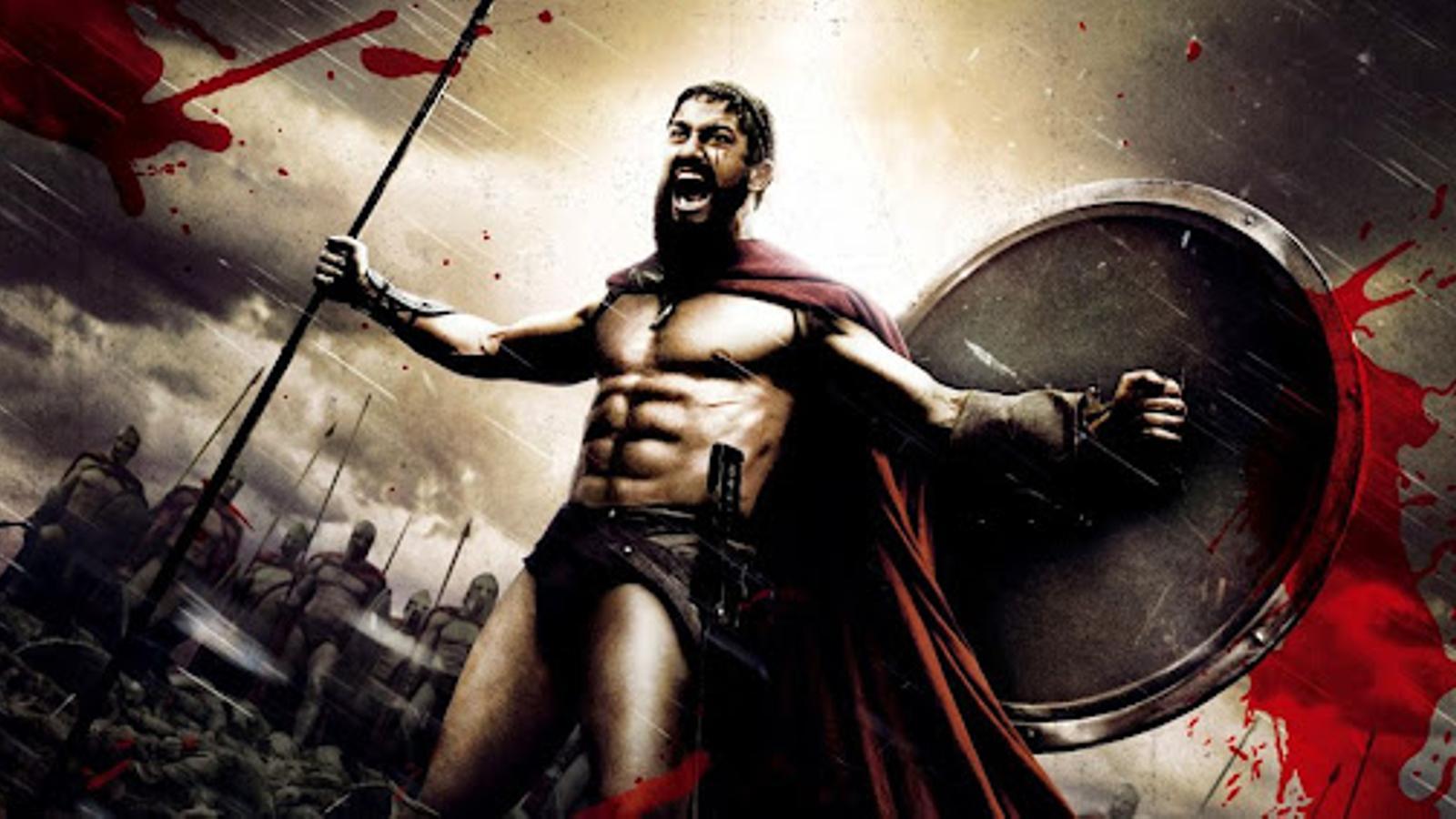
The fascination with this episode is so great that some authors have gone so far as to say that, without the Spartans and Thermopylae, Athenian democracy might not have existed. In the graphic novel "300", Frank Miller writes that Leonidas "saves the world from dark and stupid paths". "Come and get them", the phrase of the Spartan king when the Persians demanded their surrender and the handing over of their weapons, has become a widespread slogan and his image has been constantly reused.
"It is complicated to distinguish reality from propaganda", says historian Andrew Bayliss, author of the book "Sparta. Rise and Fall of a Superpower of Antiquity (Ático de los Libros). Bayliss, professor of Greek history at the University of Birmingham, explains that all the sources that speak of the Spartans, from the classical period to the Byzantine era, come from admirers, critics, or enemies. To begin with, Thermopylae was a defeat: the Spartans were annihilated in less than three days, and only managed to delay the Persian advance for three weeks. Nevertheless, Sparta remembered it as a moral victory.
Who were, then, these men and women who lived in Sparta, a small city in the Peloponnese, in southern Greece, without walls or great temples and surrounded by fertile lands? “The Spartans believed that their kings were descendants of Heracles, who had returned to southern Greece accompanied by the Dorians. This idea seemed to fit with some archaeological evidence, but a more detailed examination suggests that this is not the case,” says Bayliss. The Spartans were convinced that Menelaus and Helen had lived in a palace in Sparta. There was a sanctuary, about a 25-minute walk from Sparta, where Helen was venerated, as were Menelaus and Helen’s brothers, Castor and Pollux. Therefore, around 500 BC the Spartans linked that space with their ancestors.
But the archaeological evidence does not support them: there is no evidence of a palace in the immediate area of Sparta. “Archaeologists have searched for it unsuccessfully and have not found it. The only evidence of a monumental palace is found at a site almost 20 kilometers south of Sparta, where remains of monumental architecture and a lot of pottery have been found. This suggests that, if a Menelaus had really existed, he would have lived there and not in Sparta. This would have been a shock for someone like Leonidas, who believed he was connected to that tradition,” assures Bayliss.
Plenty of time for exercise
Sparta became a superpower of ancient Greece. At its peak, it controlled two-fifths of the Peloponnese, an area a hundred times larger than that of most Greek city-states. “Conquering the helots in Laconia and Messenia allowed the Spartans to adopt a system in which they became a kind of idle lords. The helots did the work they didn’t want to do, and thus they could dedicate themselves to an aristocratic lifestyle, especially focused on exercise and hunting,” says the historian. This system had a major drawback: the helots were much more numerous and were treated brutally. This forced the Spartans to dedicate many resources to their control, mainly through intimidation and fear. “Aristotle said it was like having an enemy in the house. Thucydides claimed that many Spartan institutions were created to protect themselves from the helots, and this generated a vicious cycle,” says Bayliss.
Sparta may seem, in a sense, a modern society, as the state was responsible for the education of children, both boys and girls, which was compulsory from 7 to 20 years of age. Both boys and girls exercised constantly, with a reduced diet to sharpen their wits and force them to find food. There was strong control. “In Sparta, the fact that a high-ranking official was in charge of education shows how seriously they took it. In Athens, on the other hand, school was for the wealthiest, children went with a slave, and teachers did not have much prestige – says Bayliss –. This prolonged education instilled discipline and a shared experience that was useful in combat, and may explain the obedience to the laws”.
Every ten days, boys were forced to undress and, if they showed signs of obesity, they were publicly humiliated. "In Sparta there were inspections and sanctions for those who gained weight," says Bayliss. Spartan society prioritized the spoken word and recited poetry, especially war poetry. It also highly valued physical beauty. There is controversy about the relationships between mentors and students. "The Athenians thought that the Spartans practiced sexual activity with boys a lot. They used the expression 'laconian buttocks' as a euphemism for anal intercourse [Laconia was the region of Sparta]. So I always tell my students that, in the movie 300, Leonidas accuses the Athenians of being 'boy lovers', but the reality was just the opposite: it was the Athenians who said that about the Spartans," explains the historian.
The Athenians were scandalized that girls wore short tunics to facilitate movement and did so much exercise. The truth is that in Sparta women had more freedom than in other Greek cities. They could own land and inherit. "It was a very unusual situation at that time, because they had economic and social influence," says Bayliss.
Decadence due to mortality
What caused the fall of Sparta was not any invasion or military disaster, but the loss of citizens. There were many deaths in combat, especially between the invasion of the Persian king Xerxes (480 BC) and the battle of Leuctra (371 BC), between Sparta and Thebes. Another turning point was a great earthquake in 460 BC. Nevertheless, a key element was taxation. “The main problem is that the threshold for citizenship was very high. It was easy to fall into poverty by Spartan standards and lose citizen status. Taxes were another problem, because they were fixed: everyone paid the same regardless of income. Losing citizenship meant being excluded; it was a social death,” the historian summarizes.

