Ian McEwan: "The dead watch us with a touch of shame and another of pride for all that we do not know about them"
The British writer publishes 'What can we know', a dystopia starring an academic who pursues a lost poem and the history that it hides

-
CAT -
CAST
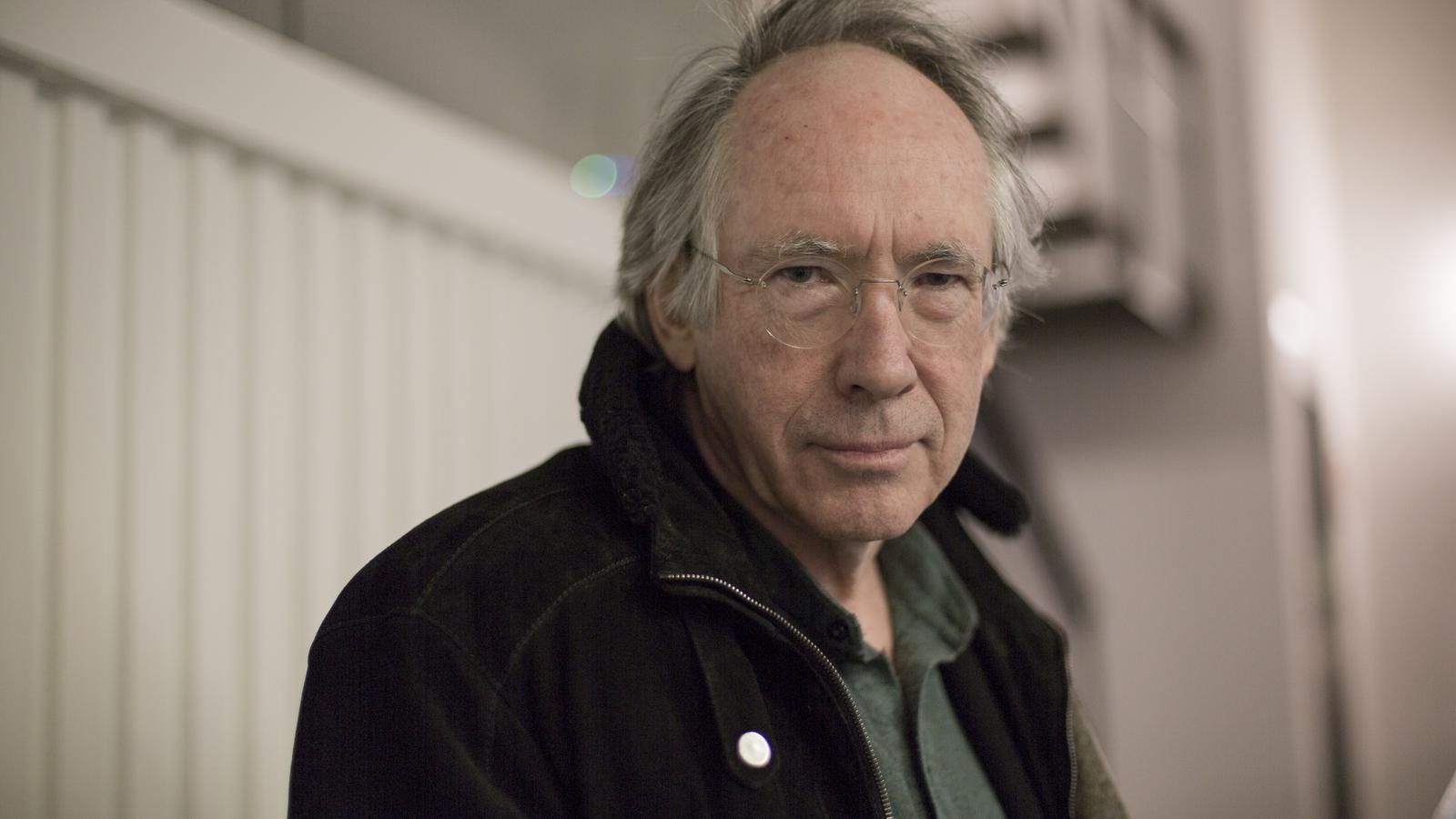
BarcelonaIan McEwan is approaching 80 years old with no intention of slowing down his creative pace. Born in 1948 in Aldershot (England), the author of Atonement (2001) and Saturday (2005) –both available in English at Anagrama– has recently experienced the loss of some of his generational peers, such as Martin Amis, who passed away in 2023, and has also witnessed other novelists announce that they were stopping their writing, as in the case of Julian Barnes. "For some time now, I have had to attend a few funerals of people I knew, and I have realized the amount of things that I did not know about them. The dead observe us with a touch of shame and another of pride for all that we do not know about them," explains McEwan from his home, on the occasion of the presentation of his new novel.
Four years after the extensive, intimate, and partially autobiographical Lessons, in What We Know (Anagrama) Ian McEwan mixes three themes that he has explored on other occasions: dystopia, the concern for climate change, and the subtle and accurate dissection of the intellectual world that he has known so thoroughly. "Since my first book, First love, last rites [1975] more than half a century has passed, and at a date as distant as that one, people were already talking about the death of the novel –the author recalls–. After dedicating my whole life to writing them, it still seems to me the best way to examine the mental lives of characters. In the era of Flaubert, Dickens, and Tolstoy, novelists were capable of explaining an entire nation through their fictions. The novel will end up becoming the passionate obsession of a minority, but we still find in it a beauty and a knowledge that no other art form gives us: there is nothing that can replace it," he defends.
What we can know is set in the year 2119 in a world in crisis, with the population reduced by half as a result of various ecological catastrophes caused, in part, by technological progress without limits or ethics. The book's protagonist, the academic Thomas Metcalfe, pursues the few traces that remain of a lost poem, recited by the poet Francis Blundy in 2014 at a dinner that was intended to be a replica of another emblematic literary meeting, starring two centuries earlier by William Wordsworth, John Keats and Charles Lamb. "If in the 19th century communication was primarily by letter, in Blundy's time there are also emails and WhatsApp, two more immediate formats through which we see that something has been lost –comments the author–. Depth has been lost in communication. When a few years ago I gave the University of Texas all the emails I had written between 1996 and 2013, it didn't make me suffer for a minute, because I don't believe I put anything relevant or compromising in them".
Less silence and privacy
In Lessons, the investigations carried out from the future by Thomas Metcalfe shed light on some of the particularities of our present. "We live in a world where it is increasingly difficult to find silence, privacy, and the ability to let the mind dream," comments McEwan. "These three elements are in danger of extinction. When we get off a plane, the first thing we do is rush to read the messages pending on our phones. In the world before the internet, we would wait for our suitcases to arrive with our eyes fixed on the baggage carousel while we thought about our own things."
The main protagonist of the novel soon intuits that the secret contained in the verses of Blundy's missing poem has to do with his wife Vivien and, in turn, could reveal to him the key to understanding those early years of the 21st century, which from the future are perceived, perhaps erroneously, as an era of cultural splendor. "It is a colossal luxury, culture," admits the author. "In times of war, we would not value it as we do now." McEwan defines our present as a "strange and restless era." "We have the certainty that the world we find ourselves in is becoming dangerous by the moment," he states. "It is not just a matter related to climate change. Many countries are rearming themselves with nuclear weapons. Artificial intelligence could cause an unprecedented economic crisis. The big difference between thirty years ago and now is that, for the first time, people in the First World think that the future will be worse than the present."
Two of the refuges that both the characters in Lessons and McEwan himself find are the power of the "literary word" and the enigma that hides behind every life. "I am a great reader of literary biographies," he says. "If you read three about the same person, you encounter three different people. A biographer I have followed and who has inspired me for years is Richard Holmes. He says that when we write someone's biography, we have to become friends with our subject until, in a certain way, we end up betraying them."
