How is it to film the big Palestinian production in the midst of the war in Gaza?
Director Annemarie Jacir premieres ‘Palestine 36’, an anti-colonial story about the Arab revolt against the British Empire
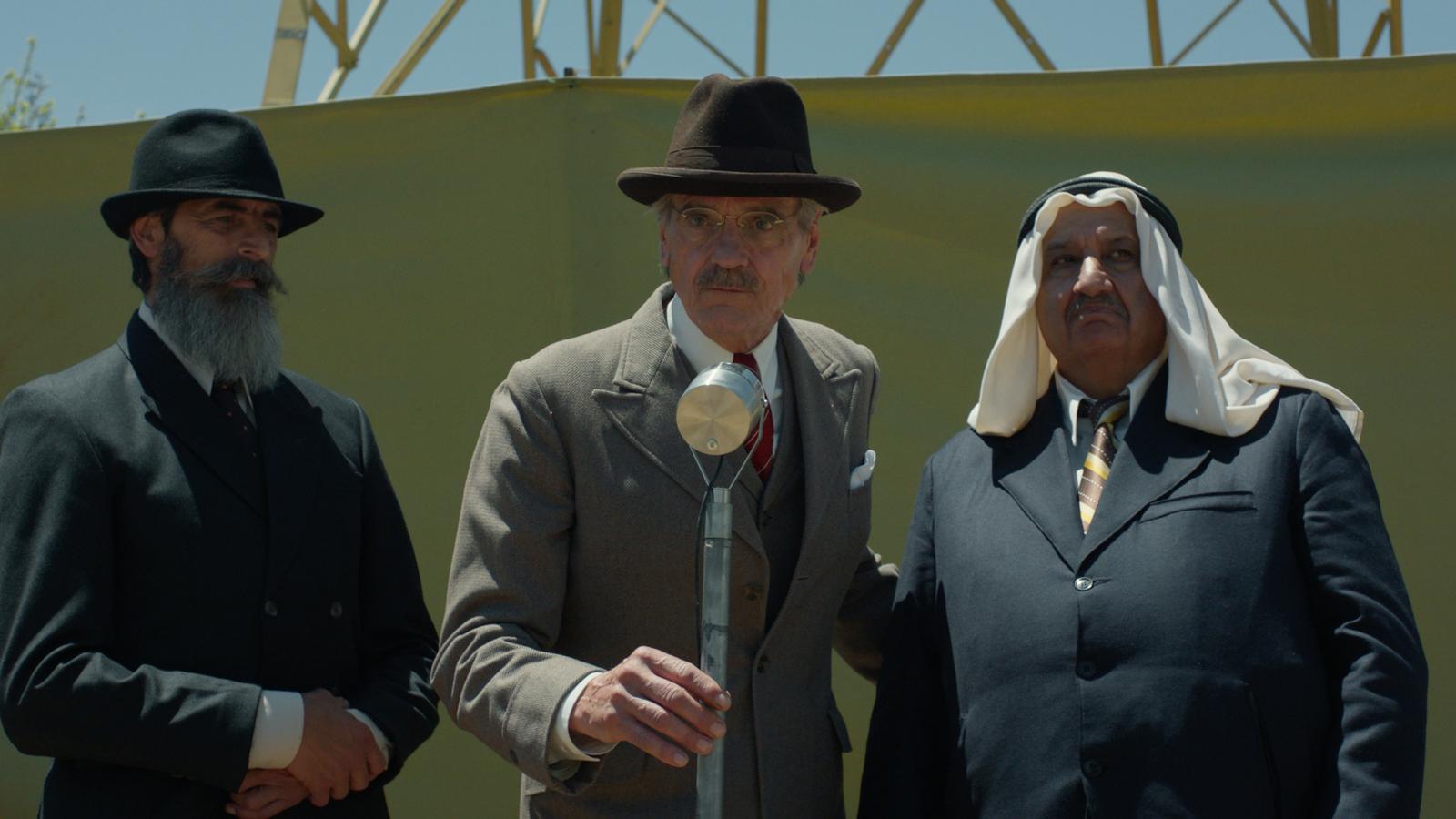
BarcelonaOne of the fundamental episodes for understanding the current situation in the Gaza Strip is the Arab Revolt of 1936, the first major Arab military uprising against the British Empire. In this uprising, Palestinians demanded their independence and protested against mass Jewish immigration. The revolution lasted three years and was one of the longest anti-colonial uprisings in the entire British Empire. Director Annemarie Jacir has brought this rebellion to cinema in Palestine 36 (2026). The film premieres this Friday and is a major international co-production between 14 countries – the most important in the history of Palestinian cinema – which interweaves a web of stories within the framework of the anti-colonial uprising. “It doesn’t feel like a film from the past, but rather it is more current than ever,” Annemarie Jacir explains to ARA via video call, who in 2008 was the first Palestinian woman to shoot a feature film with Salt of This Sea.Taken from some clandestine documentaries, Palestine 36 is the only feature film shot in the region of Palestine since the outbreak of war on October 7, 2023. Filming began before the conflict started, but it had to be interrupted and moved to Jordan. Thirteen months later, they returned to Bethlehem to complete the film. Jacir details that the film's production was stopped and resumed up to four times. “Filming this movie has been a revolt in itself; everyone has contributed to the cause in one way or another,” she explains. For Jacir, the Palestinian people “have lived the same thing for decades and decades,” and the film “portrays the dispossession of their homes and their lands.” “This is the personal story of every Palestinian: we rise again, and they repress us again,” says Jacir.
Parallels between 1936 and 2026
With an ambitious historical production value, Palestine 36 portrays the massive arrival of Jews to the area in the thirties and the subsequent creation of Zionist paramilitary forces with British support. According to Jacir, there are parallels between the situation in 1936 and the present day. “The British transferred the colonialist occupation to the Israelis. Today we continue to live under military occupation,” assures the director. In 1936, the British army deployed more than twenty thousand soldiers in the region, repressed thousands of Palestinians, and forced the exile of the revolt's leaders. In the film, several characters change their minds following the peasant uprising. “All the characters are forced to take a stance regarding the revolt, regardless of whether their decision benefits or harms them,” explains Jacir.
For Jacir, the revolution is “the most crucial moment in the history of Palestine,” a fact that made her feel a great responsibility. “Telling this story is telling the lives of our grandparents. The whole team had some family anecdote about this revolt, which is why it is very personal,” she says. Palestine 36 shows the repression and violence that the British army exercised over the Palestinian population without filters. “I didn't have to explain to the extras what it was like to experience an explosion or a raid – she points out –. Unfortunately, most of them had lived it firsthand.” The director, who studied cinema in the United States, is aware of the privilege it represents to dedicate herself to shooting a film while her people suffer a genocide. “We belong to this land – she explains –. I live and work in Bethlehem. I don't know what will happen tomorrow, but for now, we have to insist on telling our stories and fighting to achieve a normal life”.
With Jeremy Irons and Robert Aramayo
The cast of Palestine 36 combines debut actors and international stars. Two of the lead actors, Karim Daoud Anaya and Yafa Bakri, are making their first film appearance. But the casting includes established actors like Jeremy Irons; Robert Aramayo, last winner of the Bafta for best actor for his role in Uncontrolled (2025); Liam Cunningham, and Hiam Abbass, a Palestinian actress who plays Marcia Roy in the series Succession.
For the creation of the characters, the director has been inspired by real figures who participated in the revolution. This is the case of the character played by Billy Howle, a British secretary named Thomas who, after witnessing the horror of the repression against the Palestinian people, became an anti-colonial activist. One of the locations where the film takes place is the village of Al-Bassa, which was depopulated and destroyed by Israeli military forces after the creation of the State of Israel in 1948. The land is another character within the narrative. “Our landscape has changed too much during all these years of occupation – says Jacir–. The majority of those affected by the revolution were farmers. They were being separated from the most precious thing they had: their land”.
