The empire of the mop
Vileda has roots in a German tannery of the 19th century
-
CAT -
CAST
Let's place ourselves in Weinheim, Germany, in 1849. It is a small town in Baden, in the southwest of the country, surrounded by vineyards and forests and with a long tradition in leatherworking. On the outskirts, next to the Grundelbach stream, there is a tannery where, every day, about fifty workers transform hides into leather. It is hard to imagine, but it is in that workshop that the story begins which, almost a century later, led to the creation of Vileda, one of the best-known brands in Catalonia when it comes to mops.
Today, Vileda remains in the hands of Freudenberg, the same German family group that has its origins in that tannery. But the business has changed radically: Freudenberg is now an industrial giant with nearly 51,000 employees around the world and a turnover of 11.732 billion euros in 2025. The cleaning and household products division, which includes Vileda and other brands such as O-Cedar, Gimi, or Marigold, brought in 1.353 billion on its own. But how did it go from processing calf hides next to a German stream to selling cloths, mops, and other cleaning tools all over the world?
The power of Viledon
On February 9, 1849, Carl Johann Freudenberg and Heinrich Christian Heintze founded the tannery Heintze & Freudenberg after buying a small leather factory that had gone bankrupt. The business prospered immediately. Only a year later they began to manufacture patent leather and, over the following decades, the company grew to become one of the largest leather manufacturers in Europe. In 1874, Freudenberg became the sole owner and the company adopted his surname.
The turn that eventually led to Vileda did not come, however, until the 1930s. At that time, Nazi Germany was promoting a policy of self-sufficiency that hindered the import of raw materials and, in 1934, Freudenberg began to have problems getting enough hides to maintain production. The company, which until then had built much of its business around leather, was forced to look for materials that could replace it. For this reason, it created a central laboratory and began to experiment with synthetic rubber and new types of fabrics.
From that need came, in 1938, Viledon, an artificial leather initially intended for making bags and suitcases. The material had a non-woven fabric base that Freudenberg had begun to develop two years earlier. It seemed like just a way to replace the scarce hides, but that new material ended up opening a completely unexpected line of business. In the early 1940s, two company employees noticed that the women in charge of cleaning the factory were using the leftover scraps of that fabric for wet mopping: they had just found a golden goose.
From the cloth to the mop
Freudenberg turned that accidental discovery into a product, and in 1948 it began marketing a cleaning cloth for windows under a new brand: Vileda. The name was a phonetic adaptation of the German expression "wie Leder", which means like leather, a reference to the touch of that fabric. The mop that would eventually make the brand famous, however, would still take more than two decades to arrive.
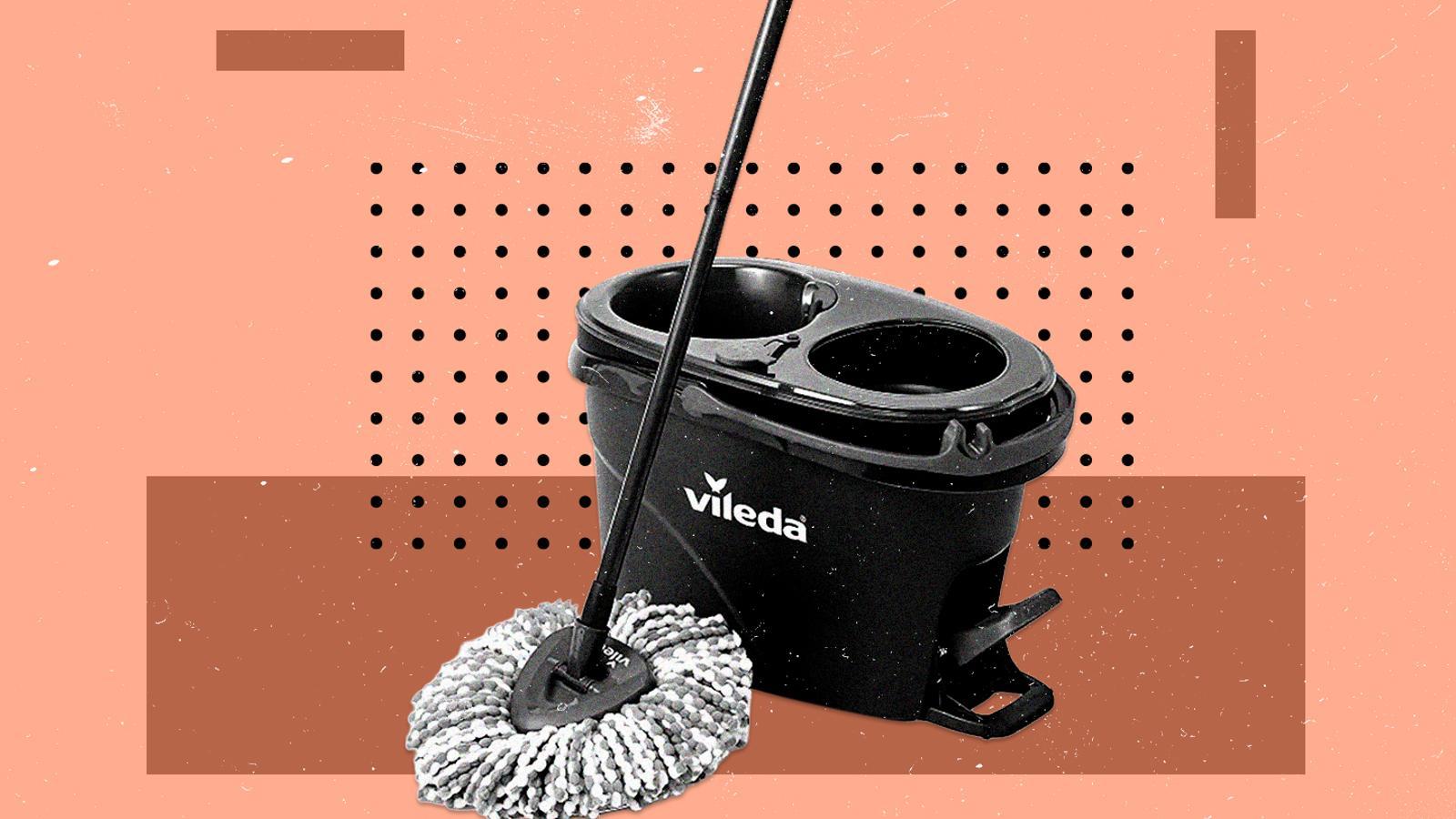
In the early seventies, Jordi Vila Solà entered the scene in history, a businessman and inventor from Barcelona who developed a floor mop made of strips of material attached to a plastic piece that could be screwed onto a handle. Vileda bet on the system and in 1974 launched the Supermop, made with strips of non-woven fabric instead of the usual cords. The coincidence is curious: despite the inventor's surname, Vileda does not come from Vila. When both paths met, the brand had already existed for more than twenty-five years.
The formula took root especially in southern Europe. In Spain, the strip mop became a practically omnipresent tool in homes. Today, Freudenberg maintains a strong industrial presence in Catalonia. In Parets del Vallès, it has, among other facilities, the Iberian headquarters of the cleaning products division that markets Vileda and, in 2024, the group inaugurated a new automotive components plant there after investing 11 million euros.
