From Chupa Chups to Puig: Catalan family businesses that change hands
In the last 20 years, many large local companies have changed owners and have become owned by funds or competitors

-
CAT -
CAST
BarcelonaPuig Brands, the Catalan multinational family group for beauty and fashion, which is negotiating an integration with the American Estée Lauder, three times larger, brings to the table the process of ownership change of local companies that has been occurring over the last 20 years. This very week, the Japanese Marubeni Corporation has bought 85% of Factorenergia, founded in 1999 by Emili Rousaud, former candidate for the presidency of Barça, for 204 million euros. The ownership changes of Catalan companies have not stopped. Between 2005 and 2006, the sales of Panrico, by the Costafreda family, to the fund Apax Partners were closed; and that of Chupa Chups, founded by Enric Bernat in 1958, to the Italian Perfetti Van Melle. Bernat's heirs today operate Casa Batlló on Barcelona's Passeig de Gràcia, one of Antoni Gaudí's iconic buildings, which they bought in the 90s.
The trap of mergers and acquisitionsAnd all this, despite the fact that mergers and acquisitions do not usually generate value but often destroy it, as explained by Oriol Amat, professor at Pompeu Fabra University-Barcelona School of Management (UPF-BSM) and director of the Family Business Observatory. Amat recalls the book La trampa de las fusiones y adquisiciones (The M&A Trap), by Baruch Lev and Feng Gu (Profit Editorial, 2025). According to these professors from NYU’s Stern School of Business and the State University of New York, based on an analysis of 40,000 cases, the failure rate of mergers and acquisitions has not stopped growing in the last 40 years, to stand above 70%.
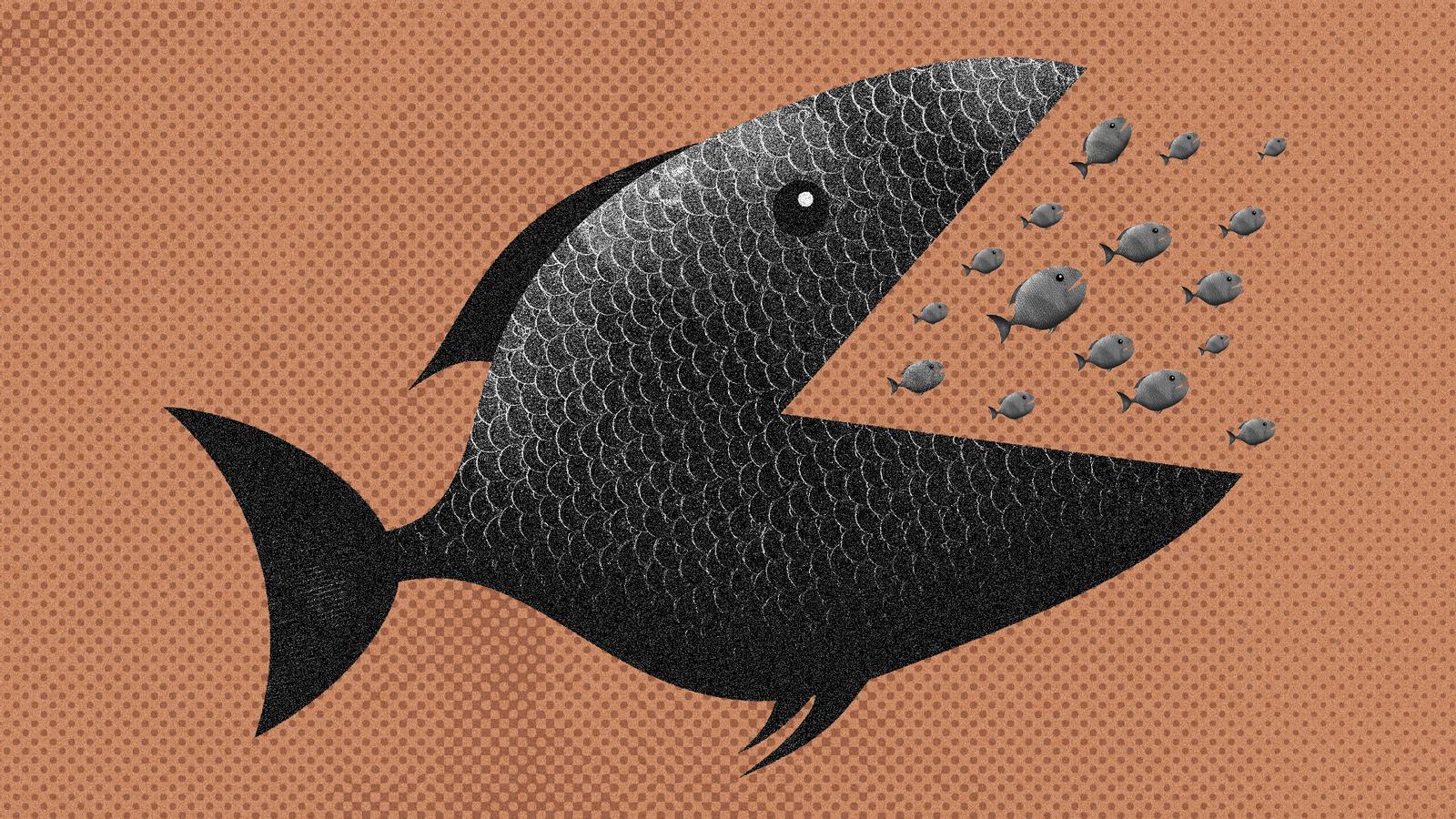
However, the loss of involvement that occurs from one generation to the next and the new interests of heirs, be they children, grandchildren, or others, in living off the returns of accumulated assets or the desire to undertake new businesses different from the original ones cannot be ruled out either. And, either businesses are sold to competitors seeking to gain size and markets –when generally the big fish eats the smaller one–, or to funds, which after a period of three or five years look for new buyers to maximize the profitability of their acquisition. There have also been cases where after selling to a fund, the family buys back the stake, as the Tous family did, with the 25% they had sold in 2015 to Partners Group, which they bought back to regain control of 100%; or the Boixareu family, who bought back from Black Toro the 43% of Irestal they had sold in 2015 and became the sole owners again.

In family businesses, which are the majority of existing ones, the first generation, that of the founder, is like a sculptor, who is capable of extracting a figure from a block of stone. "He is a creator who sees his creation as a child," explains Tàpies. And this is lost with new generations and as family branches widen, adds Amat.
In the case of Puig, the outcome is yet to be seen and, despite the difference in size, it could end with a greater protagonism in the governance of the new group by the Puig family than would correspond to the shareholding, according to experts. In any case, the doubt arises again why the ownership of many large Catalan companies is lost, which, in many cases, become diluted within larger companies from another country. A paradigmatic case is that of cava, with the recent sale by the Ferrer family of the capital stake they still held in Freixenet to the German Henkell, which now owns 100%; or Codorniu, which has the fund Carlyle as its majority shareholder, which is already looking for a buyer.
These are some of the best-known cases in recent years:
Panrico
Acquired by the Chinese group Bright Foods in 2015 for 100 million, the original company, founded by Pere Miquel in 1925 in Figueres and importer of the "system

Miquel Food
Acquired by the Chinese group Bright Foods in 2015 for 100 million, the original company, founded by Pere Miquel in 1925 in Figueres and an importer of the cash & carry system with Gros Mercat, brands to which it added Suma, Proxim or Spar. It was renamed GM Food, and since 2021 it has been owned by Transgourmet, a Swiss group that owns Coop supermarkets, leaders in that country, which bought it for over 200 million.
Caprabo
Supermarket group founded in 1959 by the Carbó, Prat, and Botet families. In 2007, 75% was sold to the Basque group Eroski for over 1,000 million euros, while the Botets retained 16% and La Caixa, 9%. Subsequently, in 2011, Eroski bought La Caixa's 9% for about 125 million and the rest from the Botets, without specifying the price. Currently, after a complicated financial situation, in 2021 Eroski took 50% and the other half a Czech magnate, Daniel Kretínsky;, through EP Corporate Group.

Gallo Pastas
Founded in the 1940s in Rubí by Josep Espona, the company was sold to ProA Capital for 227 million in 2019. Afterward, three of the five siblings who owned it, Pedro Antonio, Carlos, and Silvia, recovered 15% of the company, while the other two, Pilar and Fernando, decided not to invest in it.

Pronovias
Founded in 1922 by Alberto Palatchi Bienveniste and born as El Suizo, in the 60s it introduced prêt-à-porter bridal fashion. In 2017, Alberto Palatchi, son of the founder and who invented the name Pronovias, sold 90% of the business to the British private equity fund BC Partners for 550 million. In 2022 it ended up in the hands of the creditor funds led by Bain (90%) and MV Credit (10%). Today it is in court and in the process of being sold with a binding offer from the Catalan company Desigual and the Californian fund Enduring Ventures before bankruptcy proceedings.
Gaes
The company was founded in 1949 by Juan Gassó Bosch and José María Espoy in Barcelona. In 2018, the Italian multinational Amplifon bought it from the Gassó family for 528 million euros.
Cirsa
Manuel Lao Hernández founded Cirsa in Terrassa in 1978 to manage the slot machine business in bars. Transformed into an empire of gaming and leisure, Lao decided to sell the majority of the business to the American company Blackstone in 2018 for approximately 2,000 million. Today, it is listed on the stock exchange with Blackstone as the majority shareholder, which has placed up to an additional 4.2% among investors. Lao, who today is the third largest fortune in Catalonia, with about 1,700 million, continues to invest through Nortia Capital, with real estate investments such as the building on Passeig de Gràcia in Barcelona, which houses the headquarters of Casa Seat, or the Pulitzer hotels, among others.

Celsa
Founded in the 60s by brothers Francisco and Josep Maria Rubiralta, who also founded Werfen, which today is a world leader in in vitrodiagnostics. In 2006, they went their separate ways. Francisco kept the steel business, Celsa, and Josep Maria, Werfen. In 2023, a judge issued an unprecedented ruling that granted ownership of Celsa to the creditors, among whom were the funds Strategic Value Partners, Attestor, DWS, Golden Tree, and Cross Ocean, among others.

Freixenet
As a result of the union of the Ferrer and Sala families, at the beginning of the 20th century, Freixenet was a pioneer in the internationalization of cava. In 2018, the German Henkell bought 50% of the company and eight years later, the Ferrers and president José Luis Bonet sold the rest, and now it is 100% of the Henkell group.

Codorníu
Codorniu is the oldest company in Spain, with origins in the 16th century. A pioneer in the creation of cava, in 1872, the winery accumulated a significant number of family shareholders, the Raventós, through various generations. In 2018, the group became part of the North American investment fund Carlyle, which valued the entire group at around 390 million. Currently, it is seeking the possibility of selling its approximately 70% stake.
