General strike two days before the campaign

Hello, how are you?
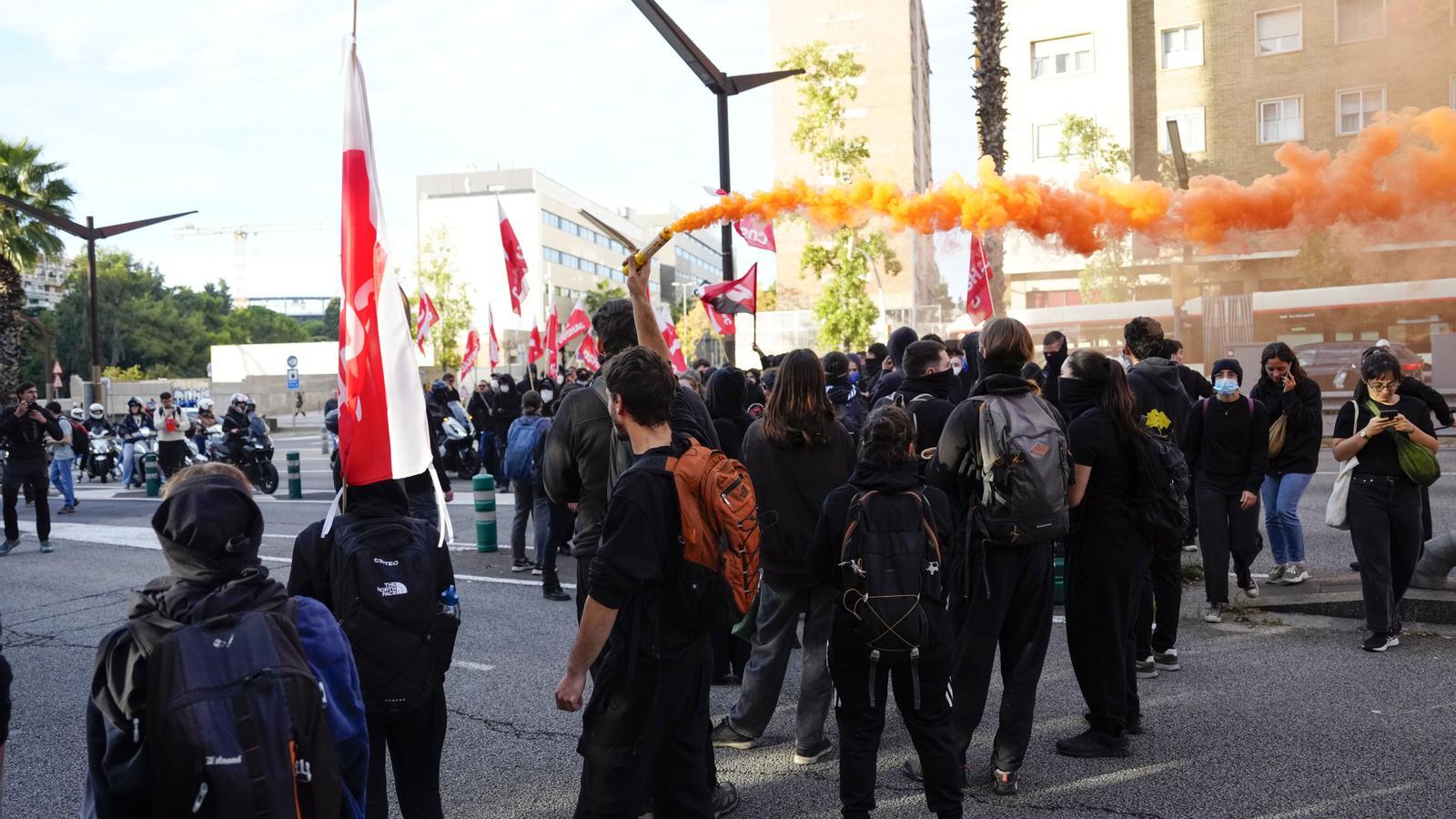
The general strike has begun as expected. From the very early hours, pickets have blocked highways, roads, Barcelona ring roads, or access points to activity centers with the potential to increase the effects of the strike, such as Mercabarna, and this has complicated (if not made impossible) the arrival at work of employees who did not want to strike. Electricity consumption had fallen by 10% throughout Spain by 8 a.m., compared to what it was yesterday at the same time. The final assessment of the stoppage will not arrive until the evening, when demonstrations are planned that will make the protest even more visible.
This is a unique strike, if not to say curious. The reasons calling for it are clear and have affected for years the present and the future of broad layers of society of all ages: the impossibility of access to housing within the reach of the majority and the cost of living, which is the same as saying, the general impoverishment (in an economy that is still growing). That is to say, it is a strike that responds to a real malaise and therefore, it is well justified.
Against whom is this strike? Against whom is this strike being held? If we take into account that the rising cost of housing and the increase in the cost of living are global phenomena, this strike is against capitalism or, at the very least, against the most undesirable effects of capitalism. And it is a denunciation of the difficulties that politics faces in democratic states to correct market dysfunctions. If we get down to specific matters, we find local factors. Catalonia has gained more than 1.7 million inhabitants in the 26 years of the 21st century, surpassing the milestone of 8 million inhabitants. Has it been built with the arrival of immigration, of high or low purchasing power, in mind? No. While wages have grown much less than those in the eurozone, rental prices have seen a nominal increase in the city of Barcelona of close to 200%. This makes renting very difficult. Furthermore, state trains are a disaster in Catalonia, which does not encourage people to live far from the capital while still being able to get in to work every day with speed or comfort. By the way, the Rodalies disaster would also warrant a general strike. Of all this, does the current Spanish government have no responsibility?
No, the government was not just passing by. It is pathetic to hear the Spanish Prime Minister Pedro Sánchez encouraging people to participate in the strike, when it turns out that he has been governing for 8 years, in coalition with parties further to the left. In fact, his support is a disservice to the strike because it is obvious from a mile away that Sánchez sees in the strike the mobilization he hopes to translate into votes in three Sundays' time. Because, and this is a good one too, the unions UGT and Comisiones Obreras have called the strike two days before the start of the election campaign.
And let us remember the sequence of events: at the end of July, the Ceuta crisis puts the Spanish government against the ropes during August and a good part of September, until on September 23rd, 87-year-old Mari Carmen Abascal is evicted from her home in Madrid and then a popular catharsis occurs, partly induced by the government, and then we all rush with housing, with the decrees presented in a hurry to Congress. And from there to the calling of elections only a few days pass. The tactical Sánchez, the survivor Sánchez sees in housing the possibility of changing the conversation and turning the tables on the polls. How can we not think that he will try to take electoral advantage of the strike?
At the same time, PP and VOX, if they end up governing, must understand that in these conditions of unrest they will not have social peace, and not because the unions and the left wing stir it up, but because the unrest is real. And hearing how they have acted as opposition these past eight years, they do not generate any hope. And even less so in Catalonia.
Good morning.
