The millennial invention that can save us from the heat

-
CAT -
CAST
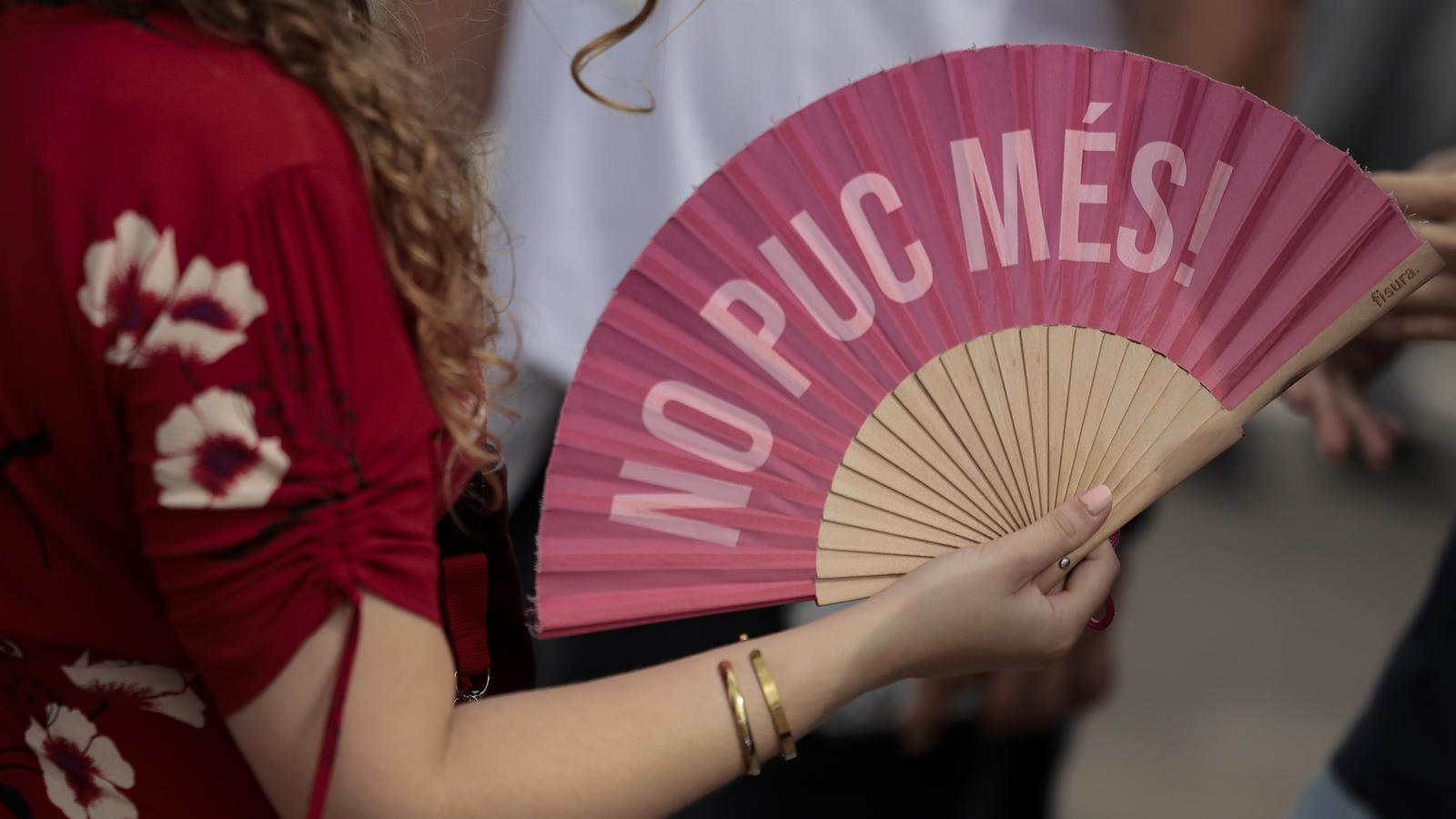
It's hot. Very hot. Too much. And I don't formulate this evidence as an experienced climatologist, but as a simple inhabitant of a world increasingly close to boiling point. Faced with this climatic exceptionality, which is already sensed as the new normal, the much-coveted air conditioning units, despite the immediate well-being they provide, contribute to heating the outside even more. Perhaps that's why, in the midst of a climate emergency, the oldest solutions are once again proving their validity. And is there anything more ancestral than a fan?Just a few years ago it seemed that this object had been relegated to a simple folkloric souvenir, adorned with inevitable kitsch Hispanism motifs. Today, on the other hand, it has regained its place as one of humanity's oldest, simplest, and most sustainable technologies. But, has this always been its function: to make wind? And, despite being an inseparable complement to the flamenco stereotype, is Spain really its place of origin?

Archaeological evidence places the first fans in the area of present-day Sudan, from where they would spread to Egypt during the New Kingdom (1550-1070 BC). Although they fanned, protected from the sun, and kept insects away, they soon also acquired a powerful symbolic dimension linked to prestige and the theatricalization of power. For this reason, in numerous representations we see pharaohs surrounded by large ostrich feather fans, and Tutankhamun was buried with several specimens. In fact, being a "fan bearer of the king's right side" was one of the most prestigious positions in the Egyptian court, symbolizing great closeness to the sovereign.However, if in Egypt we found rigid fans, we must go back to 8th and 9th century Japan to find the foldable ones we know today. A mechanical system of great ingenuity probably inspired by the mokkan, narrow wooden tablets used for bureaucratic annotations. Later, this system left its more official side to enter the ornamental and symbolic realm. In 1543 a Portuguese ship accidentally arrived in Japan and this marked the beginning of intense commercial relations, of which Portugal maintained the European monopoly for decades. In addition to spices, silks, porcelains, lacquers, screens, and weapons, they also transported foldable fans, which expanded from Portugal to Seville and, subsequently, to the Italian, French, and English courts.Over time, Europe ceased to depend on Japan and began to produce its own, with Paris establishing itself as the major production center between the 17th and 18th centuries, at which point it became a true luxury accessory. And, although the folding fan still had the capacity to generate wind, in European courts it also became established as a social and symbolic technology. Firstly, it went from being an autonomous object to becoming an accessory to the outfit. Furthermore, many painters specialized in creating scenes on fans, making them one of the first objects that – in a way – democratized the possession of a pictorial work and made it transportable. And, finally, the fan became an important element in the gestural performativity of socialization in the palace. In a court where social relationships are the main vehicle for prosperity and where the game of pretending and theatricalizing is the main language, the different movements with the fan often allow for insinuation without leaving evidence.It is curious that, after millennia of history, the fan has been many more things than a simple tool to combat the heat. But now, while this leaves us stunned at home and with no desire to step on the asphalt, it seems that the time has come to recover it, precisely, for what it has never stopped knowing how to do. Perhaps, progress does not always consist of inventing new technologies, but in rediscovering those that, in their apparent simplicity, do not need to evolve to continue being extraordinarily effective.
