The devil who wears Prada is no longer scary
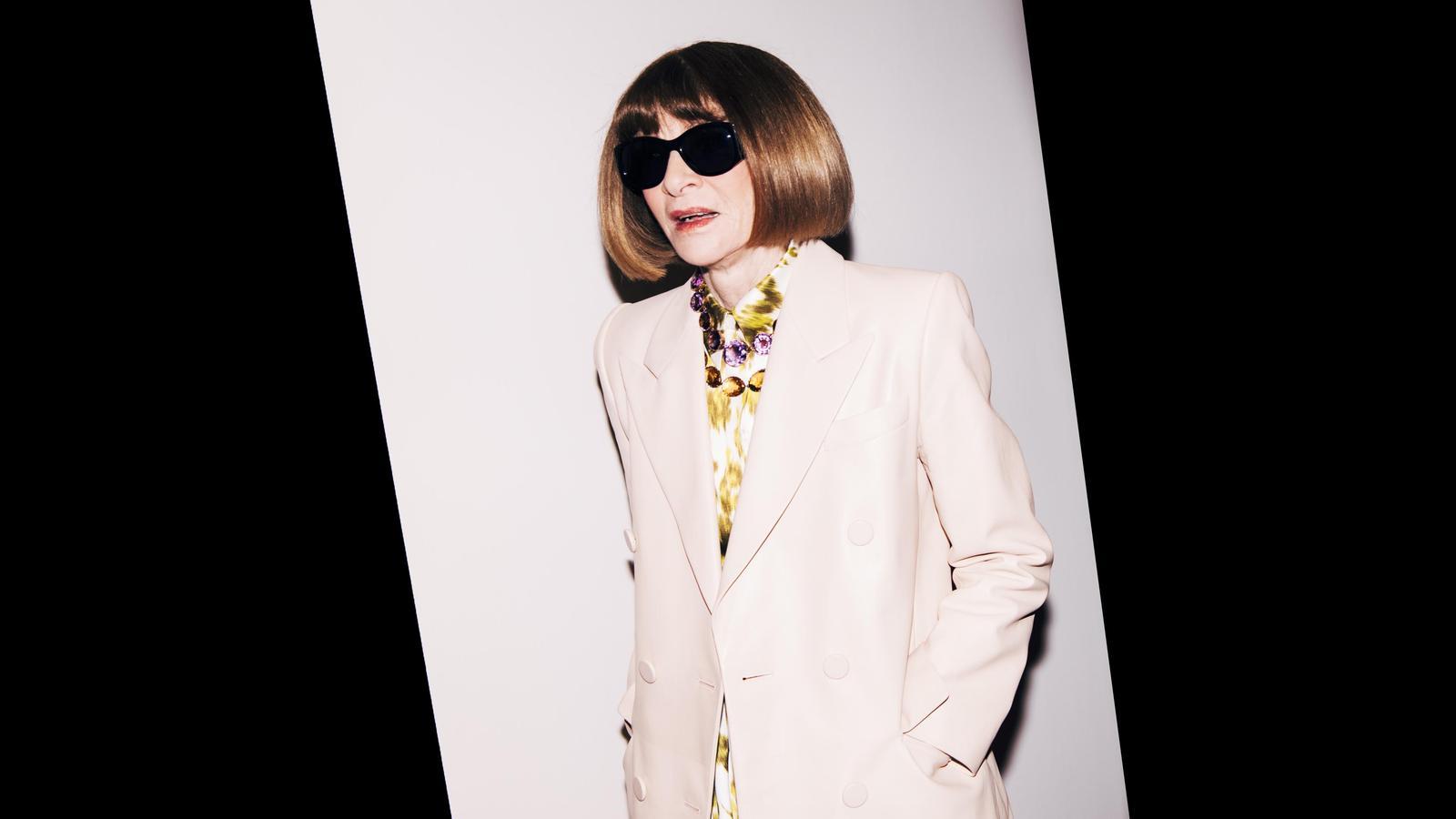

Just twenty years ago, Hollywood premiered, without intending to or expecting it, a film that would end up becoming an icon of the fashion world, The Devil Wears Prada. Beneath the appearance of a light comedy, the film hid a much more biting background than it might have seemed at first glance. The story brought to life the homonymous novel by Lauren Weisberger, which stemmed from her own experience as an assistant to Anna Wintour, editor-in-chief of Vogue and one of the most powerful figures in the industry. But what could have remained a simple chronicle of the fashion world became, in reality, a deeper reflection: not so much about fashion itself as about the forms of power that sustain it and, in particular, about the degree of violence that our society is willing to accept when this power is presented as excellence.Talking about Anna Wintour is not just talking about the magazine Vogue, but about a figure who has redefined the rules of the game of contemporary fashion. Endowed with a particularly keen nose for detecting trends and new talents –like those of John Galliano or Alexander McQueen–, she has also been the architect of one of the traits that define the sector today: the hybridization between haute couture and more everyday aesthetics. And, in parallel, she has decisively contributed to turning the inauguration of a fashion exhibition into a global event, such as the Met Gala, which has just taken place on February 4th. However, following Weisberger's account and the epithet with which she herself christened her –devil–, Wintour also embodies a certain way of understanding power: as an exercise of perfectly normalized violence, both within the sector and in relation to all the people around her. Working for her implies accepting constant humiliation, extreme competition, and renunciation of any form of personal life as natural. After all, as is repeated in The Devil Wears Prada, “a million girls would kill for this job”, even if it means seeing a brilliant resume reduced to tasks as mundane as bringing her coffee, picking up her dry cleaning, or satisfying her daughters' whims.

This film, besides putting this scathing criticism on the table –with the addition of including real first and last names–, also had the ability to explain the large number of mechanisms that are activated and the professionals involved in the apparently trivial question that everyone asks themselves every morning: "And today... what should I wear?" And precisely for having known how to combine this analytical cross-section that has made it essential for any fashion lover, on April 30th "The Devil Wears Prada 2." was released.Susan Sontag wrote in Notes on 'Camp' that camp only exists when it is not sought. When there is intention, it becomes parody, empty stylization, self-conscious artifice. Possibly, in The Devil Wears Prada, a film with discreet cinematic virtues but with a great capacity for focus, what made it an icon was precisely this lack of self-awareness: the unconsciousness of shaking deep structures.

The second installment, on the other hand, seems to have made a manual error: allying itself with what it intended to observe. During the promotion, Meryl Streep, characterized as Miranda Priestly, has been photographed with Anna Wintour, to the point where both have shared the cover of Vogue in May 2026. What could have seemed like a perfect move – for the morbid fascination of seeing reality and fiction confronted – has actually revealed itself as a double-edged sword. What previously functioned as satire with distance has become a joint staging of power. There is no longer any tension between representation and reality: they coincide, pose together, and mutually legitimize each other. And when power represents itself, criticism ceases to be possible because there is no longer any distance. Curiously, a criticism that fades away at the same time as the power of Anna Wintour and the devil, despite continuing to dress in Prada, is already ceasing to be frightening.
