Sleep outside to get a simple watch?
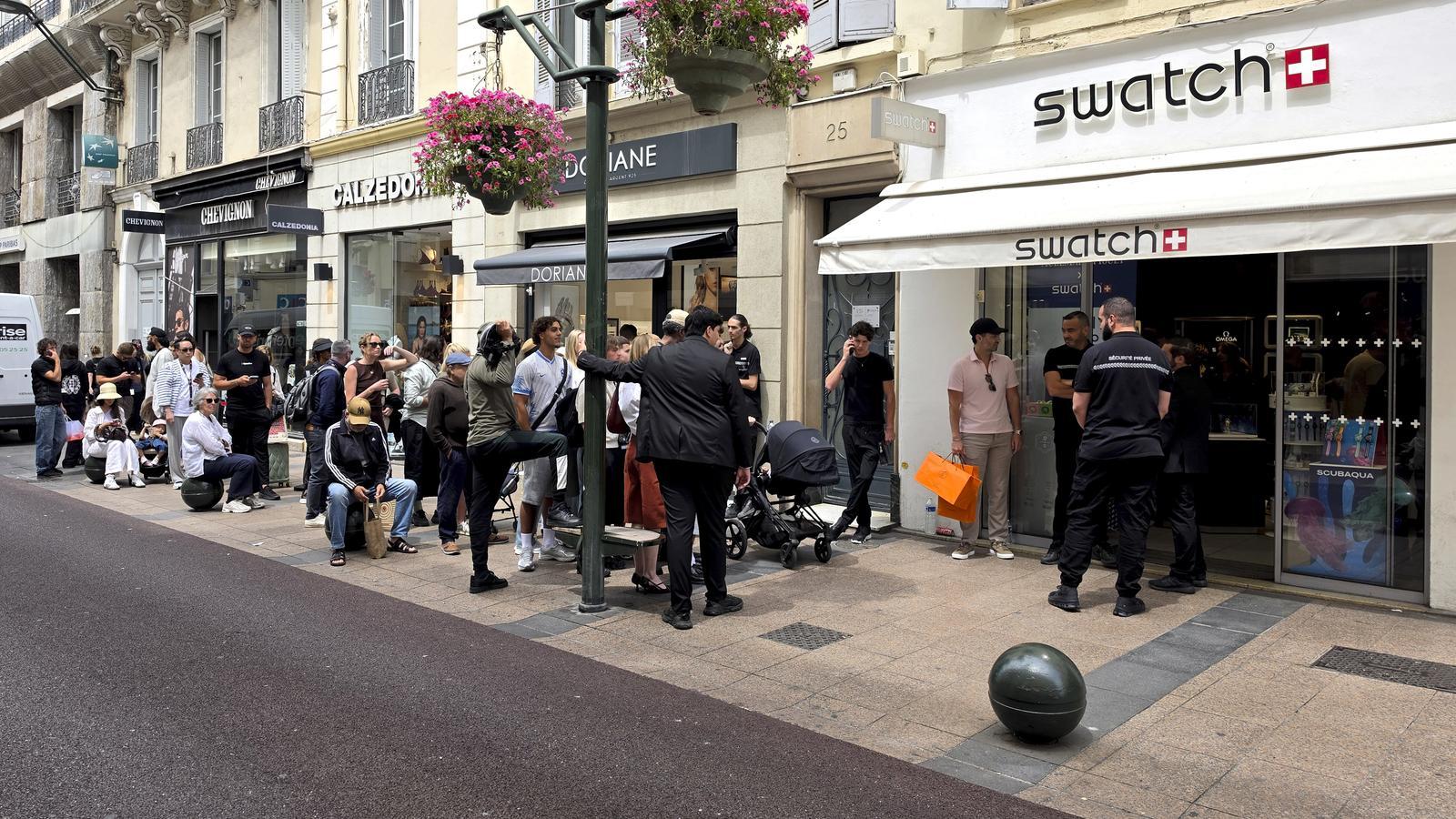

A long queue of people have patiently camped out for days –and the corresponding nights– on Barcelona's Passeig de Gràcia. In the best-case scenario, equipped with chairs and camping furniture to make the wait more bearable. The gathering forced the Mossos d’Esquadra to intervene due to the risk of disturbances. A scene that has been repeated in multiple cities around the world, with even more extreme situations. In New York, they waited for almost a week, while attempts to speculate on the queue also proliferated. In Paris, where over 300 people gathered, the police intervened with tear gas to disperse the crowd. In Milan, the authorities had to cordon off the area after rushes, disturbances, and fights.But what is the reason for this phenomenon? Are we facing a new urban encampment like the one on May 15th to demand a higher quality democracy? Perhaps the genocide in Gaza has pushed hundreds of people to occupy public space? Or perhaps the teachers' strike and the fight for public education have become a global outcry. Well, no. The reason for this collective penance is none other than the tribute that turbocapitalism demands from its most faithful followers: the queues were to get the latest collaboration from Swatch with the emblematic Swiss high watchmaking house Audemars Piguet. All in all, as absurd as it is revealing.The easiest –and also the most tempting– would be to ridicule these people and label them as brainless, foolish, or superficial. It would even be comforting to make them the scapegoat for the ills of a world we increasingly recognize and understand less. But doing so would mean killing the messenger. Because, rather than condemning individuals, what we should demand is to identify the root of the problem.What drives some people to sleep on the street for days is not the desire to get a simple watch – however attractive it may be – but the symbolic reward that capitalism has been promising for decades: the illusion of a better life through consumption. Because today watches, much more than objects intended to measure the passage of time, have become one of the most desired social markers, especially among men. And even more so if we talk about Audemars Piguet, a firm located in the same Olympus of luxury as Rolex and reserved, practically, for that privileged minority that concentrates economic power.

For too long, consumer society has successfully exploited the old carrot-and-stick strategy, further fueling the class tensions that run through any society. With the promise of social mobility conveyed through seemingly liberating consumption, disadvantaged classes continue to pursue a mobility that almost never arrives. And when we finally discover that social structures are much more rigid than we were promised, possessing their symbols – such as a luxury watch – ends up becoming the only accessible consolation prize.The most perverse thing about the system is that this voracity no longer acts solely from privilege towards the lower classes, but also horizontally. Many of the people who were queuing did not want the watch for personal use, but to resell it to their equals at even more inflated prices, turning the middle classes into predators of themselves. A food chain where everyone tries to take advantage of the next person to feel, for a few moments, a little closer to privilege.It is better that, as soon as these watches go on sale, their owners rush to resell them before the effect of novelty and exclusivity wears off. Because luxury only works while it excludes. And the day too many people gain access to its symbols, the elites simply create new ones.
