Salvador Espriu's other will: he didn't want to be buried in Arenys de Mar
A letter from the poet to his friend and lawyer Josep Ferrer i Rius allows documenting the contradictory last wishes of the author of 'Cementiri de Sinera'
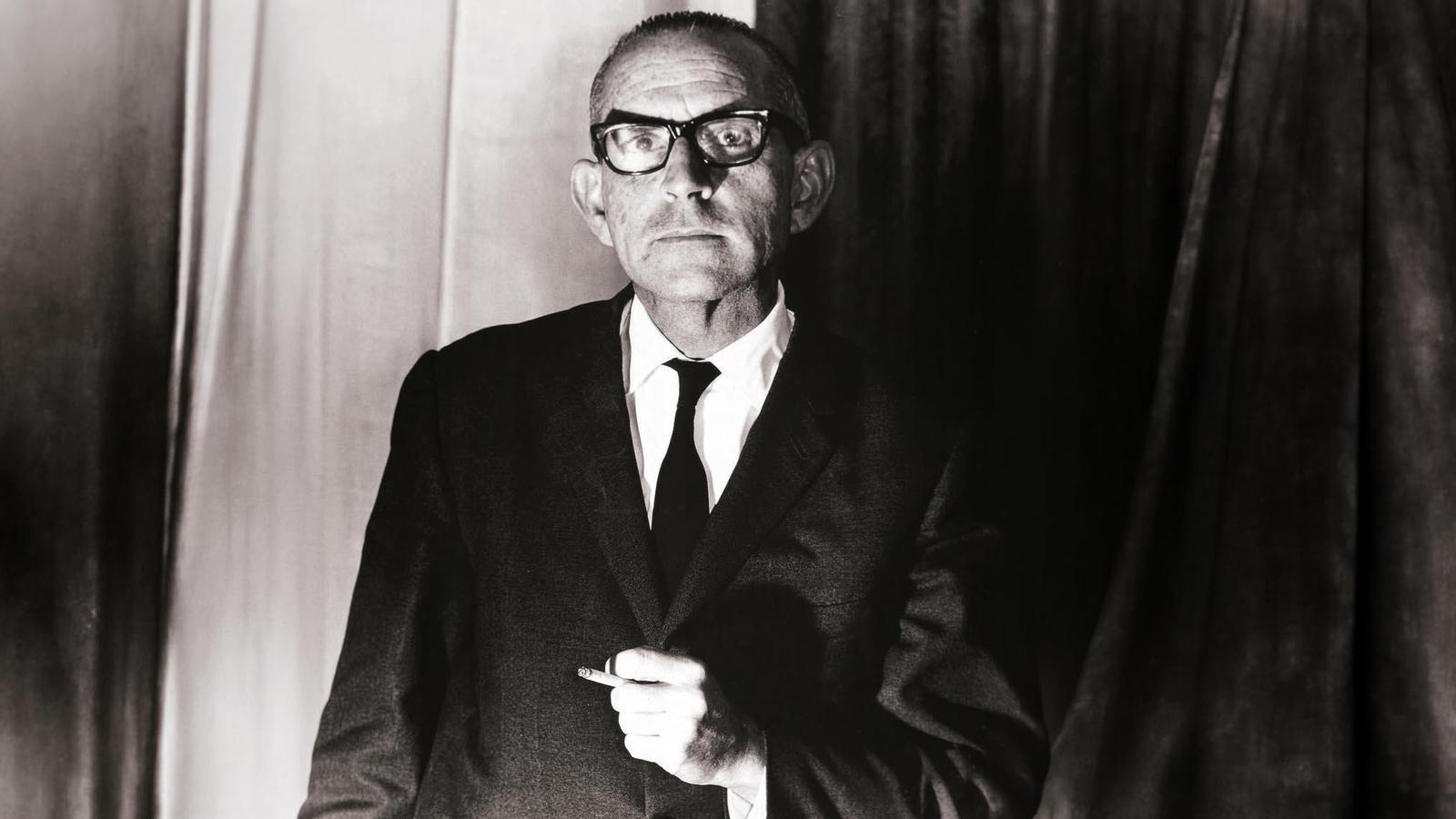

-
CAT -
CAST
“Salvador Espriu Castelló, writer, single, sixty years old, a native of Santa Coloma de Farners [...]. He declares that he in no way wishes to be buried in the cemetery of Arenys de Mar. He further declares his express wish that his body be cremated, if the laws permit”. These are verbatim words, handwritten by Salvador Espriu in what is a document of last wishes, a draft of a will, written at some point between the summer of 1973 and that of 1974 – he was born on July 10, 1913 –, drafted in Spanish – the law did not provide for any other option – and addressed to his great friend and lawyer Josep Ferrer i Rius.
The document, to which ARA has had access, confirms a reality, known and documented only partially: the wishes of the poet regarding the treatment his figure was to receive from the moment he left this world were not fulfilled. The news of his passing occurred on Friday, February 22, 1985, and it is public knowledge what happened. Espriu was laid to rest in the Saló Sant Jordi of the Palau de la Generalitat and was transferred, on Saturday the 23rd, to Arenys de Mar, where he was buried in the municipal cemetery.
Therefore, he was not cremated and was buried where he did not want to be. Why? And why did he state in writing, so forcefully, that he did not want to be buried in Arenys? What pained Espriu about the town in Maresme, so associated with his work, so unanimously linked to his poetry and his person? Perhaps Espriu did not feel particularly comfortable with the literary myth of Sinera – Arenys read backwards – that he himself had created?
More than forty years after the death of one of the most respected and influential Catalan literary personalities of the 20th century, perhaps the discovery of this document will serve to shed some light on his figure, as admired as it is contradictory, without prejudice, of course, to a monumental artistic legacy and a popular esteem beyond all question.
that each year sent, by the hundreds, to all his relatives, friends, acquaintances and well-wishers.
christmas,that he sent every year, by the hundreds, to all his relatives, friends, acquaintances, and well-wishers.

The Ferrer family kept this correspondence after his death – in 2009, at the age of 95 –, papers to which I have had access. The relationship between Espriu and Ferrer has been buried under the layer of extreme discretion that always characterized them both. Ferrer wrote and self-published, shortly before his death, a book of memoirs –Memories of an Old Man, a Barcelona Lawyer (2009) – in which he mentions his friend and client Espriu several times, but with total and absolute prudence. Barely a couple of memories and anecdotes. The same happens with the succinct text that Ferrer wrote for the book Memory of Salvador Espriu (1988), in which he recalls the friendship that united them.
Thus, textually, it was stated by Espriu's sister, Maria Lluïsa, in an interview with journalist Antoni Batista published in the newspaper Don't bother to answer me (Empúries, 2026), about the epistolary relationship between Espriu and Joan Vinyoli, includes only seven letters sent by Vinyoli, saved from Espriu's voracious need to destroy all the correspondence he received.
On the final pages of the book Espriu, Transparent (Proa, 2013), Espriu's biography written by Agustí Pons, the circumstances that led to Espriu's wish to be cremated not being fulfilled are explained. The intervention of the Generalitat is highlighted as decisive. In fact, of Jordi Pujol himself, who agreed with the poet's family on the wake at the Generalitat. It is presented as "unthinkable" that his farewell would be private and not a massive one. For what reason? Because Espriu belonged to the people.

Thus, textually, Espriu's sister, Maria Lluïsa, stated it in an interview with the journalist Antoni Batista published in the newspaper Avui on February 22, 1986, on the occasion of the first anniversary of the poet's death. "Yes, he wanted to be cremated, but he always emphasized that whatever was to be done should be done respecting the civil and ecclesiastical authorities. And it would have been very complicated to do it in any way other than how it was done. We admitted the reasons that President Pujol gave us, in the sense that my brother belonged to all the people. It was too complicated to fulfill a wish that existed, but the truth is that Salvador himself didn't make a big deal out of it either. When he left the clinic for the first time and saw the television, the cameras, the journalists, he realized that he was a public figure and that we couldn't decide many things."
It is interesting to note the evident contradiction between the expressed wish and the reality of what happened. A contradiction that can also be explained by delving a little into the same contradictory character that permeated Espriu's personality, which allows us to address the second violation of the expressed wish, and which the biography makes no mention of: not being buried in Arenys de Mar.
Is Sinera Arenys?
“Espriu always said that Sinera is not Arenys”. Ramon Balasch, editor and founder of the legendary publishing house Llibres del Mall, and therefore Espriu's last editor in his lifetime, and also his personal secretary for the last ten years, expresses himself so forcefully. He has been defending it for years and contradicting the generalized statu quo surrounding the well-known myth of Sinera, so associated with Espriu's work. statu quo generalized around the well-known myth of Sinera, so associated with Espriu's work.
Balasch shows me several documents that serve both to support the affirmation he makes and to reveal a disconcerting contradictio in terminis. On the one hand, the text that Espriu himself wrote for the program of the play Shadows of Sinera (1968): “I would like to remember and warn once more that Sinera is not Arenys de Mar. It is very difficult to maintain a dream for forty years. It is even more difficult to translate it into understandable words that last a moment.” On the other hand, a fragment of an interview with Espriu on Ràdio Arenys in the early 80s in which, recalling his childhood summers in Arenys de Mar, he remembers the cemetery: “It is a splendid cemetery and it had suggested many things to me, specifically a book called Cementiri de Sinera”.
So, Sinera is Arenys and at the same time it is not? Well, yes, it seems that it is indeed so. Balasch admits this contradiction, but argues that, in its profound sense, Sinera is, in Hebrew, “cinders”: an allusion by Espriu to Barcelona in ashes devastated by bombings during the Civil War. Balasch adds that Espriu was very often uncomfortable with the management and institutionalization of his link with Arenys and emphasizes that he never wanted to appear to be declared its favorite son, nor that of Santa Coloma de Farners. “I have made a universal myth, do not turn it into a local one,” Balasch recalls that the poet always shouted. Would this discomfort explain the explicit and very clear desire –“he in no way wants to be buried”– expressed in his last will and testament? It makes sense to think so.
Isabel Bonet is the niece of Salvador Espriu, daughter of his sister Maria Lluïsa: “The uncle disliked that research was done on Sinera”, she recounts. And she recalls a very relevant case. Her grandfather, Francesc Espriu i Torres, dictated his memoirs to his daughter Maria Lluïsa during the Civil War. And Espriu always seemed uncomfortable with this paternal testimony. “He wanted his father's memoirs to be burned”. Why? Probably because they made it clear that the characters from Arenys that Espriu always recounted as part of his childhood belonged more to his father's childhood, and therefore to his father's memory.
Maria Lluïsa Espriu rebelled against her brother's wish and kept her father's memoirs all her life, which finally saw the light in 2018: The memoirs of the notary Espriu. Life and memories of Francesc Espriu Torres. ¿Would this other circumstance also support Espriu's suspicious discomfort with Arenys? Most likely. Bonet remembers Salvador Espriu as her chattiest and most amusing uncle, even sprinkled with a touch of nosiness. Just the opposite of the serious and gruff image that accompanied him and which, as a general rule, is maintained in the collective imagination. Espriu cultivated it in public as a form of armor, there is no doubt, but in private he was quite another thing.
Bonet says that the definitive will did not contain these specific last wishes expressed by Espriu in the letter sent to Josep Ferrer. At the same time, he understands that his uncle left in writing that he did not want to be buried in Arenys. But then he adds that he would also understand the opposite option, a change of mind, contradicting himself. Thus, did Espriu change his mind between the ages of 60 and 70 regarding what he wanted his end to be? It is possible. But it is also possible that he limited himself to simplifying his last wishes and placed his trust in his family's judgment.
To emphasize how clear Espriu's vital priorities of discretion were in the final years of his life, Ramon Balasch recalls the decalogue Normes de conducta redactades amb motiu del setantè aniversari (1983), which is published in Ocnos i el parat esglai,the writer's posthumous book, an anthology of his essayistic texts, which Balasch himself edited in 2013 for the Espriu Year. In the decalogue, the poet wanted to record his exhaustion with everything and everyone, with a list of proposals bordering on misanthropy: not going anywhere, not accepting interviews, awards, readings, prologues, theses, corrections, visits, conferences, tributes, signatures, etc. A total and absolute negation of public life, the express will to disappear from it.
How does this desire fit with the public wake and funeral organized? Apparently, poorly. But the fact is that, to give just one example, at the end of 1984, a few months before he died, Espriu agreed to be interviewed by Josep Maria Espinàs on his program Identitats on TV3. If he didn't want to go anywhere, if he didn't want to grant interviews or yield to any public visibility concession, why, already in very delicate health, does he accept such a demanding and visible interview as Espinàs'? "Voler i doler" (To want and to hurt), a popular expression that may be relevant here.
Vicenç Altaio, poet and art critic, a profound connoisseur of the universe of Catalan poets, also emphasizes Espriu's dual personality. “He had a double public conduct. He sought to show an allergy and modesty towards all social and public matters and, at the same time, he never curtailed his popular and symbolic aspect, which exploded on a grand scale, for example, through his poems set to music by Raimon.” “He wanted and he hurt, yes, everyone is who they are. It makes sense that the family accepted at that time the thesis proposed by the Generalitat in the aim of collectivizing his farewell.
It is possible to verify, and to value, that Espriu's bonds and affections with Arenys were obvious and contrastable and, at the same time, also relative and contradictory. In this regard, it is appropriate to focus on the very interesting contrast that exists between two poems from Cementiri de Sinera. The third poem begins thus: “Without any name or symbol / by the cypresses, beneath / a little sandy dust / hardened by rains”. And the thirtieth poem states: “When you stop / where my name calls you / may I sleep / dreaming of calm seas / the light of Sinera”. “When you stop where my name calls you” seems a clear allusion to the tombstone of a grave. And, on the other hand, “Without any name or symbol” could mean the opposite, no burial or, why not, a preference for cremation.

The contrast between the two poems appears very opportunely in the heading of Antoni Batista's interview with Maria Lluïsa Espriu in 1986. The journalist recalls today, forty years later, those days and the bond that united him with the poet between 1976 and 1984. Batista belonged to the PSUC and the party entrusted him with the task of weaving ties with prominent personalities of the country so that they would commit themselves in favor of its legalization. One of them was Espriu, who, in addition to agreeing to publicly commit herself, gave her trust to the then 23-year-old journalist: "You come and see me and take notes," she told him.
From that bond emerged Batista's first book, Salvador Espriu. Itinerari personal (1985). Squeezing memory, Batista recalls that on one occasion he asked Espriu to dedicate one of the volumes of his complete works to him. He agreed, yes, but with the demand to keep the book and return it to him after three days: "Mr. Batista, I am Espriu, I am a nobody. When I die, even if I don't want to, everything will come out. I have to think very carefully about everything I write, even on a simple business card."
A revealing, clear, and very eloquent anecdote. Salvador Espriu took everything he wrote very seriously. Whether it was a simple and, in principle, undemanding dedication, or what he wished to be done when he had already embarked on the path to the other world.
