The unforgettable Thursday of a dining room monitor from Castelldefels
Àlex Plaza and AE el Prat, from the sixth state category, face Athletic Club in the Copa del Rey
-
CAT -
CAST
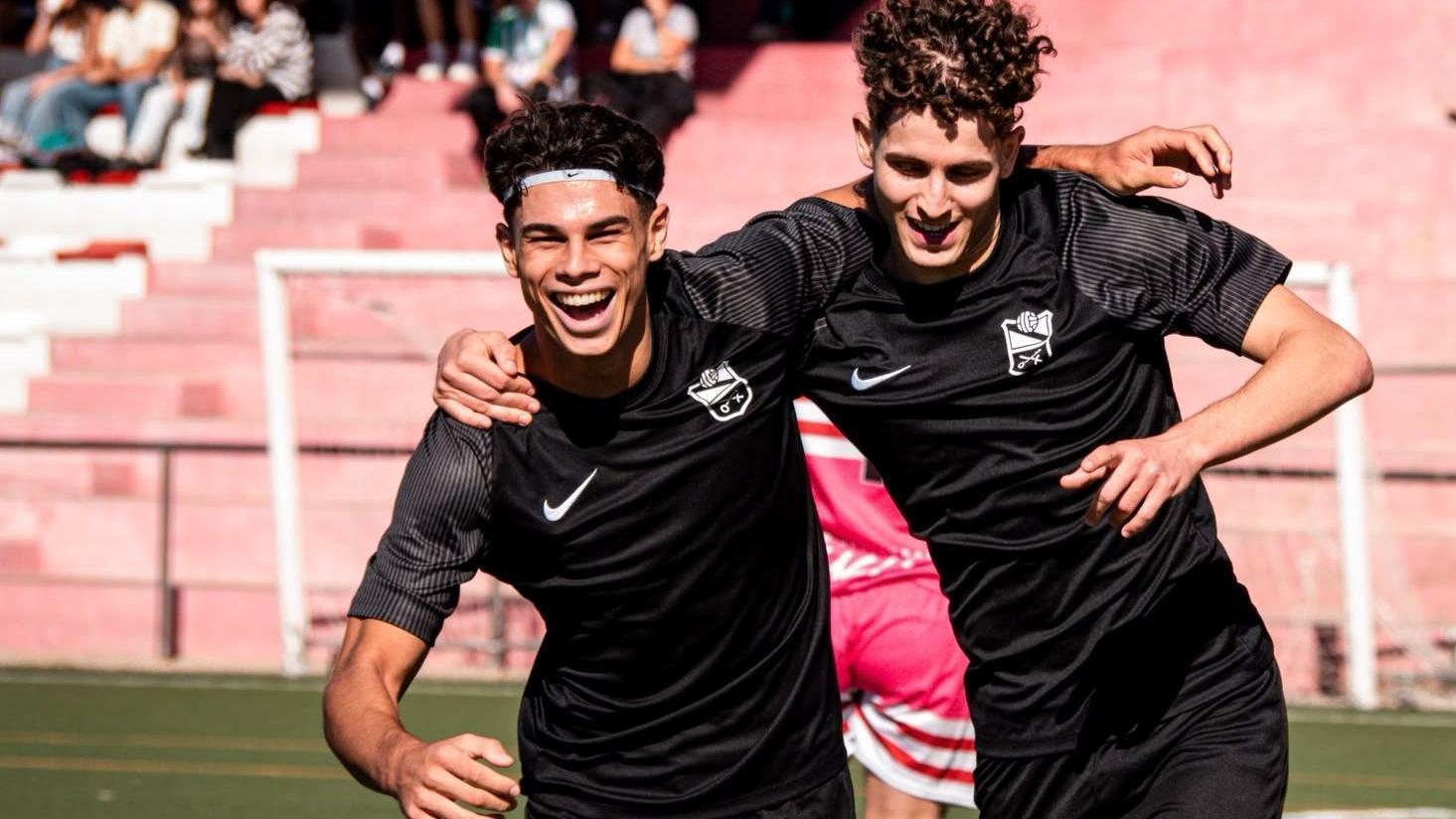
Torelló"When you are little you dream of games like this. You are innocent and you see it close, you watch the TV and you say: 'Someday I will be playing here'. When you get older you see that it is very far away", admits Àlex Plaza (Barcelona, 2004). For days now, he has been counting down the hours to this Thursday's first round Copa match against Athletic Club (9 pm, Teledeporte). He plays for Associació Esportiva el Prat, which competes in the sixth state category.
Plaza works as a lunch monitor at a school in Castelldefels and followed the draw from the playground. A smile was drawn on his face while the children asked him for Nico Williams' jersey. This Thursday he will do his shift: perhaps he will play a little football with the kids and then he will play a little football with Athletic. And whatever happens, he has to return to work on Friday. "Some Mondays, if we have lost, there are a couple of kids who tell me that we are very bad, half-joking. If we beat Athletic I will be able to lose all the remaining games", he laughs. He played for Espanyol from U10 to U14 level, alongside kids like Marc Pubill or Omar El Hilali.
The day of the draw when he left school he found his father, a mechanic by profession, at the door. He had gone to wait for him, as if he were just another kid, to explain to him that they had drawn Athletic, in case he hadn't seen it: "He looked at me and said: 'Against Athletic, eh? Against the legendary Yuri, eh?'". For days now, he, a primary education student, lunch monitor and Elite League player, has been watching Athletic's matches looking for some crack in a full-back with 400 matches at the elite level who shared a dressing room with Neymar and Mbappé at PSG. It is the magic of the Cup. Between Rubí and Argentona, a match against Athletic. All the players study or work. There are also teachers, a Japanese food delivery driver or a player who works cleaning the streets of Barcelona at night.
"It's a historic moment. The closest thing to feeling professional. You feel that all the effort you've put in has finally served some purpose. Now friends are coming out of the woodwork," he notes. The day the tickets went on sale, his mother bought 25 or 30: "It looked like a Bad Bunny concert." Life in this type of football is not easy, and they live the match like a prize: "There are days when you want to quit everything, when you think that all of this won't be worth anything. But in the end, you tell yourself: 'Why do I play? Do I play to make it or to enjoy it?' If you enjoy football, the category doesn't matter."
The match against Athletic, which will be played in Hospitalet to ensure more capacity, will be very special for the assistant coach of Prat: Javi Martos (Alamedilla, 1984), a former youth player for Barça who played his only match with the first team and his only match in the Primera División at the old San Mamés. It was on May 20, 2006, three days after the Champions League in Paris. "I went from chasing a dream to living it. I was on cloud nine. When I was on the sidelines, my legs were shaking. I thought: 'I need to cross the white line and step on the grass. That is home.'"
He was in such shock that he doesn't know if Joseba Etxeberria or someone else scored: "I hardly remember anything." Barça had already secured the League title and Frank Rijkaard gave debuts to five young players. The only goal was for Samuel Eto'o to score a goal to break the tie with David Villa and win the Pichichi. That's how it happened. Barça suffered an inconsequential defeat and, at the same time, one so sweet for Martos. He keeps the jersey from that day in a bag.
A reality check in Bulgaria
It was the culmination of a long career as a Culer. He grew up alongside Andrés Iniesta and also shared days with Leo Messi or Gerard Piqué. He would go to training with his mother, a butcher, by bus and subway, and then his father would pick him up. They were tiring days: "I was at Barça from the age of 9 until I was 22. I don't remember doing things as a child, as a teenager. It was an adult life. The day didn't end until night. I have been lucky enough to fulfill the dream, but there are so many people who have made the same sacrifices and haven't been able to make a living from football. I don't know if I would let my daughters do what I did."

A few days after his debut he signed for CSKA Sofia (Bulgaria) because he did not see a future at the Camp Nou, in the shadow of Oleguer Presas or Juliano Belletti. "There I saw the cold that it is when you leave a team like Barça. There I discovered the reality of football", he explains. He hardly spoke English and when he landed in Bulgaria, all alone, he could not even read the screens because they use the Cyrillic alphabet there. He remembers dodging journalists and struggling to find the person with the sign with his name on it: "When I arrived at the hotel I called home crying. I remember the light in the hotel, yellow, so faint. I thought: 'Where am I? What have I gotten myself into?'". At first he would call with his mobile phone, even knowing that it would cost him a fortune, because he was desperate. Later he would go to an internet café or talk via Messenger. "One day I went for a walk in a park and there was the typical father swinging his daughter. When he bent down I saw that he was carrying a gun", he recalls.
That winter he signed for Girona and contributed to the return of the Montilivi team to Segunda B and then became a legend of the Belgian Charleroi (286 matches as a professional). This Thursday he will face Athletic with his hometown team. "I will experience a magical day again against Athletic. It is a gift from life".

