A step back that puts footballers' health at risk
The refereeing permissiveness has conditioned the World Cup game and there is a risk that it will prevail in the major leagues

-
CAT -
CAST
BarcelonaThe refereeing performances in the World Cups usually anticipate the future of football. FIFA takes advantage of the most important tournament on the calendar as a laboratory where it tests new interpretations of the rules and unprecedented regulations before deciding if they deserve to be part of international football. This World Cup has been no exception. Some innovations have left a good impression, but others have generated so much controversy that they will hardly continue, just as the tournament has also highlighted the risks of an excessively permissive refereeing model that has conditioned the development of many matches.
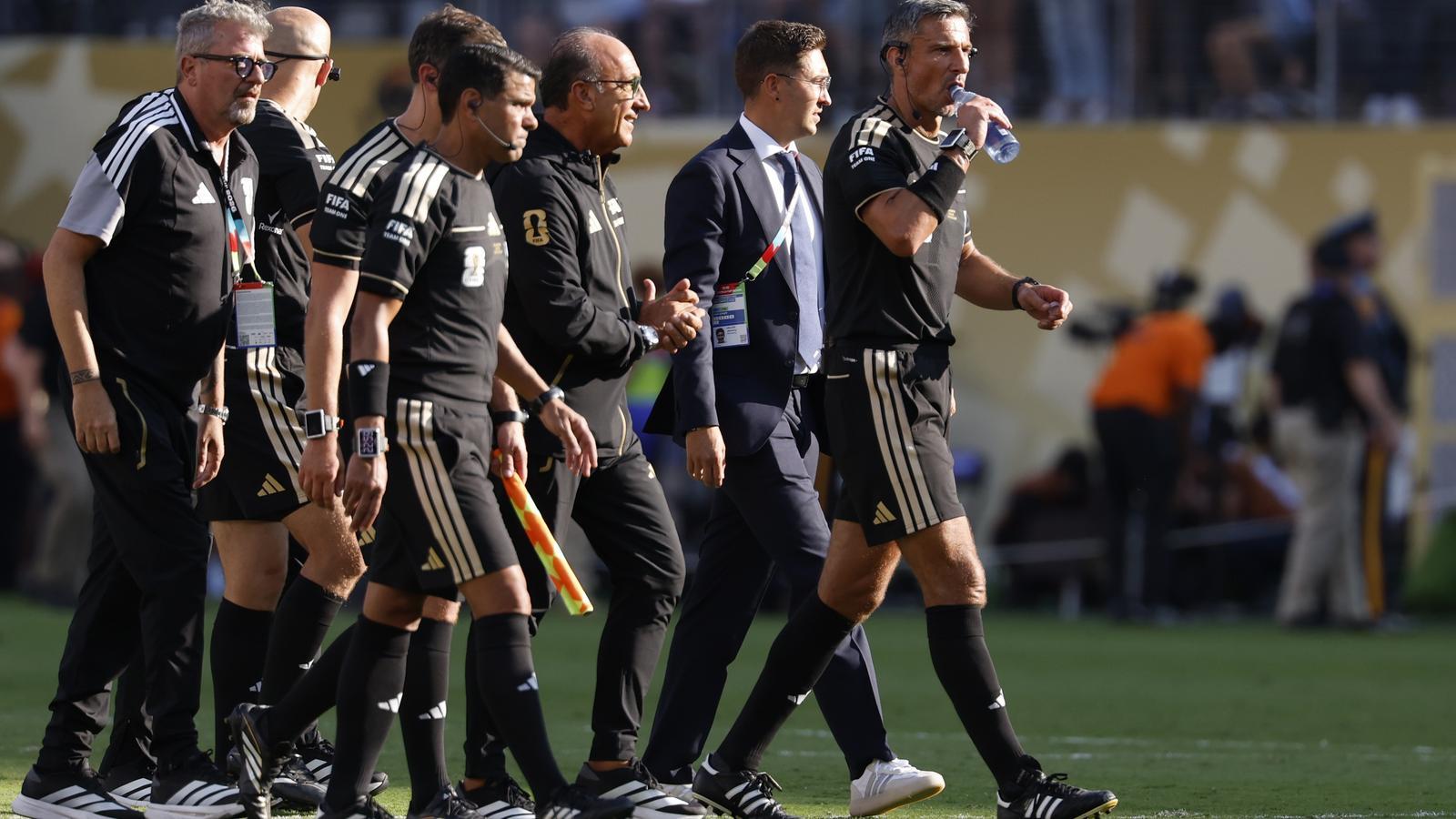
The level of refereeing has not been up to the prestige of the competition. Beyond isolated errors, the problem has been the criterion imposed by Pierluigi Collina, FIFA's head of refereeing, who has promoted a model in which the referee must intervene as little as possible. The referees have prioritized not conditioning the matches, to the point that, in many cases, they have refrained from sanctioning clear disciplinary actions.
The technical management's instructions were very conservative: yellow cards were to be reserved for very clear actions and, whenever possible, matches were to end without expulsions. The objective was to prevent matches from being conditioned by disciplinary decisions, but often the result has been the opposite. This very high tolerance threshold has generated a sense of impunity that footballers have not been slow to take advantage of to increase aggressiveness.
In the first few minutes of the tournament, Moroccan Achraf Hakimi dug his studs into the ankle of Real Madrid player Vinícius. The action deserved a red card, but the referee didn't even call a foul and VAR ignored it. That play set the tone for much of the tournament. Fouls on the edge of what's permissible became less exceptional, and refereeing tolerance continued until the final, where Argentina exploited it to push Spanish footballers to their limits.
Player protection had always been a hallmark of modern refereeing, but this World Cup has sailed in the opposite direction. Now, the hot potato is in the hands of the various confederations that govern international football, who will have to decide whether this is the criterion that should prevail in the coming years or if they will opt for greater rigor in punishing violent play.
The 'Vinícius law' has its days numbered
The so-called Vinícius law establishes that any player who covers their mouth in a confrontation situation may be sanctioned with a red card. The rule stems from the conflict between the Real Madrid footballer and Prestianni, a Benfica player accused of uttering racist insults. FIFA presented the measure as one of the major innovations of the tournament and the first victim was Miguel Almirón in a Paraguay-Turkey match. The main problem is that its application has been arbitrary, as it depends on the reaction of the opposing player, and not all referees have dared to sanction it.
In the final, Messi requested Cucurella's expulsion for covering his mouth with his fingers for a second, but VAR dismissed the Argentine star's request. The action made it clear that the regulation is not applied uniformly and that it depends on various factors that are difficult to assess. UEFA has already announced that it will not incorporate this modification into its competitions, an indication that the rule will hardly pass its first major international test.
More scope seems to be given to the reinterpretation of identity confusion, one of the assumptions on which VAR can intervene. Traditionally, this protocol only allowed for the correction of cases where the referee cautioned the wrong player. In this World Cup, however, FIFA has broadened its scope. If a card had been shown as a consequence of a rival's simulation, VAR could intervene to withdraw the caution from the innocent player and sanction the simulator.
Not all the innovations have generated rejection. The visible countdown in goal and line kicks has notably reduced time-wasting and has favoured a more fluid game, without altering the essence of football. Everything suggests that this will be one of the few World Cup innovations that have passed FIFA's test bench and have come to stay.

