In clash

-
CAT -
CAST
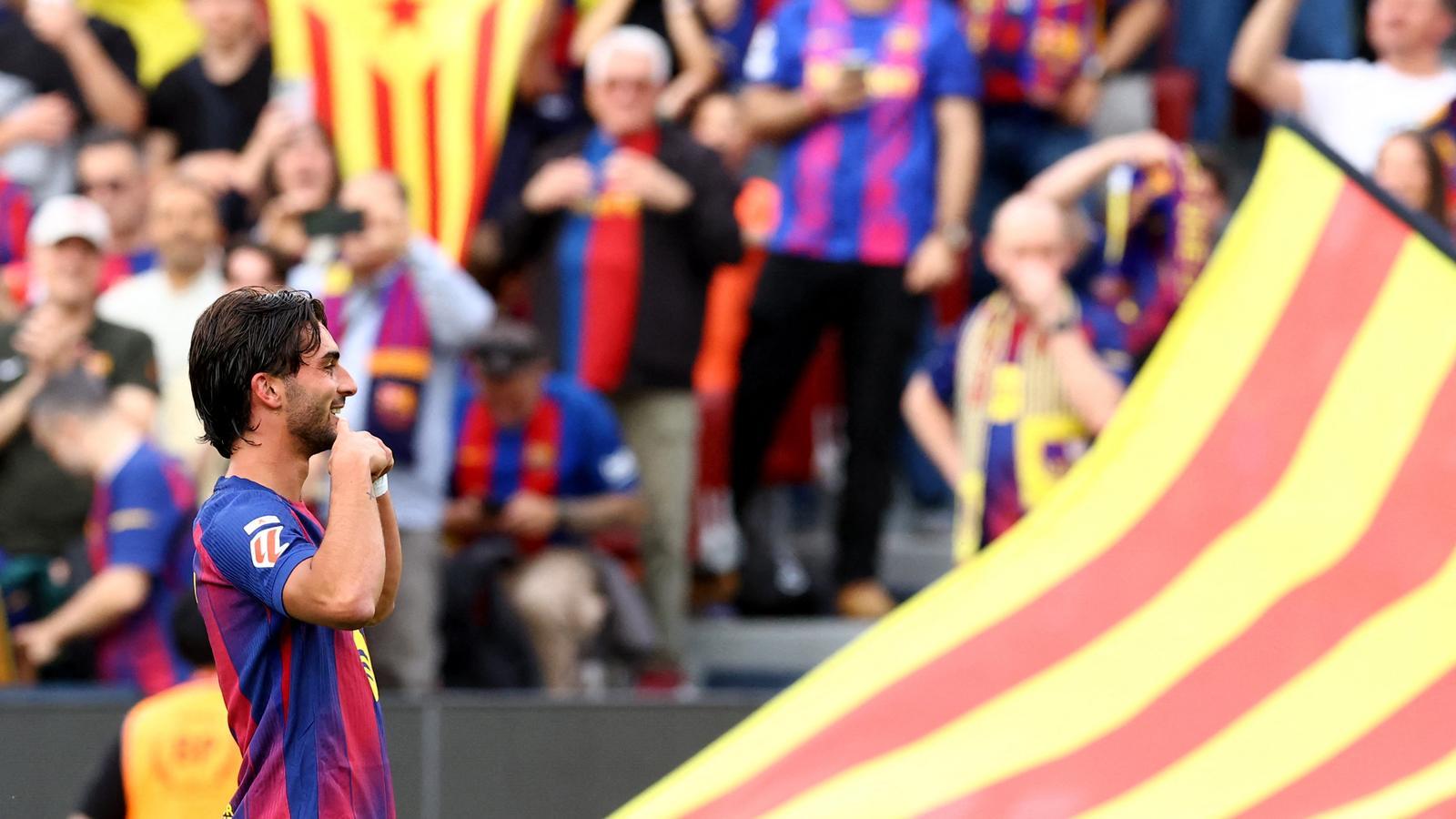
The Camp Nou hosted a derby that ended with a blaugrana thrashing and half a League in the bag. The celebration on the pitch was justified, even if Pol Lozano and other Espanyol players didn't seem to agree. The culé players sang and jumped near the cheering stand, which has once again livened up the matches in the stadium after many months of punishment.
From this noisy stronghold come many of the chants heard at the Camp Nou. From the catchy the catchyUn dia de partit to the Cant del Barça to the Virolai. Most are in Catalan, which is the official language of the club. However, there are also some in Spanish, like the one that encouraged the team to come back from a Champions League tie this Tuesday at the Metropolitano. "Yes, we can, yes, we can", thousands of people chanted on Saturday with this spirit. The slogan became popular in the 70s during a peasant protest in Arizona and was adopted by the 15-M movement in Spain fifteen years ago. It is true that it could be Catalanized –"sí que es pot, sí que es pot" would sound just as good– in the same way that Barack Obama translated it in his iconic Yes, we can. But for now, it retains its original form, which does not make it any less valid or any less Barcelonista.
I say this because this fact has drawn criticism, such as from the president-elect of Barça, Maria Elena Fort, who declared herself "in shock" over the speech. It is not known if she is more bothered that it is in Spanish or that it originates from the initiative of a group of male and female members who excluded her from negotiations to return to the Camp Nou. What is evident is that Fort's position clashes with the non-sectarianism that Joan Laporta advocated during his campaign to defend the "essential" work of his brother-in-law in the club. In any case, if the aim is to reinforce commitment to the country, we expect the same determination to recover the senyera kit in official matches (it hasn't been used for too long) or to vindicate the memory of president Josep Suñol, erased from the stadium's box for typographical reasons (sic). By the way, in Catalan, shock is not written shock, but xoc. And yes, of course you can come back!

