Vania Arana: "Sometimes it smells so bad that it's even hard to breathe"
Founder and president of the Las Kellys union

-
CAT -
CAST
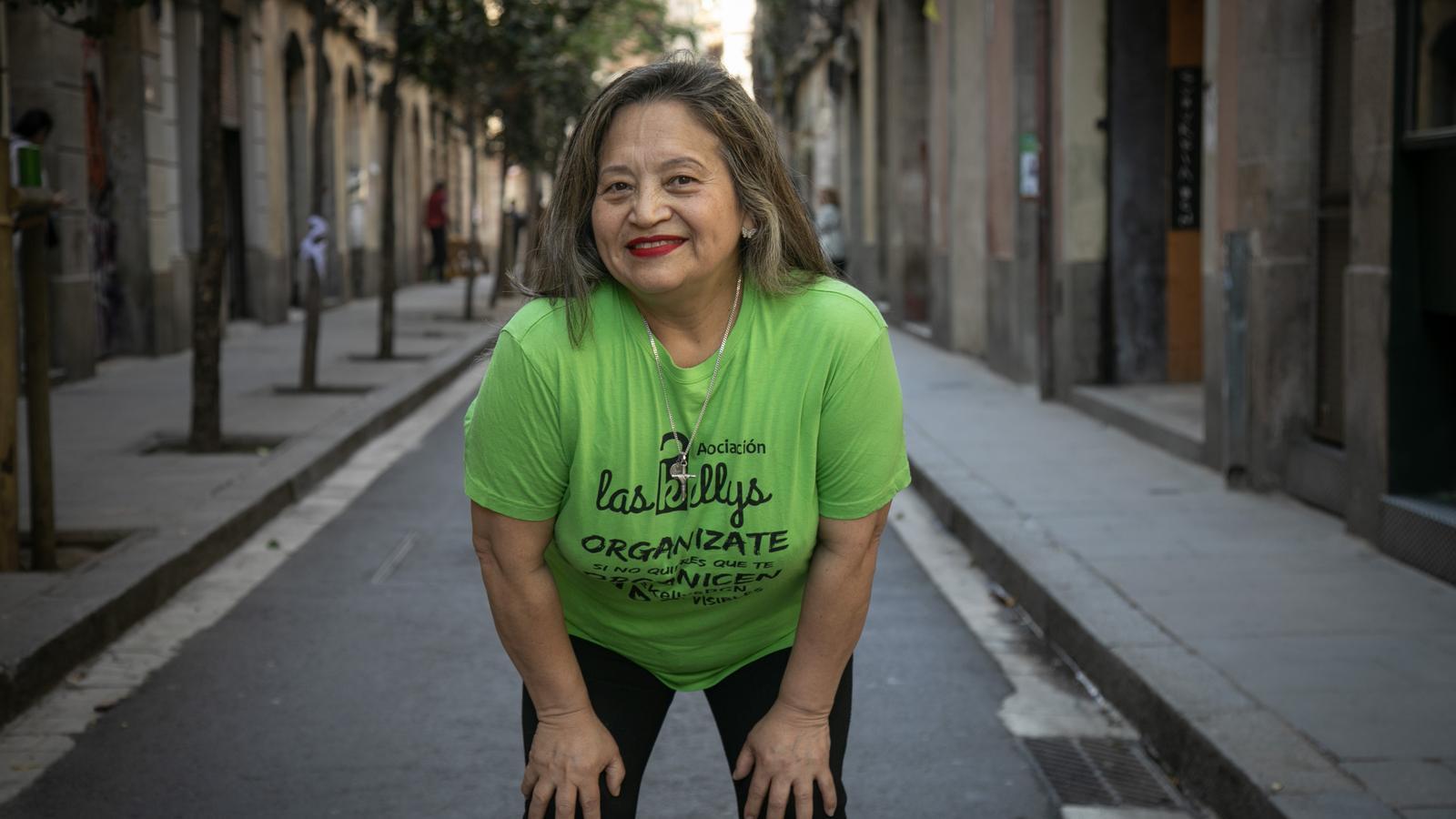
Vania Arana was born in Peru in the late sixties, but she has been living in Catalonia for over thirty years. She arrives at the interview wearing a green t-shirt with the phrase: "Organize yourself if you don't want to be organized." It is the motto of Las Kellys, the union she presides over, which brings together hotel maids, that is, women who, like her, clean hotels.
What did you play as a child?
— I liked being a teacher. And I also used to play at making cakes, at cooking... I remember picking up the broom with my friends and playing at cleaning. It seemed fun then.
In fact, you studied to be a teacher.
— Language and literature. But I wanted to conquer the world and decided to leave. I arrived in Barcelona just after the Olympic Games and I ran into reality. I sank.
Why?
— I couldn't get my degree recognized, I couldn't do anything. The only options I had were cleaning houses and taking care of the elderly or children. And I entered a house. You won't believe the first night.
What happened?
— I had to take care of an elderly gentleman who was sick and could barely move. I arrived in the afternoon. He told me he wanted a juice, I prepared it for him, he drank it, and after a while I looked at him and thought: "I think he's stopped breathing".
Wow...
— I approached and, indeed, he had died. I called the family members by phone and they told me: "Cover him up and we will come tomorrow morning".
What a shame they are not able to come right away…
— I couldn't believe it. Afterwards, I was in other houses and saw that it was a job I couldn't do, it wasn't for me. I saw elderly people alone, suffering. That period, I went out crying every day.
And didn't you consider returning to Peru?
— I was very discouraged, but I thought that with how much it had cost me to get here I couldn't go back. My visa expired, I became illegal and it was four terrible years until I got the papers.
Do you remember the day they gave them to you?
— …
Must be many emotions…
— It had been a long time since I remembered it. It was exciting, because I was afraid for a long time that the police would stop me. That's why I only worked locked up in houses.
After that you enter the hotels to clean. What did you think on the first day?
— If I can do this, I can do anything.
Cleaning is…
— Focus 100% on what you are doing, and be clear that every day will be a challenge. Your work is your mark, and what gives dignity to what you do.
Do you feel valued?
— Society has always seen the cleaning woman as a mop, someone without culture. And I am clear that not everyone is suited for this job. During the 2008 crisis, even husbands of women who cleaned and were unemployed used to come. Out of ten, one would last. And this one, with time, also left.
Why didn't they last?
— Cleaning is hard, you have to handle liquids, pay attention to details, there's always a rush, rooms are from before yesterday…
And you should find all sorts of things.
— Sometimes you enter and you can barely tell anyone has been there. The typical very neat conference attendee. And others…
Others what?
— As soon as you enter, it smells in such a way that it's even hard to breathe. And the windows, to avoid accidents, cannot be opened, or only open a few centimeters. So you have to put up with it.
What is the worst thing you have encountered?
— Vomiting. But vomiting everywhere. Bloody towels. Everything.
You are wearing a t-shirt with a message.
— "Organize yourself if you don't want to be organized." It's a Las Kellys t-shirt.
How were Las Kellys born?
— From tiredness. We started to exchange experiences through Facebook. Many, for example, could not leave work at the time we were supposed to because we had to finish the rooms even though the workday had already ended. And those of us from Barcelona said: "Why don't we associate?"
And the union is born. How did they decide on the name?
— We are always spoken of as: "The one who cleans". Without even giving us a name. And we decided to play with that."The ones who clean". And keep the queli, transformed into kelly.
What is the most important thing they have achieved?
— The recognition that we exist. I remember Spanish women in the late nineties, when I arrived, who would whisper in hotels, complaining about the time we left. And I didn't understand them.
What didn't you understand?
— That they complained about it. I thought: "At least we have work." Look what a concept I had. It's what I've learned in Peru and what exists in many Latin American countries: even if you work a lot, you have to continue and feel fortunate to earn money. I never thought: "I have labor rights." I learned it from them.
Let's play imagine that you have in front of you all the hotel entrepreneurs from Catalonia. What do you tell them?
— May they be aware of our work. And may they not subcontract. Now there are companies that do not work with the hospitality agreement but with the cleaning agreement, which is worse.
And to the clients?
— Respect. Without respect there is no dignity.
You have two children. What are you trying to convey to them?
— May they be free and may they not let anyone judge them. And if they do, may they find a way to not care.
Have you felt judged?
— Many times. I am aware that claiming rights has consequences and, in fact, I tell the women who are part of Las Kellys not to mention it in their workplace. Although I, who have experienced everything, am now lucky enough to have a supervisor who respects and defends us. She tells us we have value. It hadn't happened to me, until now.
