Why is it impossible to access the names of Francoist torturers?
The Ministry of Interior continues to guard thousands of documents that it should have transferred to the historical archives
-
CAT -
CAST
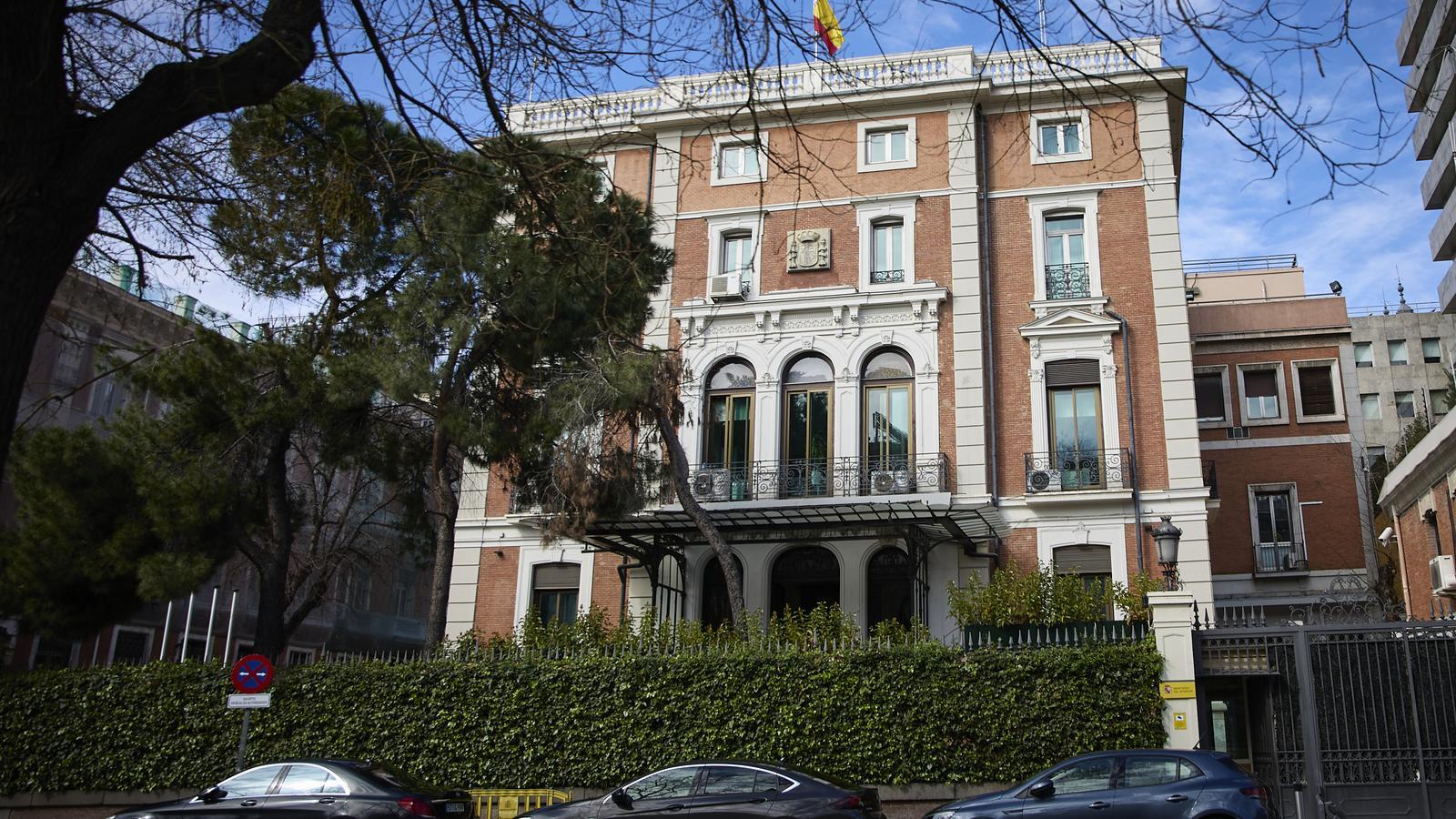
BarcelonaA few days ago, the German newspaper Die Zeit made available to its readers an online search engine that allows you to find out in a matter of seconds if there is any Nazi in your family. In Spain, we are a long way from being able to do anything similar. For years, different researchers, historians, and relatives of victims of Francoism have made requests and complaints because the Ministry of the Interior has become an insurmountable wall for accessing documentation. Some have even thrown in the towel and had to set aside their doctoral thesis.
The General Archive of the Ministry of the Interior (AGMI) is one of the most valuable for the study of the dictatorship. Although its regulatory norm establishes that it should not keep documentation older than thirty years, the ministry continues to hold large documentary volumes from the Ministry of Governance, its Francoist predecessor. Nor is it that it has transferred large volumes of information, but rather it has done so drop by drop. "According to the 1985 heritage law, it should make periodic transfers to the General Archive of the Administration (AGA) and to the provincial historical archives, but it does not," explains Mario Lozano, a postdoctoral researcher at the University of Barcelona (UB), who is studying the appointment of mayors and councilors during the Francoist regime and their trajectory when democracy arrived. "Knowing just what kind of documentation the Ministry of the Interior keeps on this is impossible, and we have had to conduct the research through provincial and deputation archives, which translates into making requests to almost a hundred archives," assures Lozano.
This Wednesday, an open letter addressed to the Minister of the Interior, Fernando Grande-Marlaska – with the support of half a thousand professors and researchers from both Spain and abroad and the Spanish Association of Contemporary History – will be delivered, demanding urgent measures to guarantee access to documentation. In fact, the Ministry of the Interior has already requested a meeting with the researchers, but they have requested the presence of the Technical Secretary General, Juan Antonio Puigserver Martínez, and the publication of the database with the requests for access to documentation.

The history professor at the Autonomous University of Barcelona (UAB) Pau Casanellas made a first attempt to access documentation for his thesis on repression against armed organizations in 2008. "It was practically impossible. Finally, I gave up," he explains. He ended up publishing the book Morir matando. El franquismo ante la práctica armada, 1968-1977 (Catarata, 2014) using alternative avenues, such as the archives of civil governments. A couple of years ago, he began working on a book about the system of repression and social control from the fifties to the end of Francoism. To do this, he initiated the official procedures to access the General Archive of the Ministry of the Interior. He made the request in February 2023 and they responded in January 2024: “They denied me access to everything I had requested,” says Casanellas. The arguments were based on legislation on documentary heritage and consultation deadlines. According to the law, 25 years must pass since the person's death and, if unknown, 50 years from the date of the document. “They invoked limits of 50 years from the date of the documents, but in my case the chronology was not affected,” he assures. He also denounces the lack of organization. "They told me that some documentation was not there or was not described," explains Casanellas, who ended up finding the information he was looking for, the operating rules of the Civil Guard's information service, in second-hand bookstores.

Obstacles of relatives
What the Ministry of the Interior safeguards is no ordinary archive. Its predecessor, the Ministry of Governance, was a key player in the political and repressive control of the dictatorship, as it concentrated powers over police, penitentiary administration, control of associations, and surveillance of political dissent. From there, the network of civil governors responsible for implementing the regime's policies in the territory was controlled. Furthermore, the AGMI also manages historical documentation from prisons, essential for research on repressed individuals and the prison population during the 20th century.
Paloma Calopa was looking for information about her aunt, Joaquina Rodríguez del Amo, who was a nurse in Madrid and was shot in the Almudena cemetery on June 27, 1940. "I was completely unaware of how archives worked, and I personally went to the headquarters of the Ministry of the Interior, with the intention of processing the request in person. Once there, I explained my case and was informed that this option was not possible and I had to fill out a form. They told me they would send me the documentation, which did not arrive at my home until a year and a half later," explains Calopa.
"The surprise was immense upon discovering that the documents contained numerous censored fragments. Specifically, about a dozen proper names had been erased or hidden, albeit irregularly, as some names do appear. It should be kept in mind that these documents date from 1939 and 1940, meaning they are more than eight decades old. From my point of view, these are materials that, due to their nature and age, should be fully accessible and should not be subject to these types of restrictions," adds Calopa, who has had to visit many other archives and explains that the experience has always been positive. "As a relative and not as a professional researcher, I consider it essential that access to archives be facilitated with criteria of support and sensitivity. We are talking about documents that directly affect the family and emotional memory of many people. In most archives, I have found professionalism, guidance, and sensitivity. They have taught me to use consultation systems, such as microfilm, and to navigate databases. Unfortunately, this has not been my experience in the case of the Ministry of the Interior," she says.
Delays in fulfilling requests
Laura Bolaños is a doctor from the Complutense University of Madrid and wrote a doctoral thesis on clandestine prostitution during the post-war period. To conduct her research, she requested personal files and documentation generated by the prisons where prostitutes were mainly held at the General Archive of the Ministry of the Interior. "I was asked for death certificates and it took them more than a year to respond to some requests. A doctoral thesis lasts three years, extendable by two more. In total, five years. With these delays, research becomes enormously complicated. In other provincial archives where I have consulted the same information, I have had no problems," says Bolaños.
"That all this documentation remains in the ministry is an anomaly," denounces Mario Lozano, because ministerial archives are not designed to hold historical documentation. In the central administration, this function corresponds to specialized historical and intermediate archives such as the General Archive of the Administration, the National Historical Archive, or the Provincial Historical Archives, linked to the Ministry of Culture. "The fact that they have not been transferred makes the task enormously difficult because often there is no archival treatment or description," says Lozano. Therefore, looking for a document can be like trying to find a needle in a haystack. "They don't even allow access to the archives, they cannot be consulted physically, and they often send censored copies with many illegible names," he adds. According to a report by historians, between 1977 and 1996 –a period of twenty years–, 34 transfers were registered, with a total of 10,646 units. Between 1996 and 2026 –a period of thirty years–, only three transfers were made, with a total of 1,881 units.
Impossible to access the torturers' names
On March 27, ERC presented a non-binding proposal (PNL) to Congress on the accessibility and transparency of the General Archive of the Ministry of the Interior (AGMI), focusing on the difficulties of accessing historical documentation kept in the archive, especially that related to repression and the penitentiary institutions of Francoism and the post-war period. The response of the Minister of the Interior, Fernando Grande-Marlaska, was to deny any opacity in the management of the archive. He only admitted the existence of difficulties due to the workload, but defended the administration's work. However, the fact is that complaints are accumulating.
On April 27, the PNB demanded that the Ministry of the Interior completely declassify the documents in its archive in order to identify those responsible for the torture and death of Txomin Letamendi in 1950. They are not the first to ask for this. The Spanish Memory Law specifies that victims have the right to justice, which must be guaranteed through public investigations that clarify human rights violations. So far, however, police reports have not been accessible. Blanca Serra, who died on April 11, tried to find out the names of those who tortured her at the Via Laietana police station through a complaint to the Public Prosecutor's Office.
"These are not documents classified as official secrets, and there is the issue of data protection with material that can be considered sensitive," explains Lozano. "The technical secretariat of the Ministry of the Interior decides who can access this more sensitive material and who drafts the internal regulations," he adds. In this case, their criteria have been quite restrictive in the opinion of the researchers.
