Having a disease that affects 30 children worldwide: "I only ask to buy time for my daughter"
The family denounces the lack of support from the administration and claims for more empathy for those suffering from rare pathologies
-
CAT -
CAST
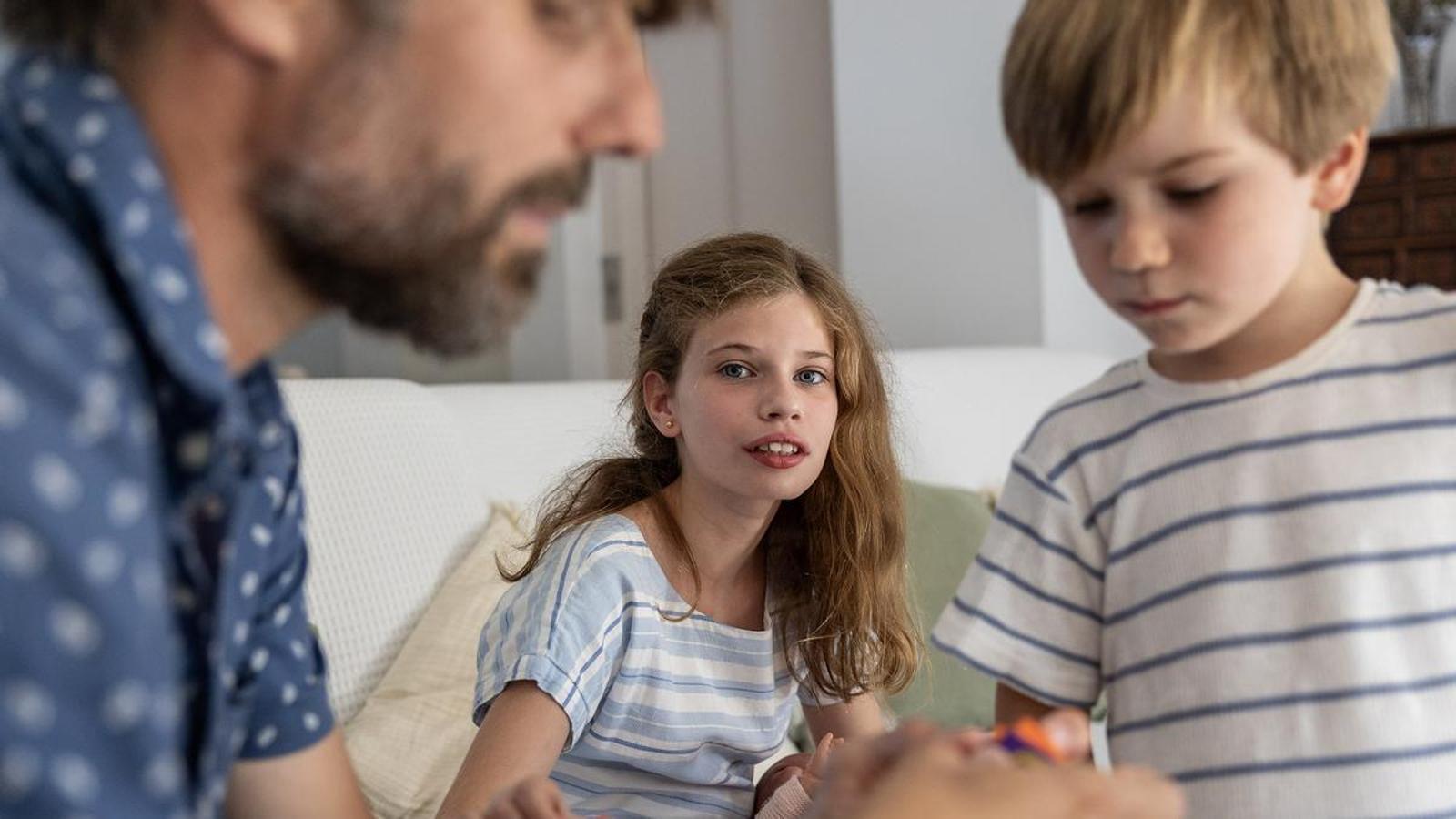
BarcelonaWhen Lucía goes down to the park to play, the other children look at her because she doesn't behave like them. Jose, her father, explains helplessly that they had to change her school because her classmates bullied her without the teachers or families doing anything to prevent it. He is also a teacher and understands that the other children look at her when she plays; they are young and have surely never seen a girl like Lucía, who has a very rare disease that only affects 30 children worldwide. However, he does not understand the adults' lack of empathy and wonders why no one protected her at that school.
He explains that since his daughter's diagnosis, they have felt very alone and unsupported, also by the administration, which only covers one-fifth of the 1,600 euros the family spends each month on Lucía's treatment. At home, they rack their brains to ensure their daughter has as normal a life as possible, but Jose admits they are disappointed with the daily lack of understanding they experience. The life expectancy for people with Batten disease type 5, like Lucía, does not go beyond adolescence, but he refuses to give up and relies on the various ongoing studies in search of a cure.
"I only ask to buy time for my daughter and for her to receive the care she needs. And to the administration and society, I ask for empathy," says Jose. His daughter was only four and a half years old when they started noticing changes in her behavior at home. After the lockdown during the covid-19 pandemic, Lucía began to have difficulty following rules that she had previously understood perfectly; sometimes she would cry for no apparent reason and was more tired than usual. When the neurologist visited her, he detected this ultra-rare neurodegenerative disease.
This summer Lucía will turn eleven years old. Since the illness was detected, she has lost the ability to read, has problems following classes, and also to move, as she has frequent falls. She has also suffered epileptic seizures and communicates less, sometimes she has even stopped speaking or cannot maintain a narrative. "This morning she told me 'Dad, you're very handsome'" and to me it's as if an angel had descended from heaven," explains an emotional Jose. She receives palliative treatments to control symptoms, especially epileptic seizures, and has been fitted with a gastric button, a silicone device placed on the skin to administer treatments.
Experimental therapy in London
Lucía has a younger brother, Álvaro, who is already five years old. The parents have tried to explain to him what is happening to his older sister and Jose assures that they have seen a great improvement since she started going to the psychologist, but he sees it inevitable that the illness will leave him with sequelae too. "How do you tell your son that his sister is going to die? He suffers, he still doesn't fully understand it, but surely he will also have trauma from it," laments the father. On the other hand, he criticizes that they have not received any emotional support since their daughter's diagnosis and, once again, blames the administration for the lack of help they have received in recent years. "I can't afford a psychologist for myself or for my wife. We prioritize our young son and Lucía's treatments, but we are tense all day and have post-traumatic stress. It's very hard.
The family has moved heaven and earth to find treatments or clinical trials that improve Lucía's life, any alternative to cling to. It was like this that they managed to access an experimental trial in London. The inclusion process was limited to a small number of patients and Lucía was able to enter after passing several tests, as unlike other potential participants, her illness was not in such an advanced stage. The trial consisted of an intervention with injections in the eye, because many patients with this disease end up blind, and in the brainstem with the objective of trying to modify cellular function to reduce the accumulation of a toxic substance. The family moved to the United Kingdom for eight months until the trial ended. He had to request a leave of absence to be able to travel, the adaptation was hard for everyone, including Álvaro, who was very young.
"I haven't allowed myself to have a bad time. Although I've had very bad moments, I've told myself many times that I can't fall, that I have to save others," admits Jose, who explains that neither he nor his wife are medicating to manage it better. They continue to focus on finding therapeutic alternatives that improve their daughter's quality of life and prolong her limited life expectancy. He is clear that they will not stop trying, no matter how much they know that there is no cure available at the moment. "Is it a dream? Yes, but a decade ago heart transplants couldn't be done, and now they are. I'm looking to buy time at all costs," he says hopefully.
