The Spanish government has relocated 173 unaccompanied minors from Ceuta to other autonomous communities
Saiz says that 89 more children have been reunited with relatives on the Peninsula
-
CAT -
CAST
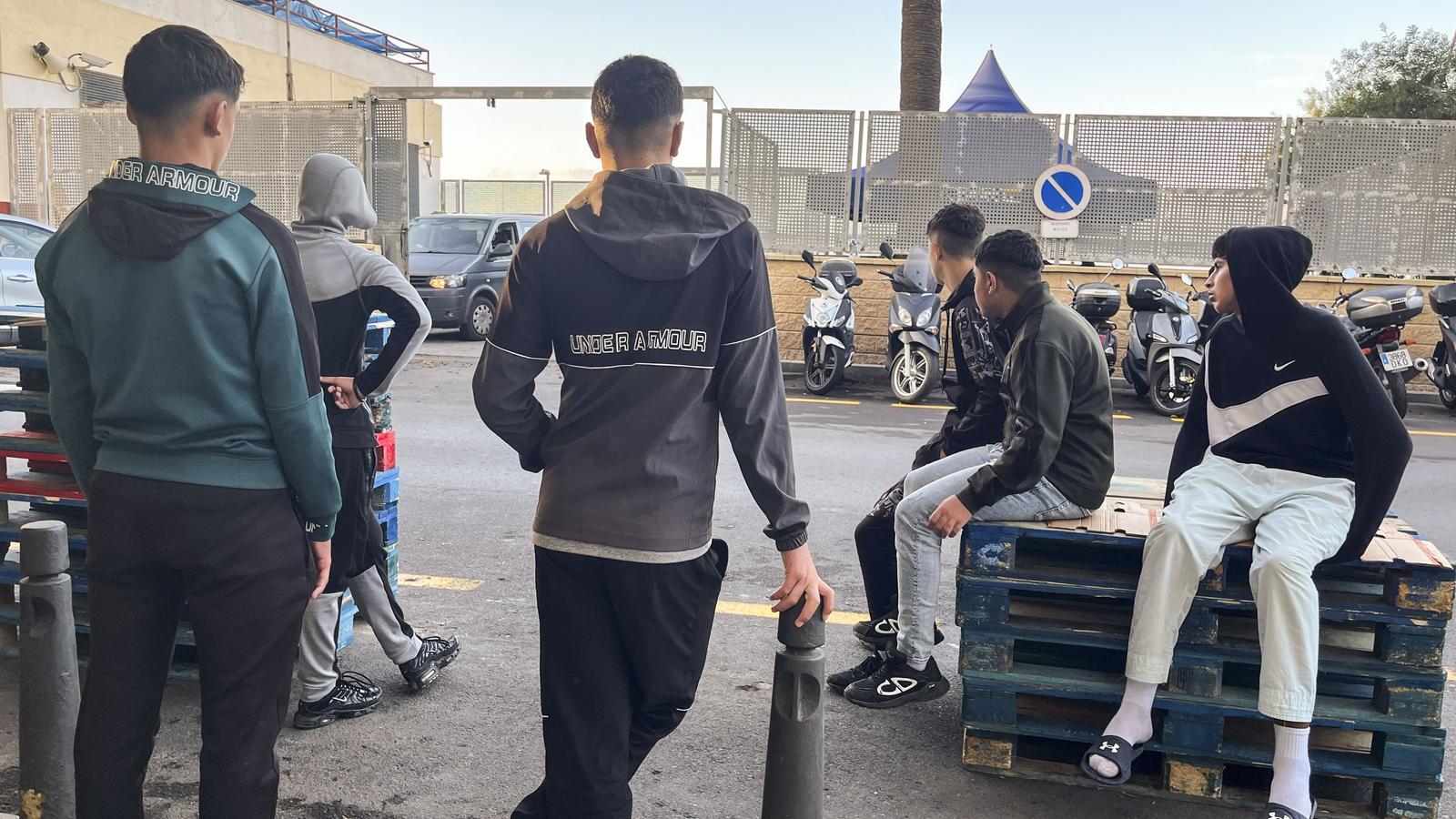
Madrid / BarcelonaThe Minister of Inclusion, Social Security and Migration, Elma Saiz, explained this Tuesday that the Spanish government has registered 3,019 unaccompanied minors in Ceuta since the mass entry on July 30 and 31. After the Council of Ministers, the spokesperson for Pedro Sánchez's executive also specified that these 3,000 children are "registered and cared for," meaning they are in spaces enabled for minors and, therefore, separated from adults. Of these, 89 have been relocated to the Peninsula in application of the right to family reunification – with direct relatives or extended family –, and 173 more have been relocated to different autonomous communities in accordance with Article 35 of the Immigration Law.
However, the Spanish government does not specify which autonomous communities these more than 200 minors have been moved to – adding those who have been reunited and those who have been relocated. Saiz, in response to journalists, limited herself to saying that they have been moved to practically all the communities, "even those that have come out saying they would not accept boys and girls due to the agreements of the far-right with the PP".
The Spanish government also detailed that 35 files of minors who arrived during the crisis in Ceuta have been sent to Morocco for possible family reunification in their country of origin. However, Saiz stressed that in the past they had sent them 650 files of this type and never received a response.
During these months, the care for unaccompanied minors who arrived in Ceuta has also become an element of political confrontation. The opposition has flatly rejected the transfers and their arrival in other territories, in some cases linked to the agreements between the PP and Vox, despite having the same political color as the government of Ceuta, which was requesting the transfer of these boys and adolescents.
"Why do we see an invader and not a child?"
This politicization has contributed to shifting the focus from the needs of minors and the conditions in which they have been cared for toward the political dispute over who should take care of them. "We have gone from 'we want to welcome them' to 'let them not come, we don't want even one of them'," laments Maria Creixell, from the organization Coordinadora Obrim Fronteres, who explains that the main concern of the people working in Ceuta is the situation of helplessness and the material conditions in which most of these minors have found themselves for weeks. Paula Escoleta, a psychologist from the association Psicomigra, adds the need for mental health care for these children. "There is a risk that psychological suffering appears as a natural consequence of migrating, but the psychosocial damage is not the migration itself, but the exposure to violence before, during, and after the migratory journey," she warns.
The experts warn of the risk posed by "homogenizing the group," as realities as diverse as war, famine, climatic situations, or situations of violence or social deficiencies that they may have suffered in their country of origin and from which they want to flee are left behind. Escoleta recalls that the journey leaves a deep mark: "They carry the border on their skin, on their face, and in their origin. If in childhood, which is when personality is forged, you grow up absorbing a hostile context, you will develop difficulties in trusting others." The psychologist insists that symptoms such as anxiety, hypervigilance, or sadness are not necessarily pathological, but rather "a logical response to an extraordinary situation," and advocates for working on resilience and the repair of damage in children who have shown great strength to survive.
Both the Coordinadora Obrim Fronteres and Psicomigra are making an urgent call to combat the criminalization and hate speech that have become established in public debate. "They are asked for an excellent attitude when they arrive, while they continue to be exposed to violence. They are treated like criminals when the only thing they seek is to be part of our daily lives and have a dignified future," maintains Creixell. For their part, Escoleta calls for political and social responsibility to dismantle racist narratives: "Before they are foreigners, they are children, and the logic should be to cover the same needs as any other boy or girl: protection, food, and shelter." "Why, when we see an unaccompanied foreign minor, do we see an invader and not a child? As a society, we must examine ourselves and ask why we are being frightened or why we hate a child.
Complaints from organizations regarding returns
Saiz also explained that, since August 10th, the Spanish government has returned 11,866 people to Morocco, most of whom have voluntarily made their way back home and about 500 have been expelled. In fact, the Spanish government continues the screening process for the immigrants who are still in the autonomous city. The minister also said that there are currently 4,400 adults who have completed the screening phase and that 7,477 temporary places have been set up for immigrants. In this regard, Saiz specified that this week there has been "a turning point" with the evictions from the beaches of El Trampolín and El Guano, which took place "successfully and without incident." The evicted people have mostly returned to Morocco or are occupying the more than 7,400 temporary humanitarian aid places set up by the Spanish executive.
However, eight organizations such as Amnesty International, Red Acoge, and Oxfam Intermón have filed a complaint with the Ombudsman regarding alleged violations of immigrants' rights, especially regarding their access to asylum. In a joint statement, they denounced irregularities in the procedures for screening, international protection, deportation, and return, and raised "serious doubts" about Spain's compliance with its obligations regarding the "allegedly voluntary returns" of recent days. In just one week, 2,500 people have done so.
The organizations state that problems have been detected in formalizing applications and accessing notification mechanisms, such as official publications, the deadlines for which are extremely short for filing appeals. Thus, they also point out that immigrants have difficulties accessing free legal aid immediately. Given this situation, they have requested the immediate suspension of any deportation of people who have expressed a desire to seek asylum or about whom there are doubts as to whether they have been registered correctly. Added to this are cases of mistreatment of immigrants by the military, also documented by the organizations through various testimonies.
