The neighbors of the L9 sinkhole will also sue the Barcelona City Council
The lawyer who leads the lawsuit points out that the city council would have allowed the works on an inappropriate terrain

-
CAT -
CAST
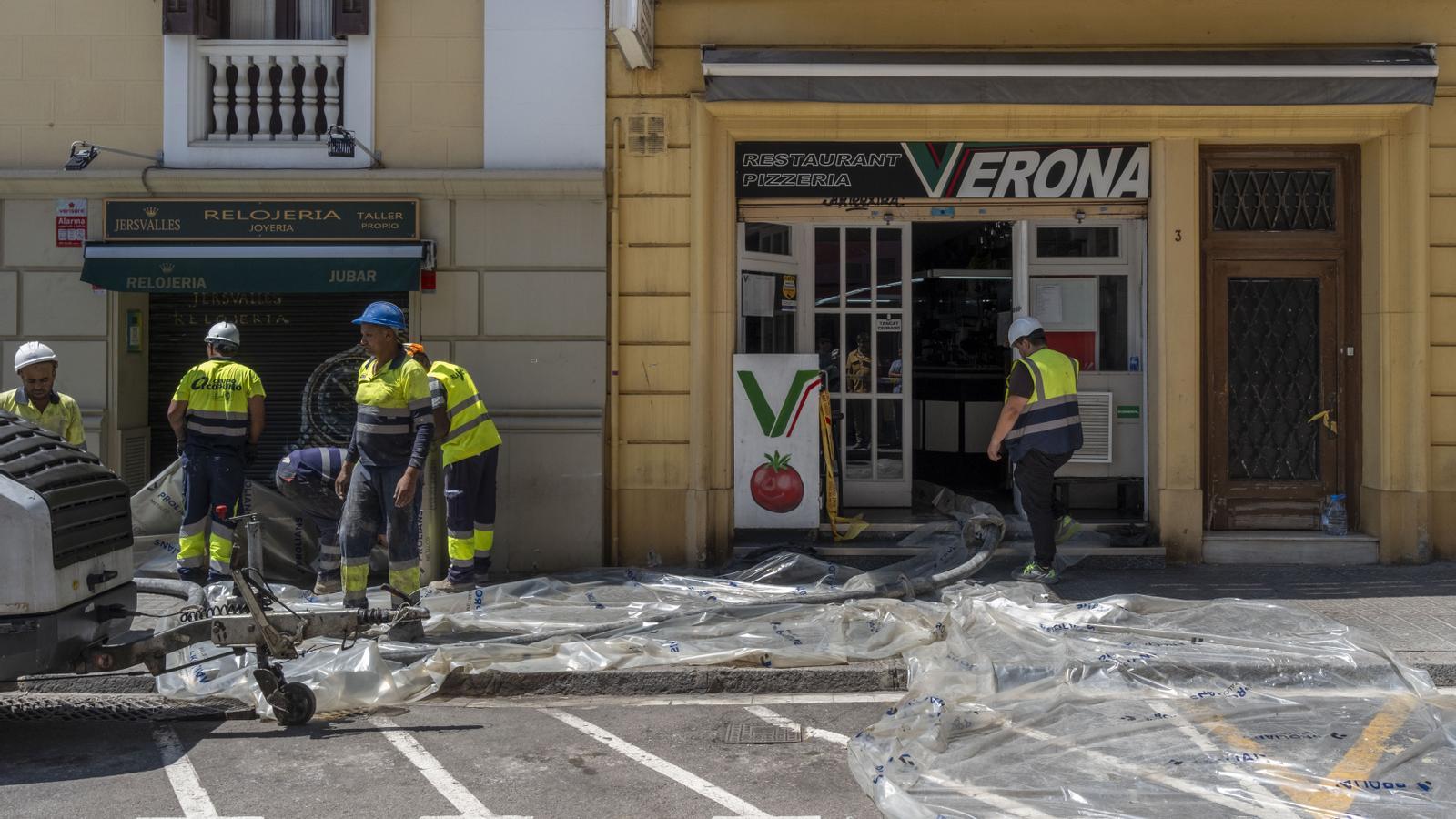
BarcelonaTwo months after the sinkhole due to the metro line 9 construction works that forced them to leave their homes, the residents of the Sant Gervasi - la Bonanova neighborhood now have the collective lawsuit ready. A text that they plan to present in the coming hours and that, as ARA has learned, will finally not be directed only against the Generalitat, but will also point to the civil liability of the Barcelona City Council. It is a decisive step in a process that is expected to be long, which will force a negotiation between the parties and could lead to significant compensation.
Most of the residents have grouped together around a platform for those affected, which has the legal advice of the Pérez Pozo Group, which already participated in the process following the Carmel sinkhole in 2005. In statements to ARA, Carmen Pérez Pozo, lawyer and CEO of the group, explains that they have decided to include the Barcelona City Council in the lawsuit because it is the institution that granted the building permit. "It granted the permit on land that is perhaps not ideal for this type of work," she stresses.
Regarding the Generalitat, Pérez Pozo points out that the lawsuit will be based on the principle of culpa in vigilando, since when an administration contracts a job it has a body of its own technicians "that should be on top of the construction companies' technicians." The lawyer recalls that the claim will be directed against the Generalitat and the City Council, and that, subsequently, it will be these institutions and their insurers that will be able to claim the corresponding amounts from the companies of the temporary joint venture in charge of the works.
The collective claim –which for now includes 90% of the residents– will include three main types of damages. First, material damages, such as cracks and damage to homes. Second, personal damages, among which are the possible physical, psychological, and moral damages caused by the evacuation and the uncertainty. Finally, economic losses will be claimed, such as the loss of income for businesses and the possible reduction in the value of the properties. "Before it was a safe area and now it has a metro line and a sinkhole underneath it," stresses Pérez Pozo.
Negotiations with the Generalitat
The filing of the contentious-administrative lawsuit is one more step in defining the civil liabilities for the sinkhole, but the negotiation between the residents and the Government began weeks ago. Before August, the platform of affected individuals already met with the Secretary General of Territory, Jordi Terrades. A meeting in which the need to establish a "framework agreement" that sets the parameters upon which the compensation will have to be calculated was already raised.
For now, Pérez Pozo rules out putting an approximate figure on what the final cost of the residents' compensation might be and remarks that although there are general parameters, each case is a world of its own afterwards. "The upheaval of having to leave home is generic for everyone, but there are people who have had health relapses, aggravation of illnesses, business losses...", he points out. "In every negotiation, no one is left happy: the one who pays, because they believe they are paying a lot, and the one who receives, because in the end nothing compensates you", he adds. Even so, he is confident in reaching an agreement. "It is not in anyone's interest to reach the judicial path", he maintains.
